|
"Dancing of the autumn leaves on a surface of a lake is a dream we see when we are awake."
-- Mehmet Murat Ildan
As the fall season progresses, more and more leaves are falling from trees. Why does this happen? Shedding leaves is an important tree survival mechanism that has evolved over time. Losing leaves means a tree spends less energy through the cold winter. A tree can also conserve moisture within the trunk to keep it from drying out. Finally, without leaves, wind will blow through the branches, putting less strain on the tree during winter storms.
During your fall colors adventures this week, watch for falling leaves as autumn winds whisk them away.
|
|
|
If this email was forwarded to you, sign up so you too can follow the colors
Explore past issues.
|
|

Take a fall colors journey through the southwestern part of Minnesota, where you'll find stunning views of colorful trees at Camden, Lake Shetek and Kilen Woods state parks.
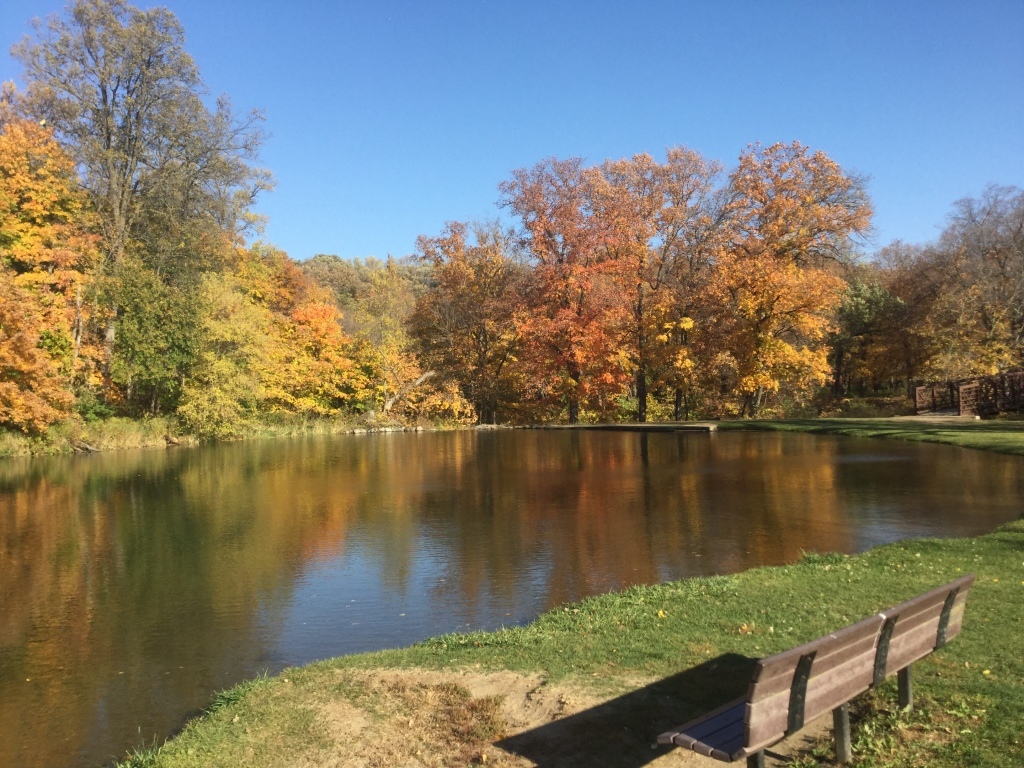 A bench overlooking the swimming pond at Camden State Park is the perfect spot to rest and take in the beauty of fall colors. Photo by Macalester Oglesby, 10/11/22
If you like fall color and you like prairies, Camden State Park is for you. While fall wildflowers are past peak, this park is also graced with maples, basswoods, ash, cottonwoods and hackberry. The prairie and tree combination – along with views of the Redwood River and Brawner Lake – make Camden State Park a scenic fall stop. This state park offers an all-terrain track chair to help visitors with mobility disabilities to explore the park. Please call ahead to reserve the all-terrain track chair at 507-872-7031. The Camden Regional Trail (10 miles one-way) leads to the town of Marshall and is popular with hikers and bikers.
About 40 minutes from Camden is Lake Shetek State Park. A major attraction at this park is in its name: Shetek, the Ojibwe word for pelican. Pelicans regularly visit Lake Shetek each fall and summer, as though they know it’s named for them. Lake Shetek is the largest lake in southwestern Minnesota and forms the headwaters of the Des Moines River. Loon Island is accessible on foot and includes an interpretive trail. Visit the park on October 22 and enjoy the annual fall pumpkin festival, organized by the Friends of Lake Shetek.
Continue your southwest journey, and visit Kilen Woods State Park. Hike through woodland along the Des Moines River or take in the entire river valley from the Dinosaur Ridge Overlook. This park offers quiet surprises in the form of small creeks, prairie grass and oak savannas. A special attraction is the Connector Trail through the Prairie Bush Clover Scientific and Natural Area.
|
|

American prairie bison calves change colors and can be seen at two Minnesota state parks.
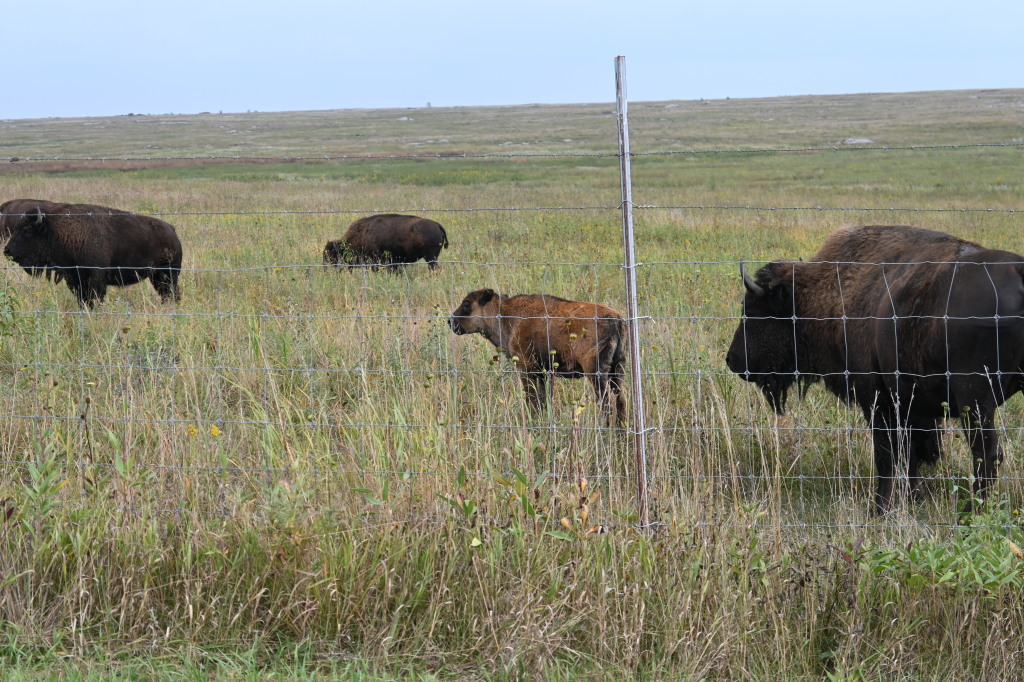 The bison range at Blue Mounds State Park is home to 80-90 bison. Each spring, 20-30 calves are born at the park. Photo by Tiffany Muellner, interpretive naturalist at Blue Mounds, 09/17/22.
Bison calves, usually born in May or June, are reddish tan or orange-red in color at birth. It is generally accepted that the reddish color helps them blend into the prairie in the spring when they are most vulnerable to predators. The calves will make the transition from a red coat to the brownish-black coloration at about three months of age (usually late July through early September).
From September onward, hide color changes depend on the age of the animal and the season. Bison hides grow thick in winter months to provide warmth and shed in the spring. This change is true of most mammals.
The bison at Blue Mounds State Park and Minneopa State Park are a big draw in any sense of the word. An adult bull may stand up to six feet high at the shoulder, measure nearly 10 feet in length and weigh more than 2,000 pounds. Cows are smaller, but still weigh about 1,200 pounds.
The bison at both state parks are part of the Minnesota Bison Conservation Herd, which has approximately 130 bison living at five different sites.
To see bison at Blue Mounds, try the viewing platform. If you can't see the herd from the viewing platform, the bison might be visible from the Western Loop Trail at the southwest corner of the range. For another chance to see the bison, as well as learn more about them and the prairie they live on, take one of the park's Prairie and Bison Tours, available through October 23.
At Minneopa, take your vehicle on the Bison Drive through the 300 acre bison range. The Bison Drive is closed on Wednesdays for maintenance.
|
|

The lower part of Lac qui Parle Lake is a common resting spot for migrating waterfowl.
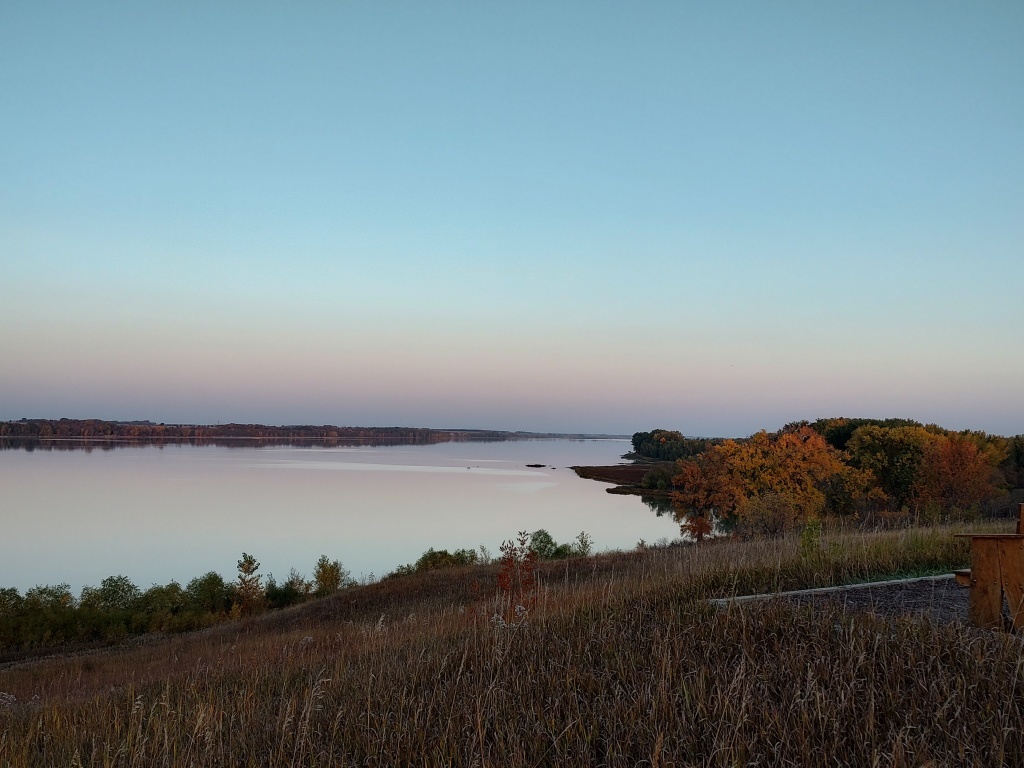 A serene view from the Lac qui Parle Lake overlook. Photo by Terri Dinesen, 10/09/22.
Like waterfowl? This park’s very name, Lac qui Parle, should intrigue you. The lake was first named by the Dakota in language describing a “lake that speaks.” That’s because in the fall, migratory waterfowl like Canada geese use the park as a rest stop on their flight to warmer climates. Ducks, swans, geese: they’re all here. For the best views, go to the lake overlook off Chippewa County Road 32.
|
|

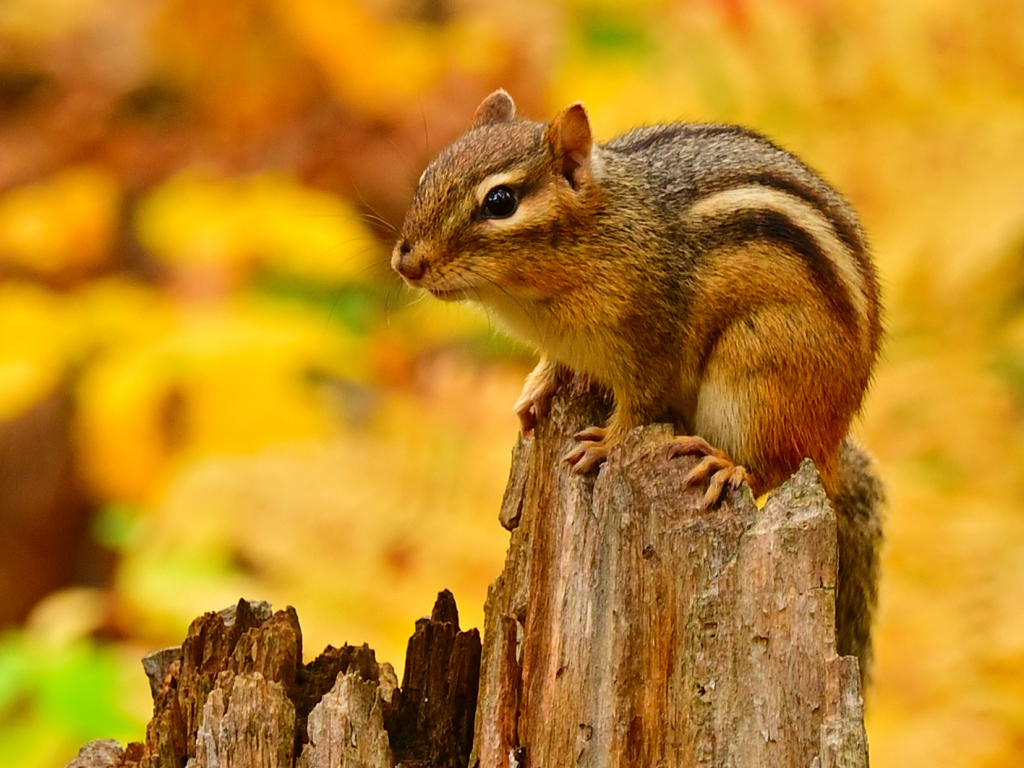 A chipmunk sits atop a tree trunk. Photo by Mark Swanson, 10/05/22.
As leaves fall from the trees, there are more opportunities to view wildlife while visiting state parks. Keep your eye out for big animals and small critters alike, like this adorable chipmunk.
|
|
Share your favorite Minnesota state park, trail and recreation area fall photos and stories. Upload your photo to our website or tag us on Instagram @mnstateparksandtrails and use #YourMNFallFavorites for a chance to be featured in the weekly Fall Color Update and our social channels. |
|
|
|
|