|
|
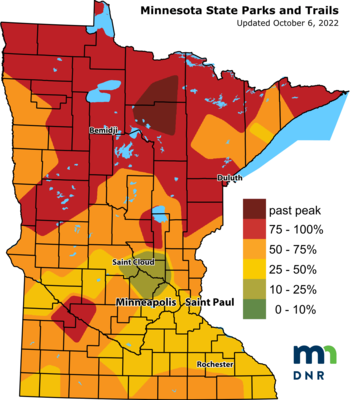
Click on the map for a complete fall color report from around the state.
Reduced sunlight in fall means trees stop producing chlorophyll, the green pigment necessary for photosynthesis. This absence of chlorophyll allows other leaf pigments to take center stage, transforming the landscape to orange, red, purple and yellow splendor.
This colorful season, come as you are and let your true colors shine through at Minnesota state parks, trails and water trails.
Email us with feedback or comments.
|
|
|
If this email was forwarded to you, sign up so you too can follow the colors
Explore past issues.
|
|

The Rum River State Water Trail starts at Mille Lacs Lake, which can also be your starting point for a fall journey through the waters and forests in central Minnesota.
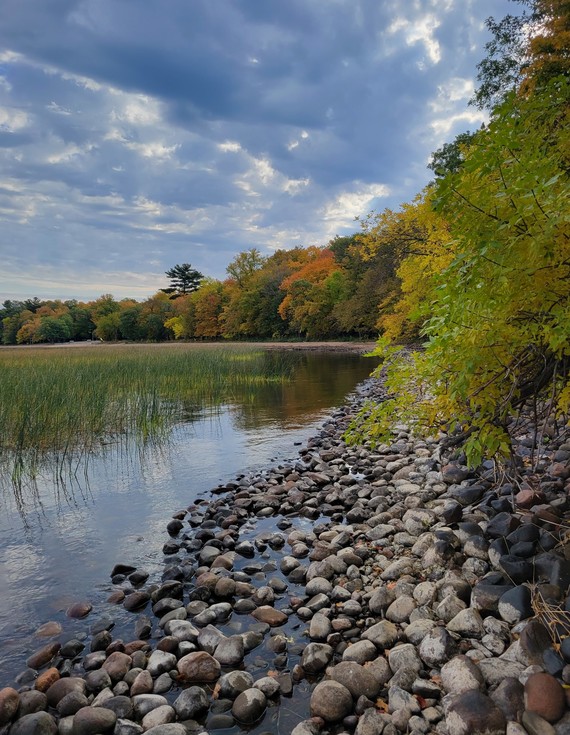 Along Pope's Point Trail on the shores of Mille Lacs Lake. PHOTO: Lindsey Job, 10/2/22
From Father Hennepin State Park's sandy beach you can appreciate the expanse of Mille Lacs Lake, Minnesota's second largest inland lake. Follow the shoreline along Pope's Point hiking trail to take in stunning lake views framed by trees displaying their best fall color: Maple trees are vibrant yellow, orange and red; ash trees are turning yellow; and asters and goldenrods are in full bloom.
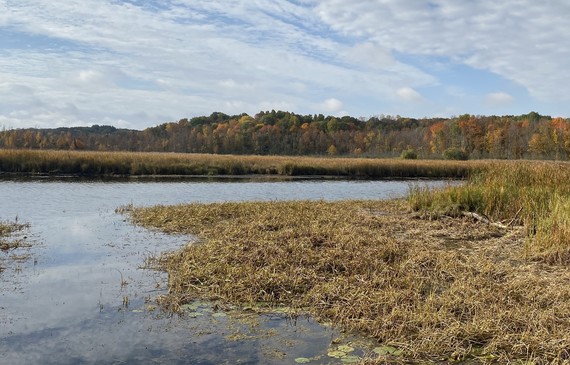 A designated Wild and Scenic River, the Rum River starts at Mille Lacs Lake and flows more than 150 miles south before it joins the Mississippi River. The river access at Mille Lacs Kathio State Park is between Ogechie and Shakopee Lakes. PHOTO: Park staff, 10/5/22
Less than 15 miles from Father Hennepin State Park is Mille Lacs Kathio State Park. Whether you come for a hike, bike ride, paddle, horseback ride, or drive through the park, you won't be disappointed. Shutterbugs, keep your camera at hand!
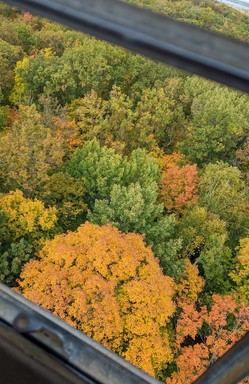
Mille Lacs Kathio State Park is home to one of five fire towers located at state parks in Minnesota. Climb the 100-foot tall tower for stunning aerial views of fall colors.
Hikers, take note. Hilly Glacial Ridge Trail is known for its beauty in the fall, as it loops through a mixed hardwood forest where you can see colors up close. Pristine Black Bass Lake offers a remote and scenic hiking and backpacking experience, as well as the opportunity to watch migrating waterfowl.
Right now, the forest has an array of hues — yellows, reds, oranges and browns, and the colors will likely peak in the next couple days.
|
PHOTO: View from the fire tower captured by Amy Fischer on 10/2/22
The nearby Rum River State Forest offers opportunities for motorized recreation on designated routes. Northern hardwoods (maple, oak, ash, elm, and basswood) and aspen stands are predominant in the upland area. Lowlands hardwoods (ash and elm), brush, and marsh grass cover most of the swampy area, with some scattered stands of tamarack and black spruce.
|
|

This is *the* week to visit. Most of the trees that display vibrant colors in fall (sumac, elm and ash, among others) are now at peak.
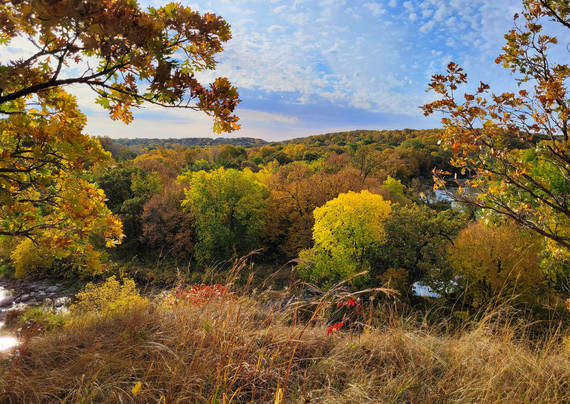 Yellow Medicine River valley in all its colorful glory. PHOTO: A. Steinbach, 10/3/22
Upper Sioux Agency State Park contains the site of the Upper Sioux or Yellow Medicine Agency. Historically, agencies were distribution points for cash annuities, food and supplies promised in treaties. The park was established in 1963 to preserve and interpret the remains of the old site.
The boundaries of this park are set on the north by the Minnesota River and on the south by the Yellow Medicine River. The diverse landscape includes open prairie knolls, bluffs and cool, wooded slopes. Go up the Valley Edge Trail for stunning vistas of both river valleys, on horseback or by foot — hikers looking for a challenge will appreciate the strenuous hills. You can also pack a picnic and just relax by the river confluence or at the day-use area.
The journey will be as worthy as the destination: Follow the Minnesota River Valley Scenic Byway for a great fall color driving tour of west central Minnesota! Whatever your route, make sure to check for the detour once you're at the park.
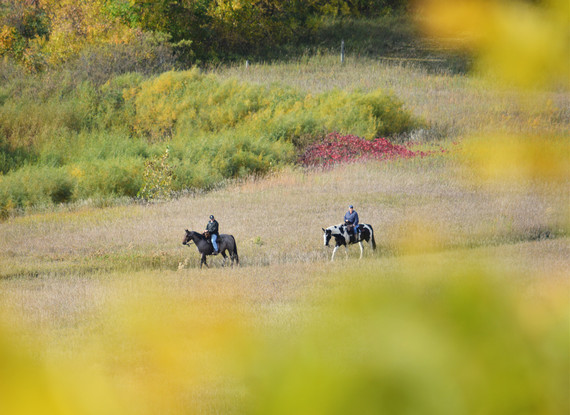 Trails at this park are shared use for hiking and horseback riding. Riders, remember to get your horse pass! Hikers, yield to horses on trails. PHOTO: A. Steinbach, 10/3/22
|
|

In the fall, woodchucks are most active in the afternoons when they’re searching for food to prepare for winter hibernation.
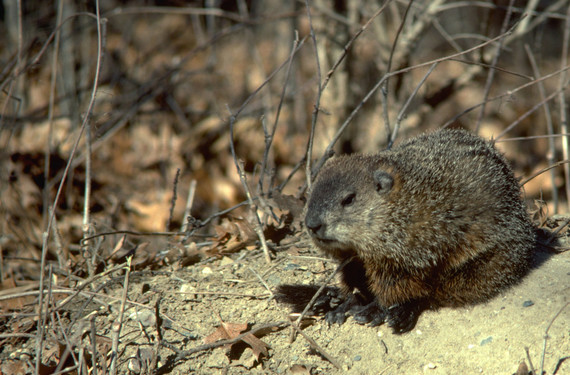 Like their cousin the squirrel, woodchucks — also known as ground hogs — are common in Minnesota.
Exactly what do woodchucks chuck? Soil, by the cubic foot. When these animals burrow, it is nothing for a single woodchuck to displace 700 pounds of soil in a day. These burrows serve as protection from predators, places to breed and a spot to hibernate.
Woodchucks go into hibernation in late October or early November. To prepare for winter, they spend the fall feeding on protein-rich foods like plants, berries, insects, and tree bark, to build fat reserves to survive during winter hibernation.
|
|

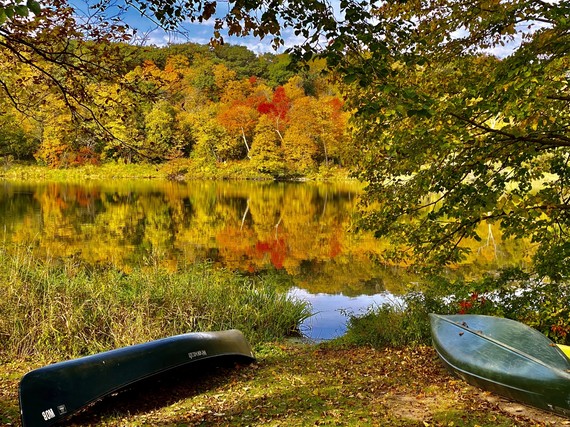
📷 Bruce F. captured this fantastic postcard of Lake Alice at William O'Brien State Park on 10/2/22.
The park is alive with color right now. Enjoy the St. Croix River from shore or venture for a little paddle. Unseasonably warm temperatures mean that many bodies of water have not cooled down yet. Conditions can change quickly, so paddlers should always check the water temperature and dress for immersion.
|
|
Share your favorite Minnesota state park, trail and recreation area fall photos and stories. Upload your photo to our website or tag us on Instagram @mnstateparksandtrails and use #YourMNFallFavorites for a chance to be featured in the weekly Fall Color Update and our social channels. |
|
|
|
|