|
|
|
March 17, 2022
Stay informed! Here’s a weekly summary of upcoming wildlife and habitat management activities and ways you can discover, explore and experience Minnesota’s outdoors.
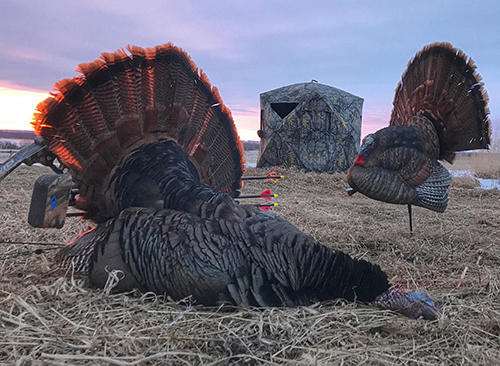
Buy your turkey hunting license
Turkey season is around the corner! Hunting begins Wednesday, April 13, for “A” season firearms hunters, youth hunters and archers. You can purchase your license now online, by phone at 888-665-4236 or in person wherever hunting and fishing licenses are sold.
More details: Find season regulations
|
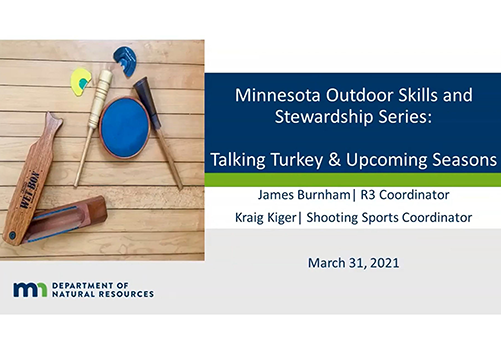
Watch this recorded turkey hunting webinar
Interested in learning how to hunt turkeys? Check out our learn-to-hunt webinars! They can show you how to get certified in firearms safety and get out in the springtime to experience the thrill of calling in a tom turkey. The webinars are recorded and posted on the DNR website.
Spring turkey hunting opportunities are available in Minnesota from Wednesday, April 13, through Tuesday, May 31.
More details: Watch a turkey hunting webinar
|
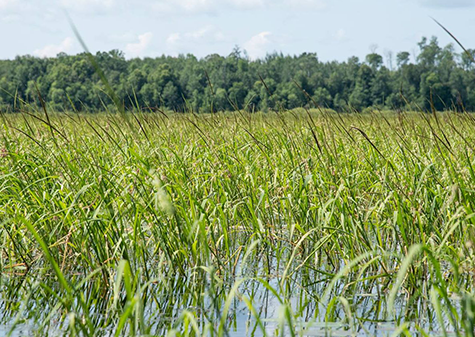
DNR hunting, fishing skills webinars continue this spring
Want to keep learning new outdoor skills? We’ve got a new lineup of webinars this spring including topics like creating sharp-tailed grouse habitat, wild rice management, native plants and pollinators, and lots of fishing topics.
The DNR started the Minnesota Outdoor Skills and Stewardship Series in March 2021 to share how-to knowledge relevant to outdoor seasons and activities. Webinars are at noon on Wednesdays, last less than an hour, and are recorded and made available online. The webinars are free, but participants must pre-register.
More details: Register for the webinars
|
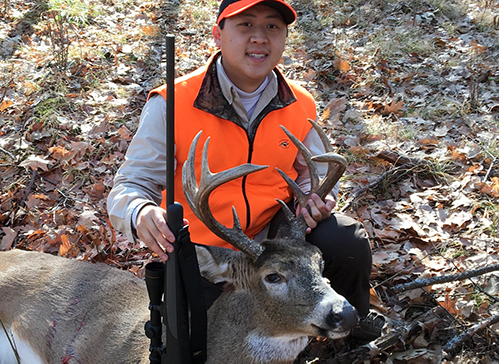
How did you start hunting?
Steven Yang remembers family outings when he was a child, tagging along with his parents when they went squirrel hunting, and fishing with family members. Since then, fishing and hunting have become his favorite hobbies.
“Now I do more than just observe, spot, and retrieve squirrels: I started squirrel hunting in my late teens and deer hunting just a few years ago.” Read more of Yang’s story.
Do you love being outdoors? Tell us your #MyMNOutdoorAdventure story!
More details: Read other stories and send us yours
|
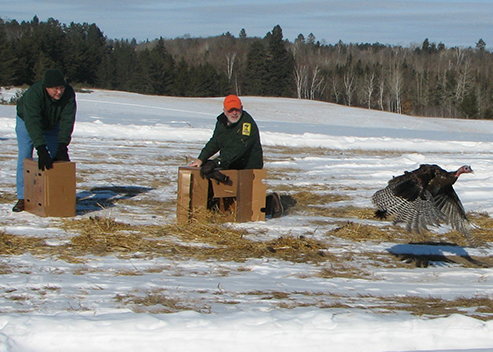
Partnering on turkey habitat projects in Hubbard County
Wild turkeys and a variety of wildlife species in Hubbard County are benefiting from a partnership between the DNR and the Park Rapids Tall Pine Toms chapter of the National Wild Turkey Federation.
For the past two years, the Tall Pine Toms chapter conducted habitat enhancement projects on 796 acres of state forest land in the Park Rapids area. The projects were designed to improve both current and future turkey habitat, while also benefiting a variety of wildlife species, such as deer, bear, squirrels, grouse and songbirds.
Wild turkey restoration is a conservation success story and the expansion of their populations in Minnesota has resulted in turkey viewing and hunting opportunities throughout much of the state.
More details: Read about this and other turkey habitat projects
About the photo: Beginning in the 1960s through 2008, the DNR released wild turkeys throughout much of Minnesota. Initial releases used live-trapped turkeys from Missouri, New York, Illinois and other states; later, thousands of birds were translocated within Minnesota.
|
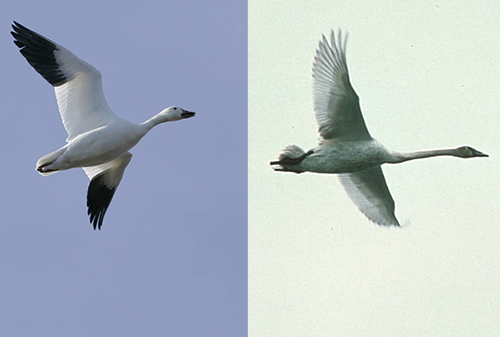
Reminder on how to identify snow geese and swans
The light goose conservation order is underway and geese will be arriving as we get to spring. Are you comfortable identifying lesser snow geese? The most commonly confused waterfowl with light geese are swans. Swans are protected in Minnesota, so it’s important to know the difference on the wing. Trumpeter and tundra swans are both far larger than lesser snow geese. These geese have distinctive black tipped wings and pink bills. By comparison, trumpeter and tundra swans have pure white wings without black markings and black bills.
More details: Learn about the light goose conservation order
Photos courtesy of the U.S. Fish and Wildlife Service
|
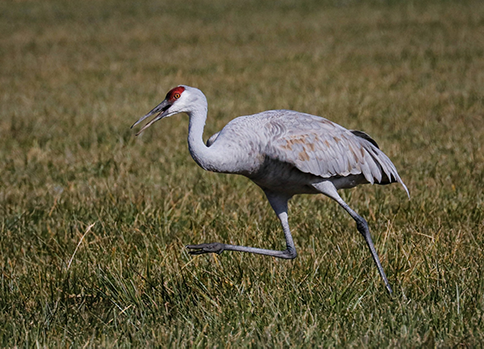
Sandhill cranes return soon
Sandhill cranes begin returning to Minnesota in late March and early April to breed. Adults have a distinctive bowing courtship ritual. Two eggs are laid in a nest built of grasses and other plants either on the ground or in a small mound in shallow water.
More details: Learn more about these birds and watch for them at a wildlife management area
Photo courtesy of the U.S. Fish and Wildlife Service
|
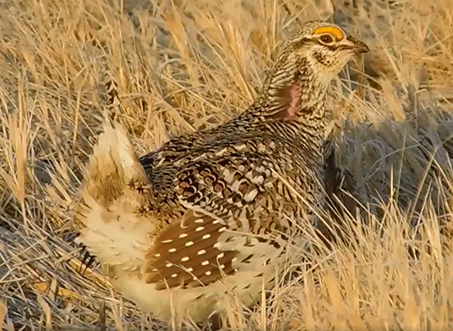
Ready for the dance!
Have you seen the spectacular dance moves of the sharp-tailed grouse? Check it out!
In spring, male sharp-tailed grouse return to their dancing grounds, called leks, to put on an elaborate courtship display. Leks are flat areas with short vegetation, allowing optimal viewing. Male birds return year after year — up to 25 to 30 in some places — to show off their dancing prowess to attract females.
Once found throughout much of Minnesota, the “sharptail” population is now restricted to the northwest and east-central parts of the state. These birds require a minimum of 1 to 3 square miles of open brushy grassland areas, called brushlands, to thrive. The loss of open landscapes due to lack of vegetation disturbance is the main threat to sharptail survival.
In Minnesota, DNR managers work to disturb areas that were historically kept open by fire. Prescribed fire and brush mowing are common tools used to manage these habitats. Continued habitat work, conducted on thousands of acres of public land, is critical to the survival of not only the sharptail, but all wildlife species that depend on these habitats to thrive.
More details: Watch them dance and check out the Minnesota Sharp-Tailed Grouse Society
|
|
|
|
|
Get hunting information
Find hunting and trapping regulations, harvest registration, how to contact a conservation officer and information about pursuing a variety of species at mndnr.gov/hunting. New to hunting? Check out the DNR learn to hunt page.
|
|