|
|
|
June 24, 2021
Stay informed! Here’s a summary of upcoming fisheries and habitat management activities and ways you can discover, explore and experience Minnesota’s outdoors.
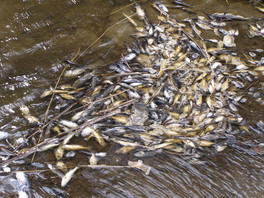
Hot weather likely contributing to fish die-offs in lakes
Spring and summer fish die-offs happen occasionally, and we are getting widespread reports of dead fish following the recent prolonged stretch of hot weather.
Please report fish die-offs by calling the state duty officer at 651‐649‐5451 or 800‐422‐0798 if you encounter a large group of dead fish in a lake or a stream (the state duty officer is available 24 hours per day, seven days a week). Calling in a report provides a single point of contact for the incident. An early report also allows timely water sampling or other response actions, if needed. It’s especially helpful to know what fish types and sizes people see in a fish die-off.
In mid-spring and summer, fish die-offs are often the result of warming water and opportunistic infections that spread in fish populations that are already stressed after the spawning season. Species commonly observed in these die-offs include sunfish, crappies and bullheads, and, occasionally, largemouth bass and northern pike.
More details: DNR fish die off page
|
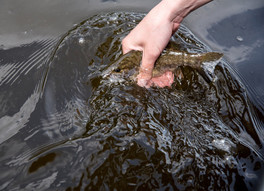
Shore fishing webinar around the corner in July
Our summer series of outdoor skills webinars are rapidly turning toward hunting-related topics. But we have another fishing webinar coming up after the holiday. Shore Fishing 102: Down by the River is at noon Wednesday, July 7, and will cover river fishing tactics and strategies to help you catch more fish from the river bank.
The webinars are part of the Minnesota Outdoor Skills and Stewardship Series that aims to give participants quick, relevant information on upcoming seasons and events, and skills to help enjoy these opportunities. Registration is free.
More details: DNR outdoor skills webinar page
|

Mille Lacs walleye fishing closure is July 1-15
Walleye anglers on Mille Lacs Lake are reminded that a two-week walleye fishing closure — implemented to reduce hooking mortality, which is the percentage of fish that die after being caught and released — will be in place from Thursday, July 1, through Thursday, July 15. Currently, anglers can catch and release walleye on Mille Lacs Lake in a catch-and-release season that lasts through Wednesday, June 30.
During the walleye closure, angling is allowed for all other species. Catch-and-release walleye fishing will resume on Friday, July 16, and continue through Wednesday, Sept. 15. The limit of one walleye from 21-23 inches, or one over 28 inches, is scheduled to resume Thursday, Sept. 16, through Tuesday, Nov. 30.
Fishing hours on Mille Lacs Lake are 6 a.m. to 10 p.m. for all species. Beginning Saturday, June 5, muskellunge and northern pike anglers using artificial lures or sucker minnows longer than 8 inches can fish after 10 p.m. During the late season, beginning on Sept. 16, anglers will also be allowed to fish from 6 a.m. to midnight, except muskellunge and northern pike anglers will be allowed to fish during the night closure.
More details: Mille Lacs Lake fishing regulations page
|
Get your fishing questions answered on the DNR website
You can get fishing questions answered at the DNR’s fishing webpage. The page answers questions like: What species can I fish for? What kind of bait is legal? What kind of fish can I keep? It also is a mobile-friendly destination for information on when, where and how to fish. You can find links to LakeFinder, which provides maps and detailed information on lakes throughout the state, and the new StreamFinder tool that provides a description, species list, regulations and access information for trout streams throughout Minnesota.
On the page you’ll also find the Minnesota fishing regulations and information on aquatic invasive species and how to contact a DNR conservation officer.
More details: DNR fishing page
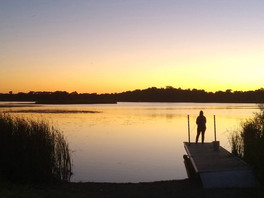
Photo of an angler fishing at dusk on Little Mary Lake, by A. Michalak
|
|
|
|
|
Learn to fish
You can find the information you need about learning to fish at the DNR learn-to-fish page! Check it out at mndnr.gov/GoFishing.
|
|