|
|
|
Oct. 28, 2020
Stay informed! Here’s a weekly summary of upcoming wildlife and habitat management activities and ways you can discover, explore and experience Minnesota’s outdoors.
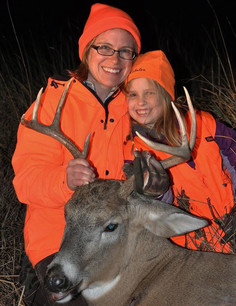
Getting ready for deer season
Firearms deer season is around the corner!
Will you be ready when the season opens a half an hour before sunrise on Saturday, Nov. 7?
Be sure to make a deer hunting plan this year — not only to buy your license, but also to figure out where to hunt, whether you’ll be providing a sample for chronic wasting disease testing, and how you’ll process your deer.
And we hope you have a fun, memorable hunt! Thank you for doing your part to keep Minnesota's deer hunting tradition strong.
|
Make safety the first priority
Hunters should follow the basic rules of safe firearms handling: Treat every firearm as if it is loaded by keeping your finger off the trigger; always control the muzzle of the firearm; and be sure of the target and what is beyond it.
Tree stand accidents are the leading cause of injury to hunters, so it’s always important to wear a safety harness and follow other safety guidelines when using a stand.
|
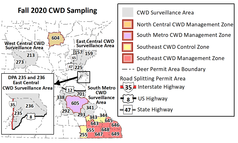
CWD management continues
The DNR continues its aggressive management of chronic wasting disease by reducing deer densities, implementing feeding and attractant bans to reduce contact between deer, and restricting carcass movement.
The DNR created additional surveillance areas because CWD was detected in both wild and captive deer in new areas last year. As part of the DNR's COVID-19 response, CWD testing will be voluntary for all disease zones and surveillance areas. Hunters who harvest a deer in a disease zone are strongly encouraged to submit a sample. More details are available on the CWD webpage.
|
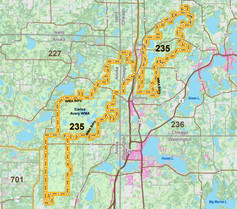
DNR maps available for hunters
Deer hunters can access a variety of online maps from the DNR including the interactive deer permit area map that shows area boundaries, and public land locations. Hunters can click on “detail report” to find harvest history, permit area designation, winter severity history and other information.
By clicking “detail map” users can view and download a PDF map of the permit area. On a mobile device, the PDF maps can be used with the Avenza Maps app as a geospatial PDF (GeoPDF). GeoPDFs display a current location like Google Maps, but the user does not need to be connected to the internet or have cell service while using the maps.
Hunters can also find online maps of public land in Minnesota, including the state’s 1.3 million acres of land in wildlife management areas. One way to search for WMAs is using the WMA Finder. Additionally, the DNR provides background maps for GPS units that depict WMA boundaries and parking areas.
|

Get hunting questions answered
Hunters can contact the DNR Information Center to get their deer hunting questions answered. Information consultants are available by phone at 888-646-6367 or email at info.dnr@state.mn.us. For immediate information, call instead of emailing, or check the DNR deer hunting page for information. Answers to common hunting questions are also available online.
Information Center business hours are 8 a.m. to 6 p.m. Monday through Friday and Saturday 8 a.m. to 4:30 p.m.
To report a violation in progress, call the Turn In Poachers (TIP) Line at 800-652-9093.
|
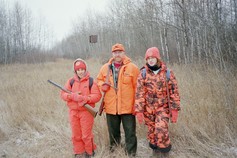
Deer season webinar is Nov. 2
Anyone who has deer hunting questions may register and participate in a virtual “First Day of Deer Camp” conversation from noon-1 p.m. Monday, Nov. 2. During the webinar, a variety of DNR staff who specialize in education, wildlife and enforcement will answer questions to help hunters prepare for firearms deer season. Registration for the webinar is required and available online.
|
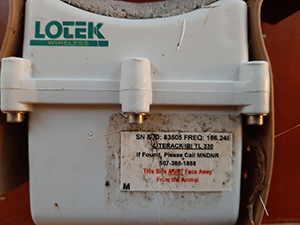
What to do with a collared deer
People in southeastern Minnesota who either harvest a deer or discover a dead deer with a GPS collar on its neck should report it and the collar’s serial number by calling 507-380-1858 or emailing sedeer.dnr@state.mn.us. The report will provide valuable information to DNR researchers. For more information on the study, and information on how to get involved, visit the DNR deer movement study webpage.
|
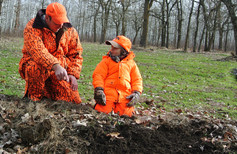
We want to see your photos!
Share your deer camp and deer hunting photos with us, so we can share them back with all of you including on social media and in email updates!
You can upload your photos on the DNR website.
|
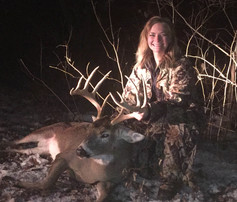
Deer hunters: Share what you see
Deer hunters, an online questionnaire will allow you to report what wildlife you see during your hunts this year. Please consider participating! We’ll compare the observations to DNR population estimates that are a baseline for managing wildlife.
You can enter information about wildlife you see each day of hunting including deer, turkeys, bears, fishers and other species, plus specific information about any deer you harvest, including antler size. Reports are valuable even if you don’t see any deer during a hunt.
|
|
|
|
|
Find hunting information
You can find the information you need about hunting and trapping regulations, harvest registration, contacting a conservation officer and pursuing a variety of species on the DNR hunting page at mndnr.gov/hunting.
|
|