|
|
|
Nov. 26, 2019
In this issue, find out about special hunts in December, get an update on one of our white-tailed deer studies, and check out your deer camp photo submissions!
Special hunts in SE Minnesota in December
Want to get out in the field again before the end of the year? Two special hunts are planned in southeast Minnesota over two weekends next month.
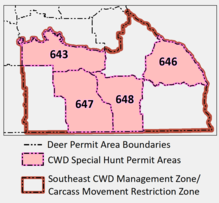
Residents and nonresidents can participate in the hunts from Friday, Dec. 20, through Sunday, Dec. 22, and Friday, Dec. 27, through Sunday, Dec. 29, in deer permit areas 643, 646, 647 and 648, which are the only permit areas where chronic wasting disease has been found to be persistent in wild deer. Additional permit areas (and their included public hunting lands) may be added to this hunt, as pending CWD sampling results come in. Any added areas will be noted on the CWD special hunt webpage by Nov. 28, 2019. Check that page for all special hunt rules and updates as the dates near.
|
From the field: research updates
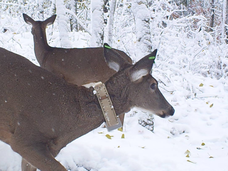
The DNR’s Forest Wildlife Populations and Research group is in the midst of a study that uses GPS collars, remote-sensing technology and geographic information system technology to learn more about how white-tailed deer use their habitat. In particular, it examines what types of cover a deer may choose, based on how many deer are in the area or how severe the winter is. Study results will inform how the DNR will improve habitat to support population goals for hunting, and wildlife viewing.
The team began its study in 2017, selecting two sites for study that differed in forest composition, winter severity and deer densities. Importantly, the primary goal of the first year was to ensure that the GPS collars would work well in a variety of habitat conditions by testing them on 20 female deer (10 at each site). The team monitors the deer’s nutrition, survival and causes of mortality, as well as their home ranges and habitat use. In addition to seeing how deer use their habitat at the stand level (where a “stand” is an area of trees that share similar characteristics, and can include cover type, like dense conifer cover or a forage opening), the study also provides insight on a habitat’s quality by looking at its association with deer nutrition levels and survival rates.
This past February, the team fitted an additional 20 female deer at each site with GPS collars. This winter they will deploy 10 more collars at each site. After taking into account the collared deer that did not survive previous winters (primarily due to wolf predation), we will be gathering information from about 50 deer total (25 at each site) on their habitat use this winter.
Stay tuned to this newsletter for more updates as the study continues.
|
Check out the deer camp photos so far
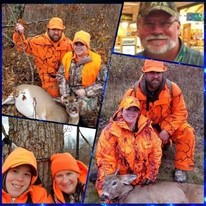
Deer camp memories made! We love seeing your photos and stories from deer season, and thank you to all those who contributed to our 2019 album on Facebook.
Hunting continues in some areas, and you can still send us photos from deer season this year. We’ll include more as deer seasons wrap up.
To be part of the album, send us a direct message with your favorite photo from your time in the woods or the field, and include your name and a description of the photo.
Thank you to Michelle Schroeder for these photos of her time in the DNR learn to hunt program.
|
|
|
|
|
Get complete CWD information
Deer hunters, please regularly check the DNR website at mndnr.gov/cwd for the most recent information.
You are receiving this email because you subscribed to Deer Notes on the DNR website. You can manage your subscriptions here.
|
|