Sartell Pool-Little Rock Lake Drawdown 2019 Update

Having trouble viewing this email? View it as a Web page.

minnesota department of natural resources

Sartell Pool-Little Rock Lake Drawdown Update

November 20, 2019

The big question: Did the drawdown work? 

Now that the water has hardened into ice, we thought it might be good to reflect and let people know about the initial results of the drawdown on the Sartell pool and Little Rock Lake during August and September 2019.

The big question: Did the drawdown work? Good question, and one we won’t fully know until the middle of next summer.


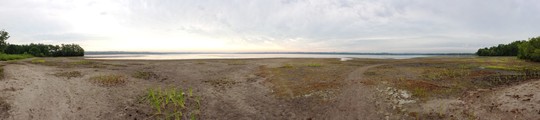
- Panoramic picture showing extent of drawdown flats on the north end of Little Rock Lake at Benton Beach and the extent of native plants installed.

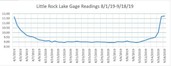
Little Rock Lake Gage readings August-September 2019

Some details you may not be aware of: 

The water levels on the river dropped three feet within 30 hours after Eagle Creek Renewable Energy started dropping them on August 1. Lake levels never completely dropped below 2.72 feet from normal pool elevation. By 31 days in from the start of the drawdown the lake had reached its lowest level according to the gage reader on the north end of the lake (8.93 ft.). We still “exchanged” approximately 1/3 of the surface area of the lake. Many flats, backwater areas and channels were seen for the first time in over 100 years! Levels were not very consistent in the lake as each precipitation event caused a slight bounce and then the lake would drain again over a period of a few days.


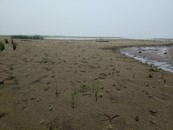
3 Native Emergent plant survival and new growth observed on the north end of Little Rock Lake, September 2019.

More than 45,000 Native Plants Installed

More than 45,000 native emergent plants were installed in over 50 locations around the lake, all in an effort to help Mother Nature regain the lost habitat and nutrient processing capabilities that the lake once had. Quite a few native plants did start sprouting on their own, but the amount of growth was not what was expected. Looking back on the weather for the month of August, more than 3.5 inches of rain fell and it was cooler than average for the same period. It makes some sense that plant growth was not as vigorous as expected.


Refill happened faster than expected

By September 14, a considerable amount of rain had fallen in the Upper Mississippi River Watershed and the river was gaining flow and elevation. The river returned to full pool by noon on Sunday, September 15. The lake did take a few more days to refill to full pool (September 18th), however, it was not without unprecedented backflow through the Harris Channel, from the Mississippi River.

Initial water quality readings did show a significant improvement compared to conditions before the drawdown. Water clarity had improved from less than one foot to five feet at one sampling station. Phosphorus levels were variable during the drawdown. Installed plant growth and survival was good as some bulrush had developed seed heads in the short time in the nutrient rich soils of the lake bed.


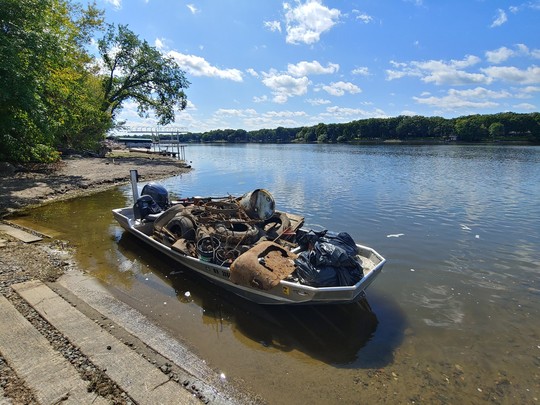
Boat load of trash and metal items collected from the Mississippi River during the drawdown.

Outpouring of volunteer efforts and unique finds

Considerable volunteer efforts were made to clean up shorelines that were exposed. More than a ton of metal objects were collected from the lower portion of the Mississippi River alone! Some unique objects found include a headstone originally from Fosston, MN -- roughly 200 miles from Little Rock Lake (Story on KSTP-TV https://kstp.com/news/headstone-found-in-central-minnesota-little-rock-lake/5489779/); two different snowmobile frames, metal barrels, various railroad equipment and parts, wedding rings, watches, graduation rings, old beer cans, farm implement parts, bed frames, dock parts, anchors, chunks of concrete and of course, tires. Dumpsters were made available at several locations in the area, for the first ten days of the drawdown, to help people dispose of all the found items.


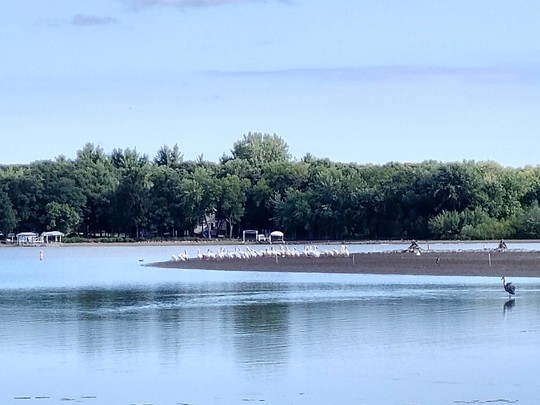
Pelicans and great blue herons hunting along the mud flats of Little Rock Lake.

An incredible level of exploration and interest in the drawdown was noticed, as vehicles paraded by near shore park locations, Gordon’s bridge and various public access areas with an ample view of the Mississippi River and Little Rock Lake. People were seen using metal detectors in some of the public areas with exposed sand and mud flats, others walked, kayaked and canoed to see the unique bird life that visited the lake during the drawdown. However, overall boating traffic was pretty minimal during the drawdown. Both Stearns and Benton County Sheriff’s offices issued no wake restrictions for the entire project area. The intent was primarily for safety, with an additional benefit of minimized erosion. Reports from a few anglers suggest fishing opportunity was good with the lower water, however, weather and flow certainly had some influence on success.
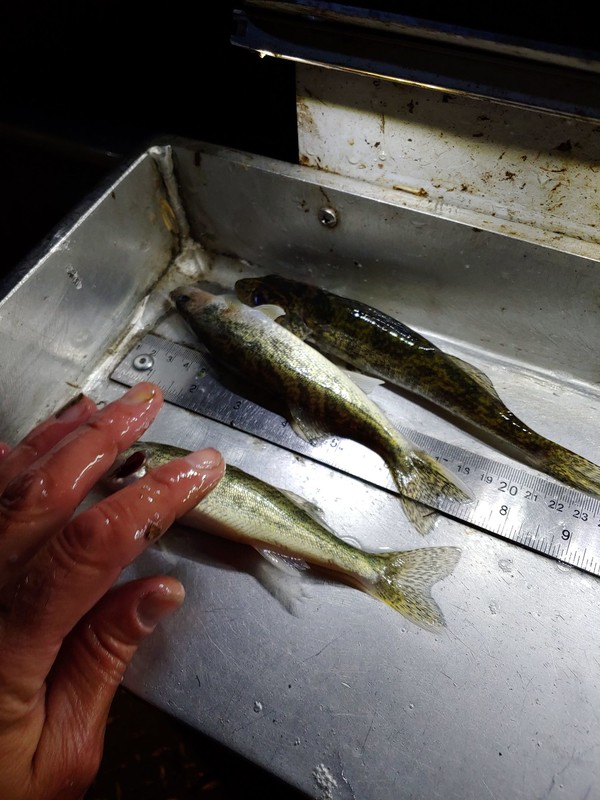

Walleye fingerlings sampled during night electrofishing on Little Rock Lake after reaching full pool elevation.

Fisheries sampling

Fisheries sampling just after the lake returned to full pool showed some encouraging results. Walleye, bass, bluegill, perch, northern pike and black crappie were all observed while electrofishing both during daytime hours and at night. Natural reproduction of walleye was excellent with more than 100 fingerlings per hour (young walleye from the 2019 spawning that reached approximately eight inches by September)

Moving forward

As mentioned earlier, the true success of the project will be measured next summer. We should expect to see additional submerged plant growth in the lake and ideally, at least 50 percent more clear water and at least a 30 percent reduction in phosphorus levels. Natural resources are rarely responsive as quickly as we expect or like, and the Sartell Pool-Little Rock Lake drawdown of 2019, is no exception. The adage that “patience is a virtue” certainly holds true in this case. After the summer of 2020, we intend to form a working group with area residents and stakeholders to develop a management document, which will determine any future operations of the pool and lake. We need the community to participate regularly in the management of this 3,600 acre system, so close to the St. Cloud area. Ultimately, the goal of the project is to improve conditions now, so future generations have the same or better opportunities than we have had to enjoy our natural resources.

Hundreds of other photos, some drone videos and time lapse pictures from various contributors can be found on the Google photo album.

Wishing all the best in the upcoming holidays for you and your families.

Questions, more information, or comments? Please contact:

Eric Altena|Area Fisheries Manager

Little Falls Area Fisheries Office

320-232-1069

Eric.altena@state.mn.us

Sartell Pool-Little Rock Lake Drawdown Project

The Sartell Pool-Little Rock Lake Drawdown Project was initiated to try and address water quality, habitat and erosion concerns around the entire 3,600 acre reservoir.