|
Minnesota is one step closer to helping people who are incarcerated access Medicaid for behavioral health services.
In September, the federal Centers for Medicare and Medicaid Services approved Minnesota’s waiver request for the 1115 Reentry Demonstration. Through this demonstration, state Medicaid programs can cover certain behavioral health services and medical care for chronic health conditions for incarcerated people for up to 60 days before release.
The Minnesota Department of Human Services is working closely with the Minnesota Department of Corrections and other partners – including correctional staff and justice-involved families – to finalize an implementation plan for this new initiative. That plan is due to CMS on Jan. 29, 2027. Pending CMS’ approval of the plan, people incarcerated at the sites selected for the first phase could begin receiving pre-release services in early 2028.
Pre-release services will include the assessment and treatment of substance use disorder, mental health and complex medical conditions. Following release, individuals will receive the full MA benefit package including coverage for carceral case management for six months post-release.
The initiative’s goals are to:
- Reduce overdose deaths
- Improve public safety
- Increase the continued use of needed behavioral health services post-release.
Learn more about the initiative and sign up for email updates at mn.gov/dhs/reentry-waiver.
Thursday, Oct. 29, two Medicaid service providers – Iska, Inc. in St. Louis Park and Bright Horizon Therapy Center in Edina – were searched by state and federal agencies due to allegations of fraud. The Minnesota Medicaid Fraud Control Unit, federal Department of Health and Human Services Office of Inspector General, and FBI partnered to execute search warrants at both locations, which provide Early Intensive Developmental and Behavioral Intervention (EIDBI) and other Medicaid-funded services.
DHS leadership were tracking these events and issued this statement: “Collaboration between local, state and federal authorities is essential to fighting fraud and stopping criminal schemes. When we see evidence of fraud, we shut off money and refer suspected criminals to law enforcement. We are thankful to see criminals being held accountable."
DHS is not a law enforcement agency but supports law enforcement investigations.
- Since January 2025, DHS has prioritized responding to over 140 federal grand jury subpoenas. This involves providing data, documents, and analysis relevant to federal law enforcement investigations.
- DHS meets with federal law enforcement officials to educate them about Minnesota’s Medicaid program and DHS testifies when criminals go to trial.
- In the past 10 months, DHS has stopped payment and referred approximately 600 providers to law enforcement for criminal investigation.
Implemented anti-fraud measures designed to overhaul regulatory and enforcement processes for EIDBI
- In the Spring of 2025, DHS changed the designation of EIDBI services from medium to high risk.
- In November 2025, DHS issued an EIDBI enrollment moratorium.
- In December 2025, DHS implemented enhanced prepayment review of all fee-for-service claims of high-risk services, including EIDBI claims.
- In January 2026, the EIDBI provisional licensure application launched.
DHS will submit recommendations for full licensing standards prior to the 2027 session.
Off-cycle provider revalidation (Minnesota Revalidate 2026)
EIDBI is among the 13 high-risk provider types that completed off-cycle revalidation. Providers were required to complete enrollment and revalidation paperwork and background studies.
DHS conducted unannounced onsite screening visits at each provider location. Providers that did not complete the revalidation process will be terminated from Medicaid.
Targeted EIDBI provider audits
In January 2026, DHS began contracting with private sector healthcare auditors to conduct targeted audits of EIDBI billing outliers. Outlier audits are focused on businesses with billing patterns that significantly differ from norms.
DHS staff meets with auditors who compare EIDBI treatment records with billing records for signs of potential fraud or policy violations.
More info
Find more information mn.gov/dhs/program-integrityabout our recent oversight actions at mn.gov/dhs/program-integrity.
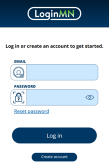
Minnesotans who are seeking free or low-cost public health coverage — Medical Assistance or MinnesotaCare — can now apply for and manage their coverage directly through the department's website.
The required steps differ based on individual circumstances. In most cases a LoginMN account is required.
Current enrollees need to create a DHS health care account using LoginMN to access their information online. Enrollees can no longer access their online health care accounts through MNsure.
|
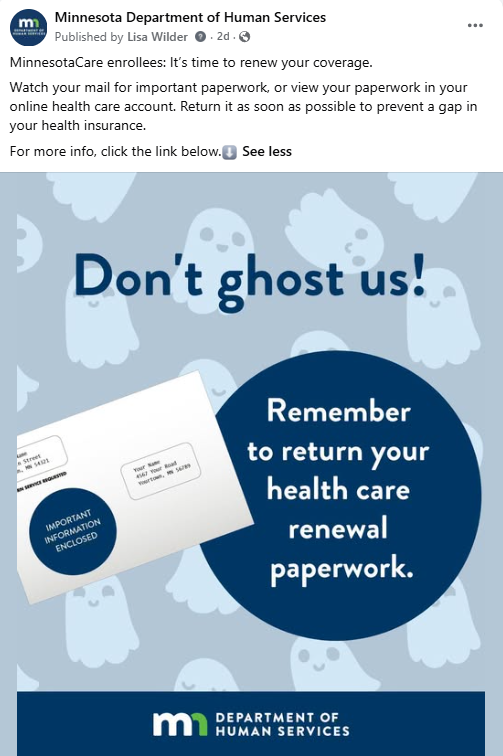 Find this post on Instagram, Facebook and X.
>> Follow us on Instagram, Facebook and X (formerly Twitter) for timely updates on DHS news and events.
>> For announcements of hiring events, job postings, internships and more, follow us on LinkedIn and the DHS Careers Facebook page.
For accessible formats of this publication, write to dhs.communications@state.mn.us, or call 651-431-2000 or use your preferred relay service.
|