|
People with Medical Assistance can find out now if they will need to meet 2027 federal work reporting requirements passed in the One Big Beautiful Bill Act with a new tool from the Minnesota Department of Human Services. The tool is available through Sept. 30, one month longer than the original cutoff date.
Starting Jan. 1, 2027, some adults may need to meet new work requirements to get or keep Medical Assistance health insurance. This change generally applies to adults who do not have dependent children, are not pregnant, are not eligible for Medicare, and do not qualify for Medical Assistance based on a disability. Medical Assistance is Minnesota’s Medicaid program.
Work requirements will be verified when Minnesotans apply for Medical Assistance and when they renew their coverage. Renewals will now occur twice a year – or every six months – instead of once a year for these adults.
Medical Assistance enrollees can prepare now for their 2027 renewal by reporting how they expect to meet an exemption from work requirements or how they will complete a qualifying activity. Many people may already meet the requirement or qualify for an exemption.
“While most Medicaid recipients already work or meet the requirements in other ways, we are encouraging people to prepare now for the challenges of more paperwork. We want all eligible Minnesotans to keep their coverage,” said Temporary Commissioner John Connolly.
Visit mn.gov/dhs/work-requirements to find:
- Qualifying activities that meet work requirements
- Qualifying exemptions from work requirements
- A short video explaining how to use the Renewal Lookup tool to prepare for work requirement or exemption reporting.
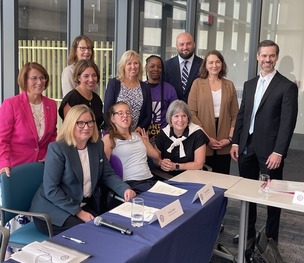 Temporary Commissioner John Connolly participated in a roundtable discussion on Medicaid with state leaders, health care providers and community members on Aug. 26 at Gillette Children’s St. Paul campus.
He spoke about complexities recently injected into the implementation of new federal work requirements taking effect Jan. 1, 2027 that will put coverage of otherwise eligible Minnesotans at risk.
The federal Centers for Medicare & Medicaid Services released an interim final rule in June providing guidance to states on the new requirements. One key issue is the creation of a more restrictive definition of medical frailty, which requires that an individual’s condition significantly impair their ability to carry out work activities. However, the rule provides no guidance on what constitutes sufficient evidence.
Connolly said adding this complexity to the process creates new hurdles for applicants, enrollees and local servicing agencies trying to navigate the system.
"Medicaid policy can look very different when you're examining it from a federal policy document versus when you're trying to implement it for the millions of people nationwide who depend on it," Connolly said.
"Our goal in Minnesota is to ensure the integrity of the Medicaid program and protect access for people who are eligible. It will be important for us to work together as these new rules go into place, to ensure people continue receiving the health care they need."
Traditional Healing is an important component of health and well-being for many American Indian people and communities.
For years, Tribal and Urban Indian partners have advocated for state and federal policies that recognize and support these culturally grounded practices.
On Aug. 14, Minnesota took an important step toward that goal by submitting a request to the federal government to expand Medicaid coverage for Traditional Healing for American Indian communities.
The request is titled “Mino Bimaadiziwin-Wičhózani,” generally translated means wellness and good health in the Ojibwe (Chippewa) and Dakota (Sioux) languages, respectively.
The 2025 Minnesota Legislature authorized the department to apply for a Section 1115 Medicaid demonstration waiver through the federal Centers for Medicare & Medicaid Service to cover Traditional Healing as a Medical Assistance service.
While awaiting federal approval, we are preparing the systems, policies, processes and partnerships needed to support implementation.
We are committed to addressing health disparities and improving access to services that are culturally responsive and meaningful to American Indian communities.
Learn more about the waiver process, and what this waiver could mean for American Indian communities in Minnesota, in a message from our Behavioral Health Administration.
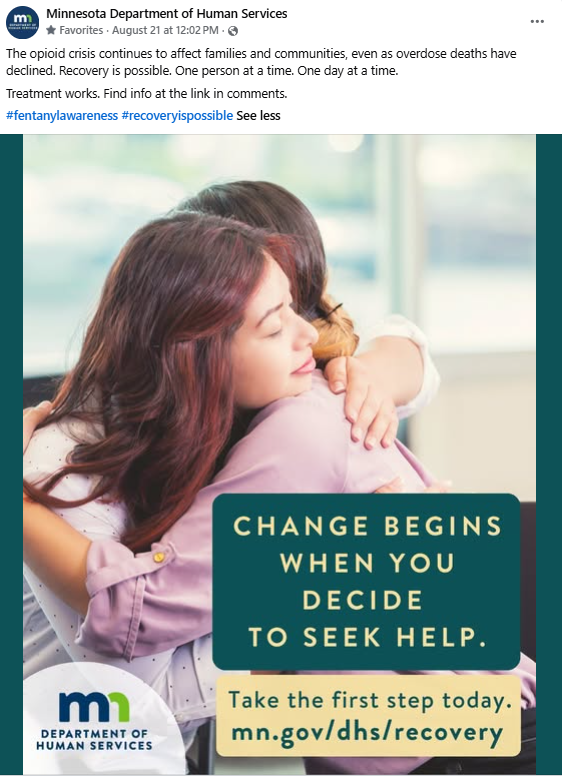 Find this post on Instagram, Facebook and X.
>> Follow us on Instagram, Facebook and X (formerly Twitter) for timely updates on DHS news and events.
>> For announcements of hiring events, job postings, internships and more, follow us on LinkedIn and the DHS Careers Facebook page.
For accessible formats of this publication, write to dhs.communications@state.mn.us, or call 651-431-2000 or use your preferred relay service.
|