News from DHS for July 2026

Minnesota Department of Human Services logo

NEWS FROM DHS

July 2026

News from DHS archive

In this issue:


Pause on new Medicaid providers in 12 high-risk services extended

Minnesota is extending a pause on enrolling new Medicaid providers in 12 high-risk services for at least another six months.

The freeze on new providers began on Jan. 30, 2026, in coordination with the Department of Human Services beginning an effort to revalidate each of the nearly 5,600 providers in those programs. The revalidation is part of a corrective action plan federal officials have asked the state to complete or risk losing over $2 billion in Medicaid funding.  

​“We still have a lot of work to do to verify the providers we have before we begin accepting new applications,” said Temporary Commissioner John Connolly.

“We’re working closely with providers, counties and managed care organizations to make sure people who rely on Medicaid services in these areas have access to care. If necessary, we can make exceptions to the moratorium.” 

More details are in a department news release.


Public comment period for EIDBI licensing standards ends Aug. 31

Stock photo

We're seeking public comments on draft comprehensive licensing standards for Early Intensive Developmental and Behavioral Intervention (EIDBI) providers serving people under age 21 with autism spectrum disorder and related conditions.

When finalized, these standards will be the requirements provider agencies must meet to become and stay licensed. They will identify and help protect the health, rights and safety of children served by EIDBI programs, and set minimum care and recordkeeping requirements.

Feedback from providers, families, advocates and community members is important. 

Visit our online hub at mn.gov/dhs/EIDBIpubliccomment to:

  • Read the draft standards
  • Register to attend an engagement session
  • Provide feedback using our online form.

We will use your feedback to finalize recommended standards for the Minnesota Legislature by January 2027.


Take survey about the legal needs of older Minnesotans

Stock photo of elder couple meeting with advisor

The Legal Needs Survey of Older Minnesotans is a statewide survey asking older Minnesotans about legal needs and barriers to accessing legal services.

Answering the survey will help the Minnesota Board on Aging improve access to legal service and education for Minnesotans 60+ and their communities. 

  • You can take this survey if you’re 60 or older and live in Minnesota, or if you provide help to a family member, friend or neighbor who is 60 or older.  
  • The survey is optional and takes about 10 minutes. 
  • Your answers are private and will not be linked to your name. 

Complete the online survey in English or Spanish by Aug. 31

A final report with findings will be shared in spring 2027.


In social media: Follow us for important updates

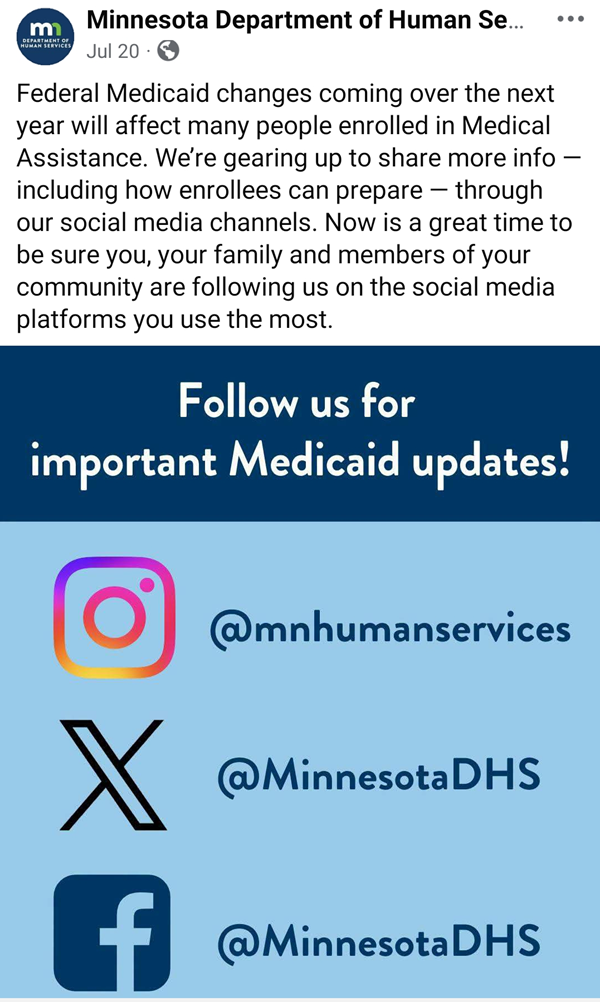
Follow us on social for important Medicaid updates

>> Follow us on Facebook, Instagram and X (formerly Twitter) for timely updates on DHS news and events.

>> For announcements of hiring events, job postings, internships and more, follow us on LinkedIn and the DHS Careers Facebook page.


Accessible formats

For accessible formats of this publication, write to dhs.communications@state.mn.us, or call 651-431-2000 or use your preferred relay service.

Enrollees can find guidance online when a provider stops service

Our goal is to support Medical Assistance and MinnesotaCare enrollees' continued access to care and share resources to help them meet their needs.

When a provider discontinues service, enrollees can go to mn.gov/dhs/find-care for guidance on finding a new provider. 

Enrollees who have a case manager or care coordinator are encouraged to contact them for help finding providers.


Celebrate Disability Pride Month by saving for the future with ABLE

Woman with a disability working on a laptop with help from another person

July is Disability Pride Month, a time to recognize the strength, resilience and lasting impact of people with disabilities in our communities.

Minnesota is proud to celebrate and advocate for the disability community all year round by making it easier to:

  • Build savings without losing critical government benefits
  • Save for everyday expenses and long-term goals
  • Enjoy tax advantages

Gain independence and a better quality of life with Minnesota's ABLE Plan. Get started today!


Fourth edition of Medicaid Program Integrity Update issued in July

This month, we distributed the fourth edition of our new Medicaid Program Integrity Update newsletter, designed to increase transparency around our efforts to prevent and fight fraud.

To stay up to date on the latest actions, sign up to receive the newsletter in your inbox.

And you can always find information on our:


In the news

newspaper beside a coffee cup

Fraud and funding delays are threatening Medicaid in Minnesota: Temporary Commissioner John Connolly joined Angela Davis on MPR News to discuss the state's response to fraud and the impact of growing federal funding freezes on providers and patients.

Trump administration says it’s deferring $1B in Medicaid payments to California and Minnesota: The Trump administration is deferring over $1 billion in Medicaid payments to Minnesota and California because of “suspected fraud and noncompliance,” the latest in a series of punitive steps it has linked to allegations of fraud in mostly Democratic-led states. Learn more in a KSTP story.

Why the Trump administration’s curveball on ‘medical frailty’ matters for Medicaid in Minnesota: It may sound like semantics for policy wonks, but the definition of a term will deeply impact Minnesota’s race to conform with federal Medicaid mandates. The phrase in question is “medical frailty.” Learn more in a MinnPost article.

Supporting recovery before people return home: Assistant Commissioner Teresa Steinmetz wrote in The Phoenix Spirit about Minnesota's new initiative that would allow eligible people to receive certain Medicaid-funded health and behavioral health services before they are released from incarceration. Read her article to learn more.