The Department of Human Services (DHS), in partnership with Management Analysis and Development (MAD), recently surveyed county Adult Protective Services (APS) staff to gather feedback on the 2025 performance target-setting process. A total of fifty-five counties responded, representing a seventy-one percent response rate.
Overall, 87% of counties reported a positive experience and the majority of county respondents identified several areas where DHS support could be valuable going forward.
Summary of Survey Findings Most respondents described the process of setting performance targets on equity and consistency in intake decisions for adults referred to APS as somewhat or very positive. Counties noted MAD’s technical assistance and access to data as key supports. Decisions were most informed by baseline data and staffing capacity.
Nearly three-quarters of respondents expressed confidence that their targets would contribute to statewide goals. Many cited increased staffing or improvements in local intake practices as contributing factors.
When asked how DHS could support efforts to meet targets, counties most often requested access to real-time data, training on intake policy, and timely consultation from DHS. Some also highlighted the need for support in analyzing caseloads and evaluating intake workflows.
Counties expressed a clear preference for continuing to set their own performance targets. Most found the technical assistance provided by MAD helpful and offered constructive suggestions to further improve these sessions.
DHS Support to Meet Performance Goals Continuing In response to the feedback, DHS remains committed to supporting counties in their performance improvement efforts. Current and ongoing supports include:
- Quarterly data sharing to help monitor intake trends and performance
- On-demand training through iSpring, including SDM® intake and APS foundational modules
- Rapid consultation from DHS Adult Protection Resource Specialists for intake questions
- Tools and resources for workload planning, including the APS TARC APS Workload Toolkit
- Continued technical assistance from MAD through September
Thank you for your continued partnership and commitment to advancing APS practice in Minnesota.
|
The National Center on Elder Abuse’s (NCEA) March Research Highlight, “No, thank you: reasons for withdrawal from older adult abuse support services,” explores the frequency and factors in service withdrawal by older adults who have experienced abuse. The study’s sample of 151 older adults referred to a specialist social work agency for abuse suggests that older adults may refuse protective services interventions with rates ranging from 13%-58%. This study involved a similar population in England as adults referred to APS in MN, but for a service different optional service
According to the study
Factors that support older adults accepting services;
- Being female
- Living alone
- Perception of health
- Perception of danger
Factors that impact older adults declining services:
- Denying maltreatment occurred
- Person responsible for maltreatment was a child or grandchild
- Lack of awareness of the of the maltreatment or severity of the maltreatment
Implications for APS
- Relationship building (person-centered assessment and supports) may help identify the adult’s goals and result in engagement for service interventions
- Motivational interviewing can explore barriers, ambivalence to change and identify motivations for engagement in service interventions
- Supporting adults in insight into the impacts of maltreatment may improve engagement in service interventions
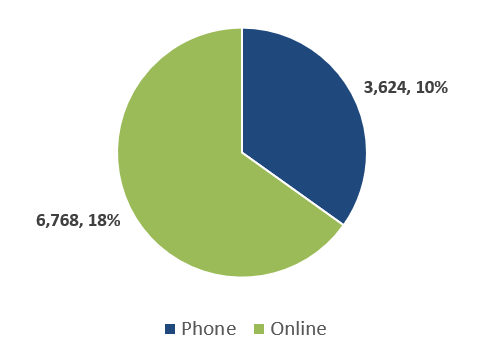
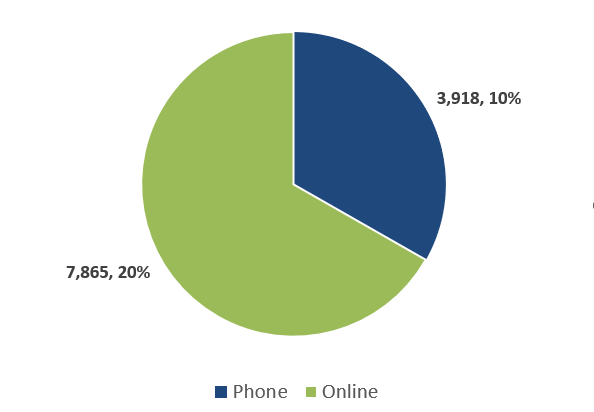
The percentage of adults referred who were accepted by APS increased by 2% between CY23 and CY24. Data shows the increase is for adults referred by a mandated reporter using the web form. Phone report counts may involve more adults referred by the general public than web report counts. Adults referred by the public using the phone reporting system may also be more likely to be functionally vulnerable as opposed to adults referred by mandated reporters using the web report. Following guidance in the SDM (R) Intake tool will support decisions on which adults referred meet state policy criteria as functionally vulnerable and potentially maltreated. DHS will continue to monitor and share patterns on outcomes for adults referred to APS to support counties in program administration and evaluation.
Calendar Year Data: Adults accepted for APS based on report source
CY23
 CY24

Share APS Success at NAPSA’s WEAAD Event
The National Adult Protective Services Association (NAPSA) is hosting an online World Elder Abuse Awareness Day (WEAAD) event in June. The theme of this year’s event is positive service outcomes experienced by adults referred to APS. NAPSA is asking each state to share a story. NAPSA will select among those nominated to include in the WEAAD event. The APS professional, or a supervisor on their behalf, will present the story at the event.
APS in Minnesota has many, many stories of positive outcomes due to worker engagement, relationship building and service interventions that made a difference for the adult’s safety or well-being.
DHS will randomly select one nominee from Minnesota to forward to NAPSA to be considered as the Central States highlighted story at NAPSA’s WEAAD event.
Please send a brief summary of your story to dhs.adultprotection@state.mn.us by April 22, 2025. We’ll share the winner referred to NAPSA in next month’s newsletter!
Thank you for all the good work you do!!!!!
|

Prioritization Guideline: “APS Lacks Resources for Assessment”
The SDM® intake assessment tool operationalizes state policy for determining whether the adult referred to APS meets criteria for an APS assessment as the adult may be vulnerable and the incident(s) may be maltreatment. County agencies screen reports based on policy criteria and application of agency prioritization guidelines if applicable.
Minnesota statutes require lead investigative agencies to establish prioritization guidelines in making service decisions for adults referred by the common entry point that are based on the agencies priorities and resources instead of state screening policy to accept adults for APS assessment who meet criteria as vulnerable and potentially maltreated. County agencies are also permitted by statute to respond within the limits of their resources and expertise when responding to requests for adult protective services from another lead investigative agency screened through the intake tool. Agency prioritization guidelines must be available to the public.
Counties may find that screening criteria is met per policy; however, lack the resources to accept all reports that meet policy criteria. If this is the case, counties would select agency prioritization guideline "APS lacks resources for assessment" if applicable to the agency’s established prioritization guidelines. This data will help county agency leadership and DHS identify APS needs for resources to accept more adults meeting criteria.
Questions? For more information, contact the DHS Adult Protection Unit at (651) 431-2609 or dhs.adultprotection@state.mn.us.
|
MN Adult Protection training courses support equity and consistency in service response and outcomes that safeguard and promote dignity for adults who are vulnerable, regardless of their location in Minnesota. Many of the following training opportunities support APS professionals meeting education requirements under 626.557 Subd. 9e (8 hours annual training specific to adult protection duties).
DHS Adult Protection Resource Specialist (APRS)
DHS Adult Protection Resource Specialist (APRS) staff support adult protection workers and supervisors with policy clarification and case consultation regarding intake, assessment, service intervention, and assessment outcomes for the safety and dignity of adults vulnerable to maltreatment and reported as having experienced maltreatment.
Connect with an APRS today at dhs.adultprotection@state.mn.us or (651) 431-2609.
MN Adult Protection Learning Management System and eLearning Courses
The MN Adult Protection learning management system (LMS), iSpring, is a software application that manages and delivers training content and tracks training information. This dedicated MN Adult Protection LMS provides on-demand, self-paced eLearning courses for APS professionals across the state.
How to complete iSpring registration and enroll in a course:
- Select the iSpring link and fill out the simple sign-up form
- Select the “Catalog” tab to view the available courses
- Click a course title and select “Add to My Courses” to enroll
- The “My Courses” tab will list all enrolled courses; select a course to begin!
Available MN Adult Protection LMS eLearning courses include 12 Adult Protection Foundations courses and two MN APS SDM Intake Assessment Training courses. Additional training content will be added as developed. (Please note, the 12 Adult Protection Foundations eLearning courses are prerequisite for the MN Adult Protection Foundations: Live Training).
Questions? Please connect with the DHS Adult Protection Unit at (651) 431-2609 or dhs.adultprotection@state.mn.us.
MN Adult Protection Foundations: Live Training
MN Adult Protection Foundations: Live Training is a 3-hour interactive online training facilitated by MN DHS Adult Protection Unit staff. The course reviews case examples and practical scenarios in order to apply foundational statutory definitions and MN state adult protection policy principles covered in the 12 Adult Protection Foundations eLearning courses. The 12 Foundations eLearning courses are prerequisite for the MN Adult Protection Foundations: Live Training
Click a link below to register for a MN Adult Protection Foundations: Live Training
Questions? Please connect with the DHS Adult Protection Unit at (651) 431-2609 or dhs.adultprotection@state.mn.us.
Vulnerable Adult Protection Dashboard
The Vulnerable Adult Protection Dashboard provides annual state and county data on the number of reports, allegations, and investigation determinations to explain what happens after reports of suspected maltreatment are made to the Minnesota Adult Abuse Reporting Center (MAARC).
SSIS Essentials eLearning
SSIS Essentials eLearning is a collection of six courses that provide an introduction to basic navigation and functionality of core SSIS functions. SSIS Essentials eLearning is offered through TrainLink. Please visit the SSIS Essentials eLearning website for registration, TrainLink instructions, technical requirements, and more information about each of the courses.
SSIS Adult Protection Worker Training
The SSIS Adult Protection Worker course is a technical training that provides an overview of data entry in SSIS as related to APS. The training is offered in two half-day virtual classes and is designed for new adult protection workers, SSIS Mentors, and those seeking a refresher. Please visit the SSIS Adult Protection Worker Training website for available training dates, registration instructions, and more detailed information about the course.

National Adult Protective Services Training Center (NATC)
The National Adult Protective Services Training Center (NATC) provides free self-paced eLearning courses for adult protection professionals nationwide. NATC course topics include Ethics, Values, and Cultural Responsiveness; Trauma-Informed Practices; Case Documentation; and more.
To access NATC eLearning courses, create a free account and click "Find Courses" to view available courses. Check out the NATC LMS User Guide (PDF) if you need help creating an account or navigating the website.
|

APS Technical Assistance and Resource Center (TARC)
APS TARC provides a variety of free educational opportunities for adult protection professionals including podcasts, webinars, briefs, and toolkits. APS TARC offerings address a wide variety of topics including ethics, frauds and scams, interviews with experts, implicit bias, trauma informed practice, and more. Keep up to date with APS TARC offerings by joining their mailing list, and check out the APS TARC YouTube page for additional content.
|
The DHS Adult Protection Newsletter shares knowledge specific to adult protection work in MN, answers common questions regarding adult protection work in MN, and provides awareness of DHS Adult Protection training opportunities. The DHS Adult Protection newsletter archive includes 12 months of past newsletters. Please contact us with any questions at dhs.adultprotection@state.mn.us or (651) 431-2609
For more information, visit us online at DHS Adult Protection: Program Overview

|




