MnCHOICES legislative benchmarks update
In October 2019, the Department of Human Services (DHS) and lead agency representatives completed a process-mapping project to identify benchmark performance measures. Then, lead agencies reviewed and prioritized measures to consider for the benchmarks. DHS sent communication in December and January about a project to identify performance measure benchmarks in the assessment and eligibility process.
The areas of measurement based on the legislative needs, process mapping and survey results are:
- Number of people assessed
- Number of times the assessment and eligibility determination process exceeds 60 days
- Number of people with multiple assessments during a calendar year
- Time spent waiting on financial eligibility to be determined
- Average minimum/maximum time from in-person assessment to Community Support Plan (CSP) mailed to the person
- Time it takes to do an in-person interview
Measures 1–4 will not require any action from lead agencies. We will take this data from existing data fields in MnCHOICES Assessment (MnA) and MMIS.
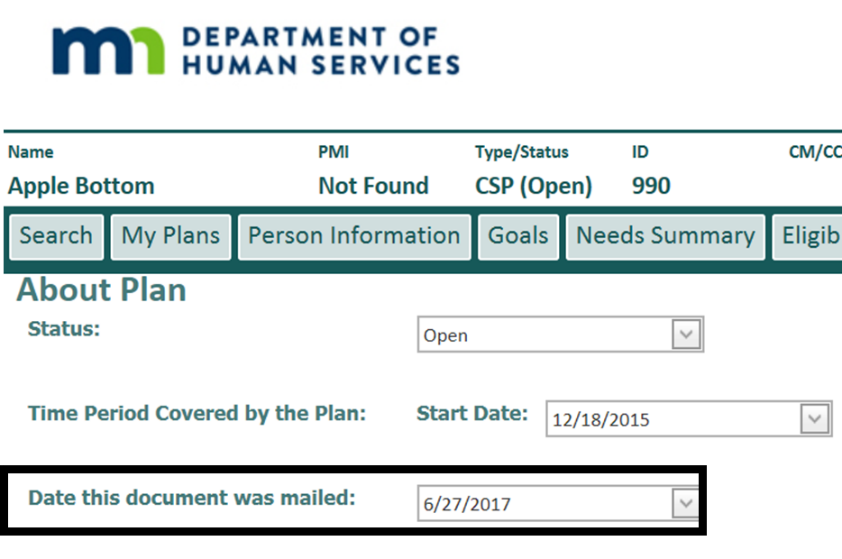
For measure 5, we will rely on the information from the MnCHOICES Support Plan (MnSP) field labeled “Date this document was mailed” found under the “About Plan” tab. When closing a CSP, it is important that all lead agencies complete this field to ensure accurate data collection.
For measure 6, we are adding fields into MnA to record the total in-person interview time for initial assessments and reassessments. We will send instructions to all lead agencies to introduce these fields and provide direction on how to complete the fields in connection with the MnA 20.3.1 release. The new required fields will look like this:
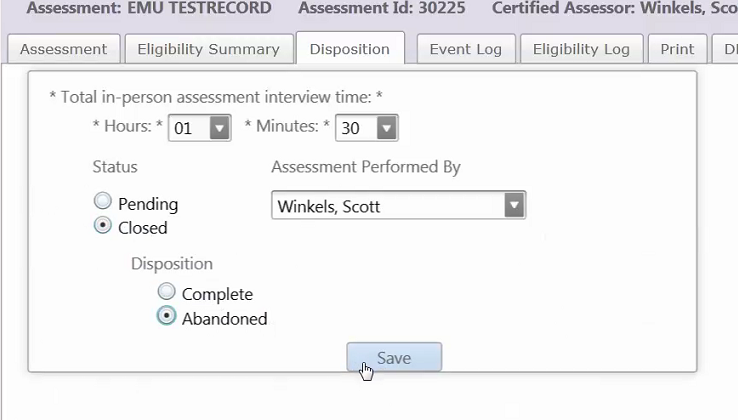 We understand the in-person interview is one part of the whole assessment and eligibility determination process. This benchmark is meant to measure the in-person interview and not the entire eligibility determination process. Through a combination of benchmarks, we will measure both the amount of in-person interview time (measure 6) and the total length of time the eligibility determination process takes from the in-person interview to the time a CSP is mailed (measure 5).
We appreciate your commitment and dedication to this project and look forward to our continued partnership.
New Mentor Training TrainLink modules
New Mentor Training modules will be available in TrainLink in early summer. Moving the training to TrainLink provides
- Immediate training when a lead agency appoints a new mentor
- Support to mentors in real time when they need it
New mentors will be encouraged to ask training questions at Office Hours to ensure they have the support they need.
These modules will replace face-to-face biannual trainings. We will send more information when the new mentor trainings are available for use.
MnCHOICES mentor support is adapting based on mentor feedback
In an effort to serve mentors and assessors, the MnCHOICES team is
- Adapting MnCHOICES Office Hours to support mentors by
- Reviewing the content from MnA releases that occur every other month
- Reporting on the development and launch of the RS Tool
- Providing MnSP updates regarding releases and performance
- Reporting on MnCHOICES RFP updates
- Providing help desk updates
- Offering quarterly policy forums to provide in-depth review of key policy topics and allow time for questions for lead agency assessors, mentors and supervisors.
We will schedule the next MnCHOICES Mentor Alliance meeting when there is enough content for a full-day session.
The MnCHOICES team will send a survey to gather feedback on this new format after the April Office Hours conference call. Visit the MnCHOICES CountyLink Mentor page to find the Office Hours conference calls schedule.
New guide for Elderly Waiver services in assisted living
DHS recently published DHS-7935-ENG Elderly Waiver services in assisted living: What you need to know, a guide for people considering moving to or already living in assisted living.
The guide can simplify the process of applying for Elderly Waiver (EW) services for:
- People needing long-term services and supports
- County or tribal nation social service experts
- Stakeholders such as intake workers at assisted living facilities
The 8-page, full-color brochure explains EW topics, such as:
- How to apply for the EW program
- The requirement to have a certain level of need for services
- Financial eligibility requirements
- Income and asset protection for a married spouse
- Rules about transferring assets to family members
- Choosing services and providers such as assisted living providers
- Which EW services, other than assisted living, may be available
- What EW participants can expect while on the program, including how to stay eligible to receive services.
Lead agencies, assisted living providers and others who work with older adults and their families are encouraged to share this information.
To order free, full-color printed copies, use “7935” in the search box on the DHS Bulk Ordering website.
Changes to under 21 Nursing Facility Level of Care
DHS has aligned changes to the under 21 Nursing Facility Leve of Care (NF LOC) criteria to match the criteria needed for the over 21 NF LOC due to recent statute changes. For more information on the changes to NF LOC, read the Changes to nursing facility level of care for people who are younger than 21 years old eList announcement. The changes were implemented in MMIS on Feb. 10, 2020 and we will update MnA in a future release.
Because MnA will be updated after the MMIS update, users may encounter MMIS edits when entering data from the assessment into MMIS. Counties and tribal nations should follow these steps regarding the changes to the NF LOC criteria.
- Use caution discussing initial assessment results with families in situations where the person may appear to meet NF LOC under the old criteria.
- Enter MnCHOICES assessment results into MMIS to double check NF LOC and make sure there are no discrepancies (i.e., the person is eligible for NF LOC in MnA because the person has an independent activity of daily living [IADL] need but may not be determined eligible under the new criteria when entering the data into MMIS).
- If the assessor needs further clarification regarding a person’s level of care, mentors should submit questions on the Help Desk Contact Form – DHS-6979 and select the policy button.
If a person is determined not eligible for NF LOC, counties and tribal nations should provide appeal information (DHS-2828A) to the person.
MnCHOICES Assessment users should pay attention to error notifications
A user may experience system, unhandled exception and soap errors when working in MnA. Users must pay close attention to these errors.
Examples of system errors are:
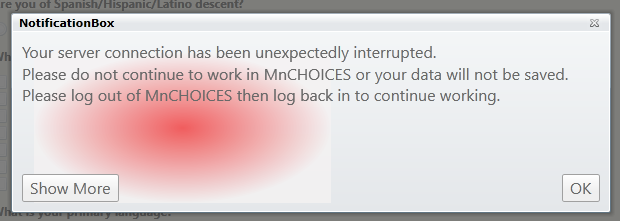 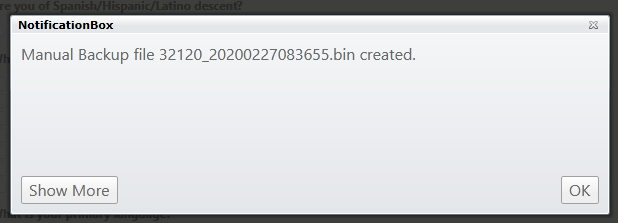  For system errors, the user should follow instructions on the error message.
Examples of unhandled exception errors are:
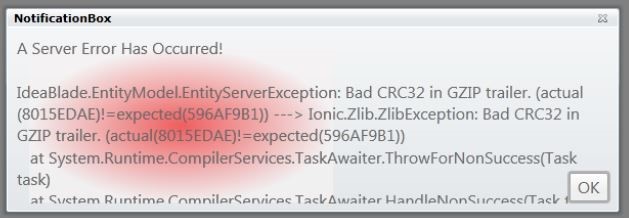 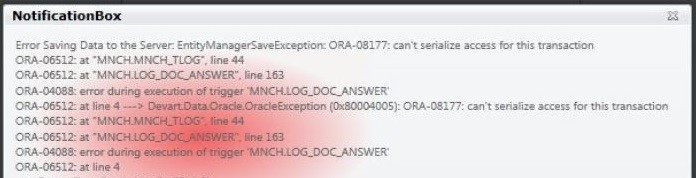 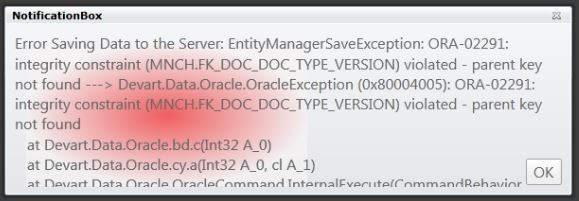 If an unhandled exception error occurs, a user should:
- Save any unsaved work
- Log out of MnA
- Close the browser tab
- Reopen a new browser tab
- Go to the login page and log in to the assessment to continue working
If system or unhandled exception errors continue to display, the user should call the help desk.
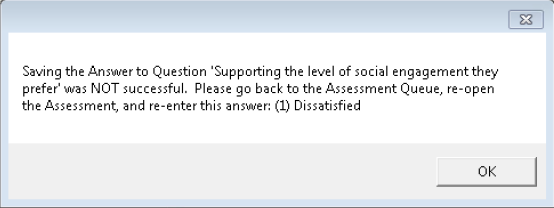
An example of a soap error is:
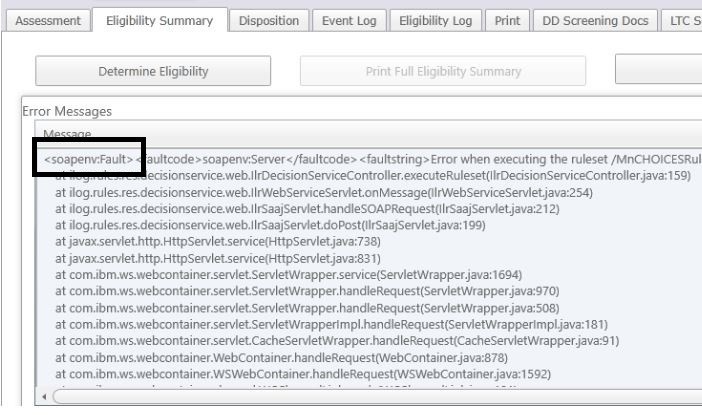 A user should call the help desk immediately if a soap error displays.
MnCHOICES Partners and Providers & People We Serve websites
In Oct. 2019, the MnCHOICES team completed a major renovation of the two main websites containing information about MnCHOICES assessment and support planning. Lead agencies and people interested in the assessment and support planning process can visit these websites for information about the process. Visit these websites to review the updated pages:
MnCHOICES People We Serve
MnCHOICES Partners and Providers
MnSP best practice: Document the CSSP is sent to the person
It is important for users to document when the Coordinated Services and Support Plan is sent to the person. Users should fill in the “Date this document was mailed” field in the About Plan tab. This meets documentation requirements for Lead Agency Review and also assists with the benchmarks data.
 Certified assessor recertification best practice
After initial certification, certified assessors should take the Step 4 recertification module to renew their certification. Certified assessors should not complete the Step 3 test a second time. DHS will require certified assessors to complete the Step 4 recertification even if they have completed Steps 1 through 3 and the Step 3 test a second time, instead of recertification.
Certified assessors that want to learn more about recertification should visit the MnCHOICES First MnCAT Step 4: Recertification or MnCHOICES Second MnCAT Step 4: Recertification modules in TrainLink. Choose the first or second module based on which recertification period applies.
Do not interpret or implement waiver plan changes without DHS policy guidance
DHS sent an eList announcement on Jan. 17, 2020, to announce that the federal Centers for Medicare & Medicaid Services (CMS) approved Minnesota's waiver amendment package. CMS approval gives Minnesota the authority to implement the waiver plan changes.
We are currently in the process of drafting policies, updating policy manual pages, preparing forms and updating MMIS to support the approved changes. In the meantime, do not interpret or implement waiver plan changes until DHS releases policy guidance. We will release policy guidance once the changes are ready to be implemented.
The following forms are new or have been updated and are now available in eDocs:
The following forms were made obsolete:
- DHS-6790I-ENG - RMS Worksheet - Transportation for Adult Day/Prevocational Services/Structured Day – Daily
- DHS-4015A-ENG - Provider Agreement Addendum Home and Community Based Services Waiver and AC Programs
- DHS-7947-ENG - Service Combinations Allowed by Minnesota Health Care Programs (MHCP) for Home and Community-Based Services (HCBS) Waiver
Free Disability Services Division trainings
Visit the DSD training news and information page to read about and register for DSD sponsored trainings or to visit TrainLink. You must have a unique key to register in TrainLink and receive credit for trainings.
- Go to TrainLink Disability Services learning center
- Click Sign On in the upper right hand corner
- Enter your unique key and click OK
- Click on Find a Course
- Under Category choose: All Disability Services Division Courses
- Click the search button
- Click the Select button to register for an available course
- Click on the Course Content tab
- Select Start to begin the course
Deaf and hard of hearing services training
Do you know a senior who is experiencing age-related hearing and vision loss? A new free online training is available to help you learn more about:
- What it is like to live with significant hearing and vision loss
- How to improve communication and promote independence
- How to support a person with dual sensory loss more effectively.
To find this, and other training opportunities visit the Deaf and Hard of Hearing Services Division learning center and choose Trainings.
Autism training online — anytime, anywhere
If you would like to know more about Autism and see live examples of home, school, work and community settings on an introduction to evidence-based strategies that can be used to develop social-communication skills and person-centered practice, explore the Foundations of Evidence-Based Strategies. You may be able to earn CEUs from participating organizations if you submit the certificate to the appropriate board of licensing. You may email the Autism team for a free subscription and if you have additional questions at asd.dhs@state.mn.us
Cultural responsiveness in autism spectrum disorder (ASD) services
This introductory level course gives an overview of and provides strategies for culturally-responsive practices when providing services to people with ASD and related conditions. You will increase your awareness and sensitivity to the needs of ethnically-diverse communities and recognize the role cultural responsiveness plays in providing quality care. Visit the session information page to view more details and TrainLink to register.
Relocation Service Coordination (RSC): Learning the basics
A relocation service coordination (RSC) self-paced online course is now available via TrainLink or YouTube. This course provides an introduction to RSC and a basic understanding of the RSC process. It also describes the role of an RSC case manager and how others can support the process.
Visit the Relocation service coordination (RSC): Learning the basics page on the DSD training news and information page for more information.
Please note that if you view the training on YouTube and want to have it show in your TrainLink transcripts, you will need to follow the Instructions for self-reporting learning activities in TrainLink.
MnCHOICES home page
Assessment page
- MnCHOICES Assessment Documents and Reports
Communication and Webinars page
- MnCHOICES Matters January 2020
- Assessment 20.1 Release Notes & Companion Document
Help Desk page
- MnCHOICES Assessment Known Issues v20.1
- Offline-Online, Quick Study
- Person master index (PMI) number changes
Mentors page
- Charter
- September 25, 2019 Mentor Alliances Meeting Table Notes
- Release and Outage Schedule
- Password Reset Instructions for MnCHOICES Assessment
- Assessment User Access
Support Plan page
- Launch webinar information and schedule
Training page
- Statewide List of Certified Assessors (Updated December 2019)
The Known Issues list is a compilation of items that have been reported to the MnCHOICES team. We created the list to identify issues and provide workaround assistance for common items a user may encounter when working in the assessment or support plan. There are separate Known Issues documents for the assessment and support plan.
As items are found, we add them to the list with descriptions and workarounds. We remove items from the list as they are resolved. These are short descriptions of the most recent additions and resolutions. For full descriptions, visit the MnCHOICES CountyLink Help Desk page.
MnCHOICES Assessment known issues
None added or resolved
MnCHOICES Support Plan known issues
None added or resolved
Visit CBSM – What's new often for a list of policies and pages we've recently updated in the Community-Based Services Manual.
DHS recently added or made updates to the Community-Based Services Manual (CBSM) about:
- Case management/care coordination
- Waiver programs
- Assessment and support planning
- Resources and consultation
- Home care
- Other Aging/DSD programs
- Consumer safeguards
- For previous issues of MnCHOICES Matters, or other MnCHOICES Assessment and Support Planning resources, visit the MnCHOICES CountyLink page
For more information about MnCHOICES, visit us on the DHS website. For technical assistance about MnCHOICES, visit us on CountyLink.
|