|
|
The information in this newsletter is intended for licensed family child care programs. It mirrors the information DCYF has shared with licensors and also provides updates related to other areas of family child care licensing.
|
|
|
September 30, 2026
Across Minnesota, early childhood educators continue to demonstrate remarkable dedication to children and families. Recent events in our statewide community have weighed heavily on many of us, and we want to acknowledge the strength, compassion, and professionalism you bring to your work each day. Your role matters, and licensing remains committed to supporting your work with clear guidance and resources.
All licensed family child care programs are required to maintain a written child care emergency preparedness plan, updated annually. This plan includes procedures for evacuation, shelter-in-place, lockdown, relocation, communication with families, and accommodations for infants, toddlers, and children with disabilities or chronic medical needs.
These requirements are designed to ensure programs have a reliable framework to respond to a range of emergencies. Regularly reviewing and practicing your plan helps strengthen your confidence and ensures children and families are supported through unexpected situations.
Door security: clarifying expectations
There is a common misunderstanding that licensed programs must keep doors unlocked. To clarify:
- Providers are allowed to lock their entry doors. Minnesota regulations simply require that children inside must always be able to exit freely during an emergency without the use of a key or special knowledge, ensuring safe egress at all times.
-
Door alarms are not required. However, many programs find them to be a helpful optional tool. Door alarms can support situational awareness, help monitor comings and goings, and enhance overall safety, particularly in busy moments such as drop-off and pick-up.
Strengthening daily safety practices
Many educators have shared that the following practices help them feel organized, supported, and prepared:
- Keeping updated copies of emergency plans accessible.
- Maintaining clear boundaries between program areas and personal spaces.
- Ensuring emergency supplies are stocked and ready.
- Connecting regularly with peers or professional networks.
- Posting emergency contact information in visible locations.
These approaches help reinforce the solid, intentional practices you already bring to your work.
DCYF continues preparing for the revised licensing standards that take effect July 1, 2027. Staff are actively working to develop the Implementation Guide, creating trainings for county licensing staff and license holders, and reviewing forms and resources to determine what must be updated or newly created.
DCYF has launched a new webpage for the revised child care licensing standards, which will be regularly updated with implementation guidance, explanatory materials, and future training opportunities. For now, the best ways to begin preparing are to review the “What’s changing” section and subscribe to our monthly newsletter.
Questions or comments about the revised standards may be submitted to:
ccregmodernization.DCYF@state.mn.us.
Again, as a reminder, current child care licensing requirements remain in effect until July 1, 2027. DCYF will continue sharing monthly updates through its list-serv, including highlights of new or revised regulations.
In September 2025, the Licensing Division shared information with providers about legislative changes passed by the 2025 Minnesota Legislature that impact family child care programs.
Updates to the Implementation Plan for 2025 Legislative Changes were recently made in preparation for items that became effective on July 1, 2026. Please review the updated implementation plan for information on correction orders on Licensing Information Lookup (see page 3), interpretive guidance (see page 4), county responses to requests (see page 5), and Electronic Licensing Inspection Checklist Information (see page 6).
The Licensing Division will share a new implementation plan later this year on legislative changes that were passed by the 2026 Minnesota Legislature that impact family child care programs
|
|
|
Minnesota Rules, part 9502.0375, subpart 2 requires providers to inform the agency within 30 days whenever someone moves in or out of the household or when a new caregiver, substitute, or employee joins the program.
Keeping your BGS roster current helps ensure background studies are accurate and supports a safe, compliant, and welcoming child care environment.
Please remember to communicate all updates directly to your licensor, whenever you:
- Add new household members or caregivers (before they move into the household or begin working).
- Remove those who move out or are no longer with your program.
Thank you for your continued attention to these important updates. Your care and diligence truly make a difference.
With the recent start of a new school year, it can often be a good time to ensure that you have the updated information in your child enrollment records, including current immunization information. MDH offers a website with more information on immunization requirements and offers a form, Are Your Kids Ready? to assist in tracking the information.
Minnesota recognizes that child care programs are not only vital educational and supportive resources for children and families, but also a cornerstone of our state’s economic stability. The Department of Employment and Economic Development (DEED) provides a variety of information and resources to support child care programs, the broader industry, and the workforce. To learn more, visit the DEED Office of Child Care webpage and explore the available tools and information.
|
|
|
REETAIN Bonuses help supplement income for early childhood educators who demonstrate dedication to the field and their own professional development. They can be used for professional or personal expenses. Bonuses are competitive, awarded annually, and range from $500-$3,000.
The Fall REETAIN Bonus application period will be open from October 1, 2026 - November 30, 2026, for family childcare educators. Check out the REETAIN webpage for the most up-to-date information and instructions on how to create your account to access the Grants and Scholarships Application Portal, eligibility requirements for the REETAIN bonus, and submitting your application. All licensed family childcare providers will receive a postcard in the mail with information as well. If you have questions about REETAIN Bonuses, email reetain@childcareawaremn.org.
The Early Childhood Connector Newsletter was created just for the child care and early education community. Packed full of relevant content, the newsletter shares the latest updates on licensing, grants and funding opportunities, resources for families, and much more. Learn more about the Early Childhood Connector here, including Connector Calls, and subscribe to the newsletter here.
Read the Latest Articles
Early Childhood Connector Call – October 13, 2026
Connector Calls are a great opportunity to get your questions answered and seek clarification. During the call, state staff will answer questions related to legislation, licensing, programs, grants and more. Early educators of all types, from licensed programs to Family, Friend and Neighbor caregivers, are invited.
Please submit your questions for the October call! Questions must be submitted beforehand; new questions will not be answered during the call.
The September 2026 edition of the DCYF Child Care Assistance Program (CCAP) newsletter can be found here.
|
|
|
The Center for Inclusive Child Care provides free relationship-based professional development including support, training, modeling, and resources to child care programs throughout Minnesota. See the CICC website for more resources and information.
CICC Tip Sheets
- Recently a tip sheet created by the Center for Inclusive Child Care was shared with county licensors. The tip sheet is titled, What Does the ADA Mean to Child Care?
- What Shapes a Child’s Development? Development doesn’t happen on exactly the same timeline for every child. These CICC resources explore developmental milestones and the many factors that can influence a child’s growth, while highlighting how early educators can use observation to recognize concerns and support children and families.
Newest CICC Self-Study
Challenging behavior can be difficult to navigate, but expulsion doesn’t have to be the answer. Explore practical, proactive strategies that support children, families, and educators, along with individualized support plans and transitions that help everyone feel successful.
CICC Inclusion Matters Podcast
In the recent episode of Inclusion Matters, CICC welcomes back Dr. Jenn Hall-Lande, licensed psychologist and researcher with the University of Minnesota Institute on Community Integration and Masonic Institute for the Developing Brain. Dr. Hall-Lande shares updated autism prevalence numbers in Minnesota, explains current research trends, and offers practical insights for early educators on supporting early intervention and partnering with families.
All families in Minnesota deserve to thrive. DCYF connects people to benefits, services and tools that support children, youth, and caregivers. Explore help with food, cash and employment supports, health coverage, child care, housing and home stability, early learning, youth services and family well-being.
Explore the DCYF webpage titled, Individuals and Families, for information on various programs and services.
Help Me Connect is Minnesota’s resource portal for expectant and parenting families with young children, and those working with them. Take a look at the website and share information with the families you work with in your programs.
Imagine needing help for your family but not being able to understand the information available to you.
Minnesotans speak more than 300 languages, and every family deserves access to information they can understand. Language access helps reduce barriers, strengthen connections to services and support families in making informed decisions for their children.
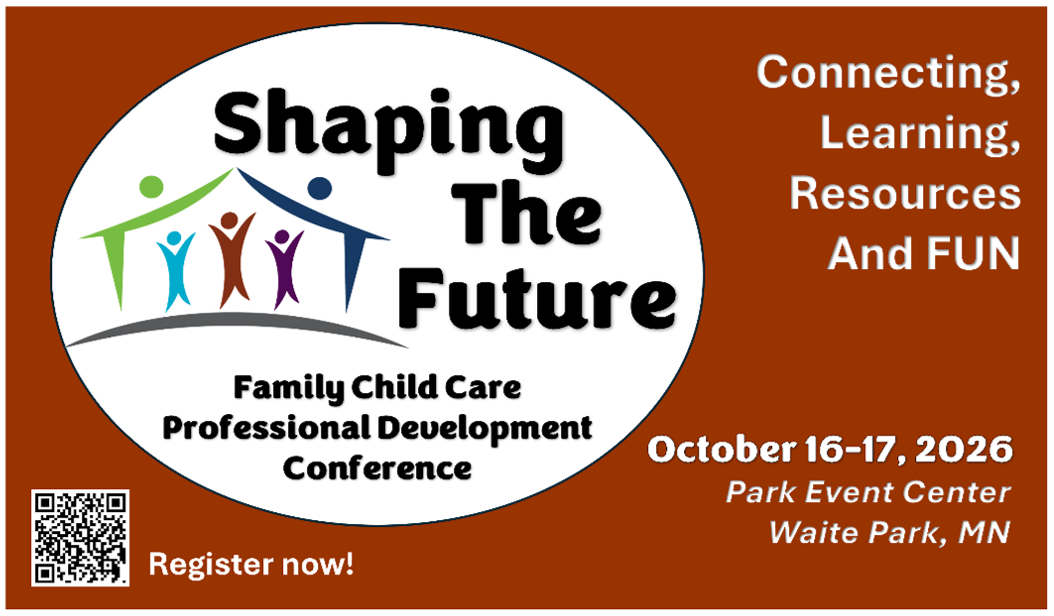 https://STFconference2026.eventbrite.com
The Office of the Ombudsperson for Family Child Care Providers shared the flyer below for an annual conference for family child care professionals. Please scan the QR for further information and registration.
|
|
|
|
|



