Wetlands for Water Quality; EPA Uses MN Health Data: Clean Water Council Update

View as a webpage  /  Share

Minnesota Clean Water Council

Study on Le Sueur River Shows Constructed Wetlands Are the Most Effective Tool for Addressing Agricultural Runoff 

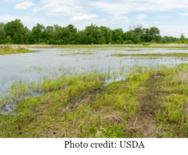
Wetlands USDA Picture

A new published study is sure to lead to robust discussion in Minnesota water circles.

From the website Successful Farming

A new study finds wetlands constructed along waterways are the most cost-effective way to reduce nitrate and sediment loads in large streams and rivers. Rather than focusing on individual farms, the research suggests conservation efforts using wetlands should be implemented at the watershed scale.

The study, led by Amy Hansen, assistant professor of civil, environmental & architectural engineering at KU, utilized computer modeling to examine the Le Sueur River Basin in southern Minnesota, a watershed subject to runoff from intense agricultural production of corn and soybeans...

...But the researchers found the performance of wetlands required optimal placement, and often cost-effective wetlands can be too expensive for a single farm or one agency to put in place.

The PNAS paper concludes that a comprehensive strategy must address an entire watershed as a system, combining funds from different programs and agencies and pinpointing locations for fluvial wetlands that will lead to the greatest reduction in nitrates and sediments reaching waterways.

The Clean Water Council has reached out to the lead author about doing a presentation for the Council this fall.

Read Full Story

Upcoming Meetings & Project Updates

Minnesota Clean Water Council

Upcoming Meetings

Full Council: The next meeting is Monday, July 19th, which will be a field tour of the Forever Green Initiative at the St. Paul campus of the University of Minnesota. The packet from the June 21st meeting (Topics: Emerging Farmers Program, water quality benefits of street sweeping, and "Creating More Innovative Agriculture") has been posted at our web site.

Policy Committee: The next meeting is Friday, July 23rd via Webex. (Topics: Drought Update; Banking Groundwater study; Underground Utilities Policy Statement.) The presentation from the June 25th meeting (Topic: Chemicals of Emerging Concern in Waters, Sediments, and Subsistence Fish Used by the Grand Portage Band of Chippewa) has been posted at our web site.

Budget & Outcomes Committee: The next scheduled meeting is Friday, August 6th. The Friday, July 2nd and Friday, June 5th meetings have been cancelled. The presentations from the May 7th meeting (Topic: Prioritizing impairments in watershed plans) have been posted

Meetings at MPCA have WebEx capability for on-line viewing. Contact us for details. NOTE: WebEx recordings are moving to a new server. We will only have on-demand access to archived WebEx recordings for the previous six months.


Updates on Programs Supported by the Clean Water Fund

Weekly Stream Flow Maps and Tables: Want a weekly snapshot of stream flow data in Minnesota? The Minnesota DNR publishes maps and tables in PDF format on a weekly basis. 

Pipestone We Are Water MN: The MPCA and MN Humanities Center have moved the We Are Water exhibit to Pipestone. It runs through September 13th.

MPCA Smart Salting News - Summer 2021: The MPCA has the latest news on chloride de-icer reduction training.

Conservationists Drive Minnesota Agricultural Water Quality Certification Program, a Model for Other States: The INFORM news service does a deep dive on the MAWQCP, including a feature on a certified Houston County farmer. 

Watershed Conservation Grants Available to Private Landowners in Scott County | Jordan News: Two watersheds in Scott County have Clean Water Fund grant funds available for various conservation projects.


Other Relevant Water News

New Minnesota co-op wants to profit from getting Kernza wheat in marketplace - StarTribune.com: The Perennial Promise Growers Co-op (PPGC), a newly formed Kernza growers co-op, was publicly introduced recent at the Madison, Minnesota Kernza Field Day. The PPGC also launched a website

Minnesota Water Resources Conference Registration Open: The event will be virtual on October 19-20.

EPA Follows MN's Health-Based Water Guidance

From the Minnesota Department of Health:

The Minnesota Department of Health’s (MDH) Human Health-Based Water Guidance Table has been listed as a primary data source for the U.S. Environmental Protection Agency’s list of unregulated contaminants to be reviewed for possible regulation. Minnesota is the only state besides California to be listed along with national and international bodies such as WHO, CDC, Health Canada, FDA, and EPA itself. This recognition is significant because there were only 18 sources of information that met the EPA’s rigorous requirements. The list of unregulated contaminants includes 66 chemicals, 3 chemical groups, and 12 microbial contaminants. MDH’s Contaminants of Emerging Concern Program is funded by Minnesota’s Clean Water Fund and was created for the purpose of evaluating the health risks of new contaminants in water. The guidance developed by the program will be critical to interpreting the results of the EPA’s study and used to ensure safe drinking water everywhere in Minnesota.