CARD Grant Program Update
The
purpose of the Conservation Applied Research and Development (CARD) Grant
Program is to identify new technologies, strategies, and program approaches
that utilities can implement to help achieve the annual state energy
conservation goal of 1.5% as established by the Next Generation Energy Act of
2007. Below is an update on the CARD-funded state energy efficiency potential
studies and summary reports of two recently completed CARD projects.
Advisory committee meetings set for Feb. 27 on State Energy Efficiency Potential studies
Advisory committee meetings for
the State Energy Efficiency Potential studies will be held on Feb. 27 at the First National Bank
Building in St. Paul. The Demand-Side
Management Committee will meet from 9:00 a.m.–noon, while the Electric Utility
Infrastructure Committee will gather from 1:00–3:00 p.m. If you are not
an advisory committee member, you are welcome to join the meeting as an
observer. Non-committee members should RSVP with Jon
Blaufuss at the
Center for Energy and Environment. Once finalized, agendas for each of the
committee meetings will be posted on each
study’s website. Read more.
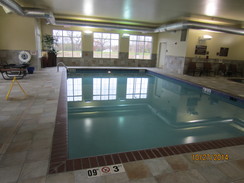 Optimized Operation of Indoor Public Pool Facilities
In
response to the energy-saving challenges of indoor public pool facilities, the Center for Energy and Environment (CEE)
undertook a CARD project to jump-start efforts to address the need for
cost-effective operational improvements in existing indoor public pools. The
primary objectives were to provide a better understanding of the energy-savings
potential associated with improved operations and to develop technical guides
for utility program providers and operators. HVAC recommissioning-related
activities show the largest potential for savings of both gas and electricity. Read more. (Photo courtesy of CEE)
|
A Field Assessment of Cold-Climate Air Source
Heat Pumps
The
increase in efficiency and operating capacities of cold-climate air source heat
pumps (ccASHP) provides an opportunity for energy efficient space heating for
Minnesota homes, in particular homes without access to natural gas heating.
However, a field study was necessary to evaluate this new technology and
understand how the system would perform in actual installations. The Center for Energy and Environment (CEE)
conducted this assessment with a CARD grant and additional support from Great River Energy and the Electric Power Research Institute (EPRI). Read more.
CARD Project Webinars
Advanced Commercial Clothes Dryer Technologies Field Test
Thursday
January 25, 2018, 11:00 a.m.– 12:00 p.m. CT
Register
In a recently completed CARD-funded study, the Gas
Technology Institute (GTI) assessed the performance and savings from two
advanced retrofit technologies in commercial clothes dryers: moisture sensors
and modulating gas valves. For the evaluation, GTI installed and monitored
modulating valves on 12 dryers and installed and monitored both modulating
valves and moisture sensors on six dryers. Join the project team as they
discuss their results and the implications for inclusion of these technologies
in utility CIPs.
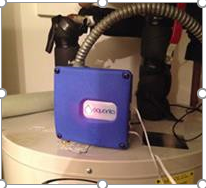
Field Study of an Intelligent, Networked, Retrofittable Water Heater Controller
Wednesday Jan. 31, 2018, 11:00 a.m.–12 p.m. CT
Register
The Gas Technology Institute (GTI) in collaboration with the Center for Energy and Environment (CEE) recently completed a CARD-funded field study to validate the performance, cost-effectiveness, and direct energy savings of the Aquanta, a smart water heater controller. Thirty-three water heater controllers were installed and monitored in residential homes throughout Minnesota. In 10 of these sites, third-party measurement and verification instrumentation was installed for high resolution data collection. In this webinar, Dave Kalensky, GTI, and Ben Schoenbauer, CEE, will provide an overview of the Aquanta controller, summarize the scope of the field study, and discuss their findings and recommendations, including how a water heater controller such as the one studied may fit within utility CIP program activities. (Photo courtesy of GTI)
|
Demand Control Systems Deliver Efficiency in Commercial Hot Water Use
Tuesday Feb. 6, 2018, 11 a.m.—12 p.m. CT
Register
Commercial and hospitality buildings typically cycle between periods of very heavy hot water use and periods of low to no hot water use. To ensure an immediate supply of hot water at all times, building managers often override existing recirculation technology that was designed to control and reduce pumping and heating costs. To address this challenge, the Center for Energy and Environment (CEE) conduced a CARD-funded study to assess the effectiveness of new demand control systems installed at six sites. CEE Senior Research Engineer Ben Schoenbauer will provide a technical overview of study findings, including the performance of field installed systems, recommended approaches for building screening, non-energy benefits of the new systems, and specific recommendations for utility CIPs.
Overlooked
Opportunity: Compressed Air Demand Reduction through Air Tool Replacement
Thursday, Feb. 22, 2018, 11:00 a.m.–12 p.m. CT
Register
Compressed air-driven (pneumatic)
power tools use around 10 times more energy than direct electric motor-driven
power tools. This relative inefficiency of compressed air is often an
overlooked aspect of efficient manufacturing which translates into an
opportunity to reduce costs at many manufacturing companies. This webinar
reports on the results of a CARD project in which the Minnesota
Technical Assistance Program (MnTAP) quantified this opportunity by
identifying Minnesota manufacturing subsectors and industries that have
significant pneumatic power tool usage; estimating the air consumption of
pneumatic power tools and thus the electric consumption at the air compressors;
and estimating the potential energy and cost savings from replacing pneumatic
power tools with electric-driven power tools. This project also developed and
validated a standardized model to quantify energy conservation opportunity
through tool replacement.
Improving Energy
Code Compliance through Support and Assistance Programs
Wednesday, March 14, 2018, 11:00
a.m.–12:00 p.m. CT
Register
Commercial energy codes specify design
requirements to achieve a minimum level of energy efficiency in new buildings,
additions, and renovations. This CARD project, conducted by the Center for Energy
and Environment, piloted two
approaches to improve compliance of individual building projects. The first is
to support design teams working on small to mid-sized buildings so that rework
after submission of plans to the city can be minimized. The second is to
provide technical assistance to city plan review staff. The two pilot programs
engaged with 32 buildings and 11 other buildings. By providing tools and
technical assistance to building design, construction, and code enforcement
professionals to help improve compliance with the most commonly neglected and
highest-impact energy code requirements, this project sought to deliver
significant energy impacts at a low cost. Join the webinar to hear CEE Senior
Mechanical Engineer Russ Landry, P.E., give an overview of this study,
including scope, ideas behind the two pilot programs, and the energy impact
findings of the two energy code pilot projects.
Increasing Residential Boiler
Efficiency with Retrocommissioning & Improved Installation
Wednesday March 28, 2018, 11:00 a.m. – 12:00 p.m. CT
Register
Although
high-efficiency condensing boilers have been available in the residential
market for many years, consumer acceptance and market penetration is low. One
contributing factor is that many mechanical contractors believe condensing
boilers don’t achieve their listed efficiency. This CARD project, conducted by
the Center for Energy and Environment,
sought to address this concern by characterizing existing boilers and
determining practical, cost-effective steps to improve performance of
high-efficiency boilers through retrocommissioning and improved installation.
The team found that while it is possible to increase boiler efficiency by a
small margin through retrocommissioning and optimization, it requires a lot of
work for a small amount of savings, and that installed systems were already
achieving high levels of efficiency without intervention. New installations
also achieved high levels of efficiency with only basic installation
requirements. During this webinar, CEE’s Director of Residential Programs,
Rebecca Olson, and Senior Research Engineer, Ben Schoenbauer, will dive deeper
into project findings and discuss quality installation and retrocommissioning
best practices that can be integrated into utility Conservation Improvement
Programs.
Webinars & Conferences
GPI Webinar: Introducing the Minnesota Utility Energy Registry
The Great Plains Institute will
host a live webinar on Jan. 26 from noon to 1 p.m. to introduce an initiative
to develop a Minnesota Utility Energy Registry, a voluntary online data
platform to provide public access to community-scale utility energy data. The Minnesota
Utility Energy Registry is a new initiative designed to provide communities
with the consistent, up-to-date energy data necessary to inform clean energy,
climate, and resilience planning, implementation, and assessment of project
initiatives—and to streamline the process of responding to data requests for
utilities. The project seeks to make it easier for local governments to find
the data they seek and to simplify the process for utilities by developing a
jointly agreed upon set of data and geospatial parameters. Webinar registration information is available online for
“Introducing the Minnesota Utility Energy Registry.”
MEEA’s Midwest Energy
Solutions Conference is Feb. 7-9 in Chicago
The annual Midwest Energy Solutions Conference, sponsored by the
Midwest Energy Efficiency Alliance (MEEA), will be held Feb. 7-9 in Chicago.
The conference unites more than 650 of the region's leaders and innovators in
energy efficiency for three days of insightful panels and networking. It is
about celebrating the industry's accomplishments, while looking ahead at the
changing policy landscape and latest technological breakthroughs. Read more to register.
Energy Design Conference & Expo is
Feb. 19-21 in Duluth
The 28th annual Energy Design Conference & Expo will be
held Feb. 19-21, 2018 at the Duluth Entertainment Convention Center. The
deadline for early bird registration is Feb. 1. Once again the conference will
provide the latest in energy-efficient building and technologies, renewable
energy, best practices, and responsible design. There will be 44 sessions from
some of the top educators in the energy field, as well as plenty of
opportunities to network. The Minnesota Department of Commerce will be an
exhibitor at the event. Read more.
CERTs
Community-Driven Clean Energy Conference is March 28-29
More
and more communities, organizations, and individuals are trying to figure out
how they can get energy efficiency and renewable energy projects done.
The CERTs Community-Driven Clean Energy Conference on
March 28-29 at the St. Cloud River’s Edge Convention Center will provide the
resources and connections needed to make it happen. The
conference features a full day agenda on Wednesday the 28th and a
half day slate on Thursday the 29th. The first day is highlighted by
the Clean Energy Community Awards presentation in the morning and breakout
sessions in the afternoon. Read
more to register and view the agenda.
News & Resources
 GreenStep Cities workshop highlights the value of benchmarking wastewater treatment plans
On
Dec. 6, GreenStep Cities in collaboration with the Minnesota Department of
Commerce, hosted a workshop highlighting how benchmarking helps wastewater
treatment plants (WWTPs) begin to identify significant energy and cost-saving
opportunities at Minnesota WWTPs. A main takeaway from the workshop was that no
matter whether a WWTP receives a high or low benchmarking score, plants can
leverage their score to benefit their facility. It is not unusual for a typical
plant in Minnesota to identify $13,000 in annual energy cost savings, and B3 Benchmarking, funded by Commerce and the Minnesota Department of
Administration, is a powerful and simple tool that WWTPs can use
to generate a variety of metrics to benchmark their facilities. Read more.
|
 Commerce opens applications for 2018 Clean Energy Community Awards
The Minnesota Department of Commerce has announced the opening of the
application process for the 2018 Clean Energy Community Awards (CECA). The
awards recognize the good work of Minnesota communities in helping to achieve
the state’s clean energy goals. Commerce is the sponsor and coordinator of the
program, with financial support from the U.S. Department of Energy. Applications and award information is available, and applications will be accepted until Feb.
5, 2018. The awards will recognize communities that implement planning,
programs, policies, and technologies that encourage energy efficiency,
conservation, and renewable energy generation. Visit the CECA
webpage for more on the Clean Energy Community
Awards and past award recipients.
|
Report looks at state
participation in electric distribution system planning
With
infrastructure aging and grid modernization promising greater reliability and
resilience—and more consumer options—state involvement in long-term planning
for electric distribution systems is growing. A new report, State Engagement in Electric Distribution System Planning, documents
activities in eight states, including Minnesota, with statutory or public
utility commission requirements for electric distribution system or grid
modernization plans, plus four jurisdictions with proceedings on such requirements
underway or planned.
Mayors tout the importance of EE at
North American Climate Summit
At
the North American Climate
Summit last
month in Chicago, city officials from several countries recognized energy
efficiency as an important emissions reduction strategy. Many described how
they are making it part of their climate action plans. The summit attracted
mayors and other officials from 50-plus municipalities and officials from the
United States, Canada, Mexico, and other countries to discuss strategies for
reducing greenhouse gas emissions. Signatories of the Chicago Climate Charter committed to several provisions, including decreasing their
communities' emissions by the same percentage as the reduction that their
nations agreed to in the Paris Agreement. Read more.
MEEA publishes
guide to utility consumer advocates in the Midwest
A new publication by the Midwest Energy Efficiency
Alliance, MEEA's Guide to Utility Consumer Advocates in the
Midwest, provides an
overview of the active utility consumer advocates (UCAs) in the region. Along
with descriptive information, it details the role the UCA takes and recent
public positions in energy efficiency proceedings. This guide will help MEEA
members and stakeholders better understand the UCAs in their states.
ACEEE report looks at the benefits smart
technologies in buildings
Smart
technologies can reduce a building's energy use by nearly a fifth and yield
additional benefits, such as increased worker productivity, according to a new
American Council for an Energy-Efficient Economy (ACEEE) report, Smart Buildings: A Deeper Dive into Market Segments. This report documents how many
types of buildings—not just the biggest and ritziest—can benefit from the
latest interconnected technologies, from simple occupancy sensors to complex
energy management and information systems.
DOE’s free
Energy Saver guide offers tips on saving energy, money
A recently updated Energy Saver guide
from the U.S. Department of Energy offers consumer tips for saving money and
energy at home and on the road. The guide shows how to make your home more
comfortable and easier to heat and cool, while saving on utility bills. There
are tips on energy efficiency, energy conservation, and clean, renewable energy
to power your home. Free
copies are available in English and Spanish.
*********
CIP News provides the latest news and information on a wide range of
Conservation Improvement Program (CIP) topics. Use the links below to update
your existing subscription profile, unsubscribe, or sign up as a new
subscriber. If you have comments or questions, please contact us at cip.info@state.mn.us.
|