February 2022 MCD Newsletter
Message from the Executive Director, David Dively

It's February and Valentine’s Day brings about thoughts of relationships and love.
For many, these relationships often culminate in the desire for marriage. While many types of couples have successfully advocated for the right to marry, one group continues to be overlooked: people with disabilities.
Most couples consider their finances when planning to join their lives together. However, they are usually not penalized for the decision.
For people with disabilities, access to services and supports is usually determined by income and asset levels. When two people combine their assets, it often results in fewer benefits or a denial of benefits altogether. People with disabilities should not be penalized for getting married. Worries about losing financial support or other services should not influence the decision to marry.
|
Black Disability History Month
 February is Black History Month. This year to celebrate, the Minnesota Council on Disability has been featuring Black historical figures and leaders with disabilities on our social media and website. History tends to invisibilize the great contributions that Black disabled Americans have brought and continue to bring to our communities.
Amplifying the legacies of folks like Harriet Tubman, Brad Lomax, Lois Curtis, and many others provide a way to counter act the ways racism and ableism coincide with one another. Black history and disability are intertwined and much of the disability rights movement was based off the civil rights movement. As we observe Black History Month let us acknowledge that Racial justice is disability justice and Black Disabled Lives Matter!
Disability Community Conversations with MDH
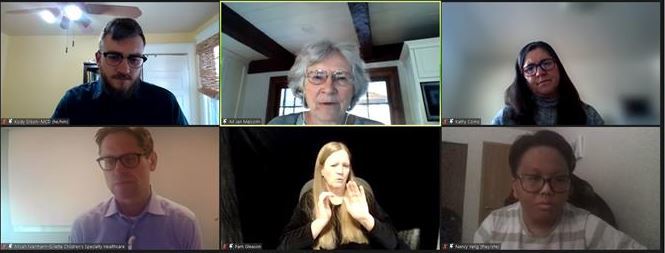
On February 7, the Minnesota Council on Disability (MCD) hosted a disability community town hall with the Minnesota Department of Health (MDH).
Health Commissioner Jan Malcolm and epidemiologist Kathy Como-Sabetti provided a presentation on the state of the COVID-19 pandemic. Gillette Children’s Specialty Healthcare also provided an update on their service operations.
The disability community asked questions and shared concerns with the panelists. Topics included:
-
Disability services staffing shortages,
-
Access to high-quality masking, and
-
Allocation of COVID-19 treatment therapies.
During these comments, Commissioner Malcolm remarked on the disability community’s advocacy: “You've been powerful voices, and you are teaching us, and we are learning.”
For people who are immunocompromised or have comorbidities, the panelists stressed these recommendations:
-
Get vaccinated to reduce the risk of serious illness or complications from COVID-19.
-
Wear a high-quality N95 mask to better protect yourself from the virus.
MCD is grateful to MDH for their community engagement and taking time to learn from the disability community. We are also grateful to community members and allies who attended and shared their stories.
Legislative Session Update with Trevor Turner
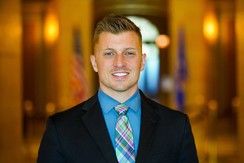
We are two weeks into the 2022 Minnesota Legislative Session. There is a frenzy of legislators, lobbyists, and advocacy organizations trying to ensure their bills meet important deadlines.
March 25 is the first committee deadline. By this date, all bills introduced this session must be heard in at least one relevant committee in either the House or the Senate to survive until the second committee deadline on April 1.
By April Fool’s Day, all bills must be heard in committees in both the House and Senate if they are to be considered for passage.
|
Telling Your Story This Legislative Session
Talking to your legislator is easy and can be fun! By following a few basic tips, you can start to build relationships and have a real impact on policymaking
Facts and figures are great, but legislators want to hear your personal story. They want to know why you care about the issue and how it affects their constituents. Your own story is the most powerful tool you have in winning them over to your cause. There are a few basic elements to a good story:
-
Who are you?
-
What is the issue you want to discuss?
-
What do you want them to do about it?
There are many ways to develop your message. One way is to use an app like. Note: This is not an endorsement of any product or service. The following information is only for your reference.
From the iOS App Store description:
Using this app you'll develop your personal story to support your case. By responding to the provided questions, you'll be guided through building your testimony, and have a chance to review and edit it before sharing. You'll be sending your story as an email, and you'll be able to choose where to send it.
|