|
Mission Statement
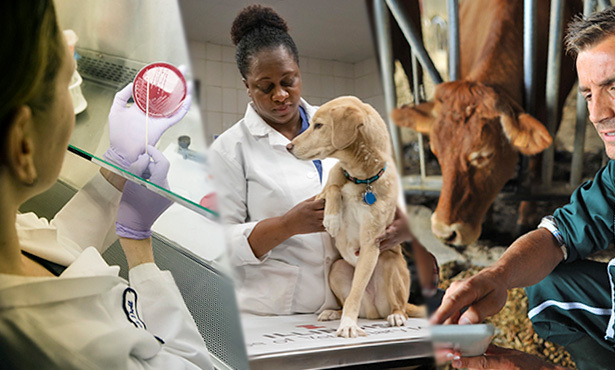
The mission of the Minnesota Board of Veterinary Medicine is to promote, preserve, and protect the health, safety, and welfare of the public and animals through the effective control and regulation of the practice of veterinary medicine.
|
|
Current Board Members
To view a list of current board members, please click the link below.
|
More Information
Click on the link below to visit the Board's website.
|
|
Understanding Veterinary Feed Directives (VFDs)
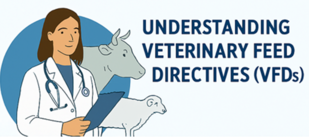
A Veterinary Feed Directive (VFD) is a written order from a licensed veterinarian that authorizes the use of certain medications in animal feed. These medications, called VFD drugs, can only be used under FDA-approved conditions to ensure responsible and safe use.
What Makes a VFD Lawful?
- Issued by a licensed veterinarian in the course of professional practice.
- Complies with federal regulations (21 CFR 558.6).
- Issued within a valid Veterinarian-Client-Patient Relationship (VCPR).
Examples of VFD Drugs
- Tylosin – controls liver abscesses in cattle.
- Florfenicol – treats respiratory disease in cattle and swine.
- Lincomycin – used in swine feed for bacterial infections.
- Chlortetracycline – treats bacterial infections in livestock.
Who Needs a VFD?
Any medicated feed containing a VFD drug—whether for food-producing or non-food-producing animals—requires a VFD order.
Key Takeaways
- VFDs ensure safe and regulated use of medicated feeds.
- Only licensed veterinarians can issue VFDs under a valid VCPR.
- Applies to both food and non-food animals.
Learn More
Visit the FDA’s VFD resource page: https://www.fda.gov/animal-veterinary/development-approval-process/veterinary-feed-directive-vfd
|
Practice Act Update
The Minnesota Board of Veterinary Medicine has drafted legislative language to modernize and update its Veterinary Practice Act. This initiative reflects the Board’s commitment to ensuring that veterinary regulations remain current, effective, and responsive to the evolving needs of the profession and the public.
A diverse and collaborative task force—comprising veterinarians, industry experts, regulatory partners, and other stakeholders—worked diligently to develop these proposed updates. Key areas of focus include:
- Veterinary-Client-Patient Relationship (VCPR)
- Telemedicine
- Prescription Drug Protocols
- Equine Dentistry
- Practice of Veterinary Medicine definition
- Veterinary Drug Repository
These proposed changes aim to enhance clarity, improve access to care, and uphold the highest standards of veterinary practice in Minnesota.
|
Board of Veterinary Medicine Complaint Process

Confidentiality
- All complaints and investigations conducted by the Board are confidential under Minnesota law until a final disciplinary action is taken.
- Information gathered during the investigation, including medical records and personal statements, is treated with strict confidentiality and is not shared publicly.
- If the matter results in public disciplinary action, only the final order becomes public; all investigative details remain private.
Complaint Process Overview
- Complaint Filing
- When the Board receives a complaint, it reviews the information to determine whether the allegations fall under the Veterinary Practice Act and the Board’s jurisdiction.
- If additional information is needed, the Board may request records or statements from you and other involved parties.
Investigation
- The Board conducts a confidential investigation. This may include reviewing medical records, interviewing witnesses, and obtaining expert opinions.
- You will have an opportunity to respond to the allegations and provide supporting documentation.
Board Review and Decision
- After the investigation, the Board determines whether a violation occurred. Possible outcomes include:
-
No Action (complaint dismissed)
-
Corrective Action Agreement (non-disciplinary, educational/remedial steps)
-
Disciplinary Action, which can include:
- Reprimand
- Conditions or limitations on your license
- Suspension or revocation in severe cases
Role of HPSP
- The Health Professionals Services Program (HPSP) monitors health professionals whose illness or condition may impact safe practice.
- If you self-refer and remain compliant with HPSP requirements, the matter often stays confidential. However, if compliance is not maintained or if there is potential risk to patients, HPSP is obligated to report to the Board.
Legal Representation
- Many licensees choose to consult an attorney experienced in professional license defense, especially when signing agreements or responding to Board inquiries.
- While legal representation is not required, it can help ensure your rights and interests are protected during the process.
Next Steps
- If the Board contacts you, respond promptly and provide requested documentation.
If you have questions about the process or need forms, visit the Board’s Complaint Page or contact them directly at vet.med@state.mn.us or 651-201-2844.
|

The Minnesota Board of Veterinary Medicine is pleased to share that we will be undertaking a full redesign of our website in 2026. This initiative reflects our commitment to improving communication, accessibility, and transparency for both veterinary professionals and the public.
Our vision for the redesigned site is to create a more welcoming, user-friendly, and mobile-responsive resource that meets the needs of today’s digital audience. The new design will feature:
• Improved Navigation: Making it easier to find licensing information, regulations, and resources.
• Enhanced Transparency: Providing clearer, more accessible information about Board activities, decisions, and processes.
• Mobile-Friendly Experience: Ensuring that users can access important information seamlessly from any device.
This project is part of our ongoing effort to strengthen engagement and provide timely, accurate information to the veterinary community and Minnesota residents. We look forward to sharing updates as the redesign progresses and unveiling the new site in 2026.
|
Why Compliance Matters
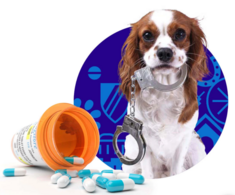
Compliance with the Controlled Substances Act (CSA) and Drug Enforcement Administration (DEA) regulations is essential for veterinarians. These rules help prevent drug diversion, protect public health, and ensure safe use of controlled substances in veterinary medicine. Non-compliance can lead to fines, loss of DEA registration, and legal consequences. Following these guidelines safeguards your practice, patients, and professional reputation.
DEA Registration
- Register with the DEA if you prescribe, administer, or dispense controlled substances.
- Renew every 3 years, online only.
Link: DEA Forms & Applications - Diversion Control Division | DEA Forms & Applications
Ordering Controlled Substances
Security & Storage
- Store controlled substances in a securely locked, substantially constructed cabinet.
- Limit access to authorized personnel only.
Inventory & Recordkeeping
- Complete initial and biennial inventory.
- Maintain accurate records for at least 2 years.
- Keep Schedule II records separate from Schedules III–V.
Theft or Loss
Disposal of Controlled Substances
- Use DEA Form 41 for disposal.
- Link: Disposal Guidelines & Form 41 - eCFR :: 21 CFR Part 1317 -- Disposal
- Send to a reverse distributor or destroy to an irretrievable state.
- Do not accept unused controlled substances from clients.
Quick Access Links
Compliance Checklist
- DEA registration current and renewed every 3 years
- Controlled substances ordered using correct forms (Form 222 for Schedule II)
- Secure storage cabinet in place; access restricted
- Initial and biennial inventory completed
- Records maintained for at least 2 years and organized by schedule
- Theft or loss reported within 1 business day and follow-up completed
- Disposal completed via Form 41 and reverse distributor
- Never accept unused controlled substances from clients
|
|
|
Tips: Who Else to Call?
Board of Animal Health: reportable diseases, rabies certificates, MN health certificates, animal identification, commercial dog and cat breeders
Board of Chiropractic Examiners: human chiropractors working on animals
Board of Pharmacy: compounding, drug label requirements, pharmacy or pharmacist complaints, license verification, prescription monitoring program
DEA: controlled substances, DEA registration
MVMA: veterinary technician credentials and CE
USDA/APHIS: federal accreditation, heath certificate requirements
DNR: wildlife questions
FDA: Veterinary feed directives, AMDUCA
MN Pollution Control Agency: disposal of medications and other substances from a veterinary practice
Contact Information for Related Agencies
Minnesota Board of Animal Health: 625 Robert Street North, St. Paul, MN 55155 http://mn.gov/bah/ (651) 296-2942
Drug Enforcement Administration: 100 Washington Avenue South, Suite 800 Minneapolis, MN 55401 www.deadiversion.usdoj.gov/index.html DEA Regional Field Office at (612) 344-4136 National Office toll free 1-800-882-9539
Minnesota Board of Pharmacy: 335 Randolph Ave, Suite 230, St. Paul, MN 55102 http://www.pharmacy.state.mn.us/ (651) 201-2825
Minnesota Department of Health: Stacy Holzbauer, DVM, State Public Health Veterinarian, 625 Robert St. North St. Paul, MN 55155-2538 (651) 201-5107 stacy.holzbauer@state.mn.us
FDA Minneapolis State Liaison: Ryan Benedict (612) 758-7191 ryan.benedict@fda.gov
USDA APHIS Veterinary Services: (608) 662-0600 vspswi@aphis.usda.gov
Minnesota DNR: 500 Lafayette Rd., St. Paul, MN 55155 http://www.dnr.state.mn.us/index.html (651) 296-6157 info.dnr@state.mn.us
MN Pollution Control Agency: 520 Lafayette Rd., St. Paul, MN 55155 http://www.pca.state.mn.us 1-800-657-3684
|
|
|
|
|