|
Read the newsletter in Español, Soomaali and Tiếng Việt
Emergency Go-Kits: Supporting neighbors in need during a challenging time
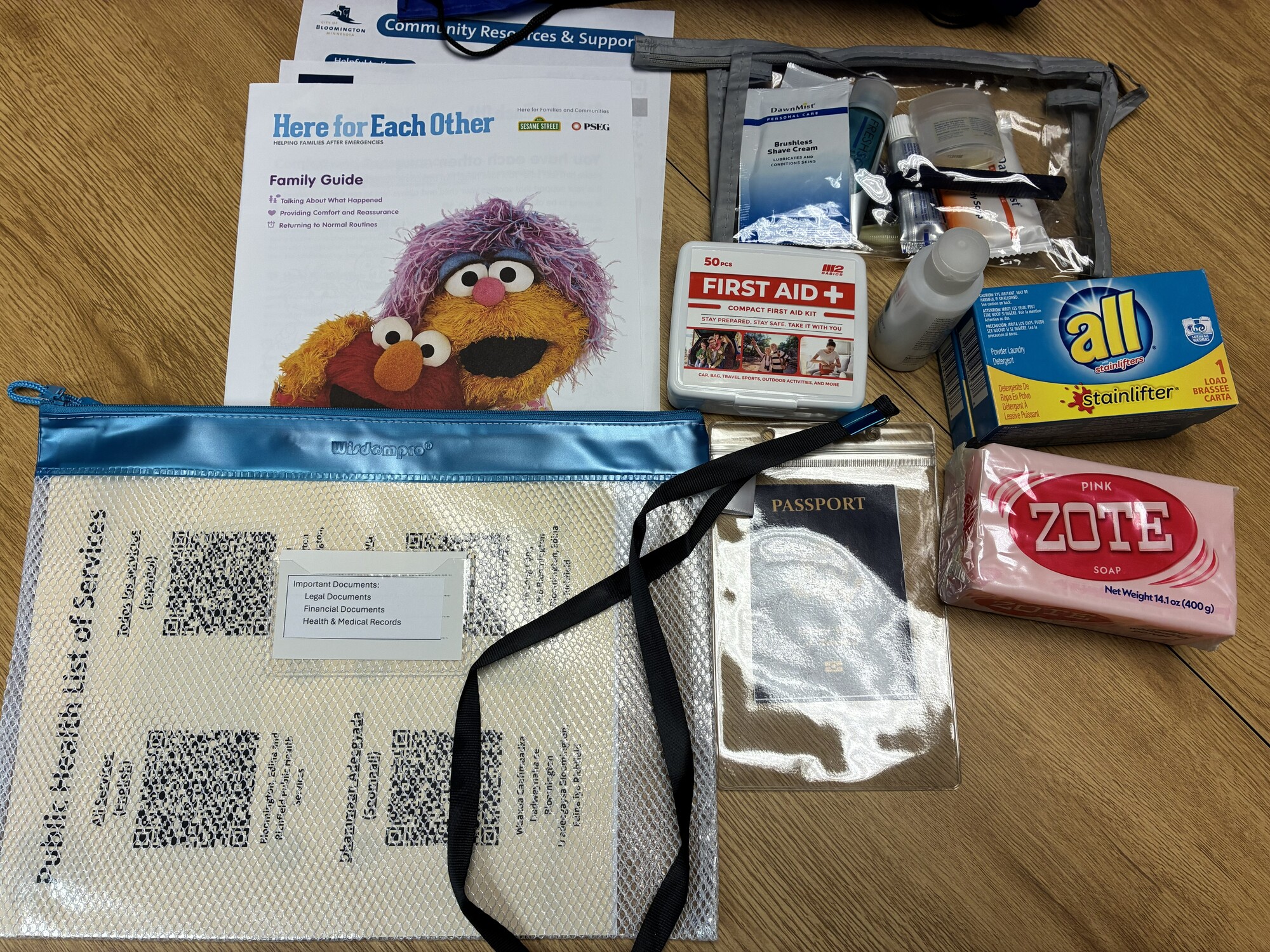
Operation Metro Surge impacted our community. For many, it was an emergency situation requiring our neighbors to stay home, or shelter in place, during a very difficult time. This impeded our community members’ ability to work and access necessities such as food, hygiene products, and infant care items. Bloomington Public Health stepped up to help those in need by assembling emergency “Go-Kits” that contain basic items a household may need in an emergency. Three kinds of kits were offered:
-
Base Kits with basic hygiene items (shaving cream, razor, comb, soap, toothpaste, toothbrush, deodorant, shampoo, lotion), laundry soap, first aid kit, passport holder with lanyard, and an important-documents holder with a list of community resources.
-
Menstrual Care Kits including pads and tampons.
-
Infant/Toddler Kits including diapers sized 1-6, wipes and zinc oxide cream.
As of mid-July, Public Health distributed 279 Go-Kits: 90 base kits, 45 menstrual kits and 144 infant/toddler kits; distribution is ongoing. Public health nurses, dietitians and other staff deliver Go-Kits directly to families at the Bloomington Public Health Center and in residents’ homes. Staff also distributed kits to community partners such as the Richfield Health Resource Center so that they may provide them to their community. Katie Meaux is a dietitian in the Women, Infants and Children (WIC) Supplemental Nutrition Program who has distributed Go-Kits to families.
“Those who are struggling…to keep their families safe, clean, and cared for are so grateful to receive this support,” shared Katie. “I feel that offering these supplies lets folks know that people are here to support them and we care about their well-being. It lets people know that we see the challenges they are facing.”
For public health professionals, the connection to their community is often what attracts them to this work. The Go-Kits have helped give staff a sense of purpose and connection with others. Afaf Saleh is a public health nurse who has also distributed Go-Kits.
“Efforts like the Go-Kits help the communities we serve immensely. I am very proud of our Public Health Department and the City of Bloomington for always trying to figure out ways we can extend ourselves and be there for our communities,” Afaf said.
With Go-Kits, Afaf has formed deeper connections with her clients, holding space for their struggles and connecting them with resources.
Afaf shared the story of a family that did not leave their home for two weeks and were running out of necessities like groceries, laundry soap and diapers. They also stopped going to work, leaving them with no income during that time. The Go-Kits, along with food banks, were very important resources to them. “The mother expressed her deep gratitude for the Public Health Department for helping her get through that difficult time,” shared Afaf.
While the federal government announced the end of its immigration enforcement surge in February 2026, the community is still recovering. Bloomington Public Health continues working to assess the surge’s impact on individuals, families, businesses and organizations. “Our community is still searching for ways to support families who are recovering,” said Katie.
Residents of Bloomington, Edina and Richfield may share their experiences now through August 15, 2026, in the Operation Metro Surge Community Recovery Survey. Your participation is voluntary, and individual responses are anonymous.
Photo by Thomas Park on Unsplash
Making a difference: voices from the community
“Thank you for providing supplemental food for our family…Thank you for being kind, honest and for never making me feel shame. This program is such a wonderful benefit to women and children and essentially families. Please keep doing what you're doing because there's a lot of people out there like me that are so grateful for people like you.”
-Past participant of the Women, Infants and Children (WIC) Supplemental Nutrition Program
“I want to thank you all for all your help during a difficult season of our lives. It truly helped relieve a lot of the financial burden and provided a lot of healthy food for our kids. We are immensely grateful!”
-Bloomington resident and past participant of the Women, Infants and Children (WIC) Supplemental Nutrition Program
August is National Breastfeeding Month – Get Connected to our Peer Breastfeeding Program
Did you know? The American Academy of Pediatrics recommends exclusive breast/chestfeeding until your baby is six months old. You can then introduce complimentary solid foods while continuing to give human milk until two years or beyond, as long as it is a good fit for you and your baby.
Benefits of breast/chestfeeding and giving human milk include:
-
Helps build a strong immune system in your baby.
-
Human milk has the optimal nutrition that your baby needs, and it changes as the baby grows, giving them the perfect amount of carbohydrates, proteins, fats, vitamins and minerals.
-
Improves your baby’s cognitive development.
-
Increases physical and emotional bonding between you and your baby.
-
Lowers your risk for postpartum depression, certain cancers, type 2 diabetes, and osteoporosis.
-
Quicker recovery from childbirth.
-
Convenient and you can do it anywhere.
-
It’s free and environmentally sustainable.
Our WIC Peer Breastfeeding Program improves health outcomes by increasing the percentage of individuals who start out breast/chestfeeding their baby and continue doing so.
Key facts about the Peer Breastfeeding Program:
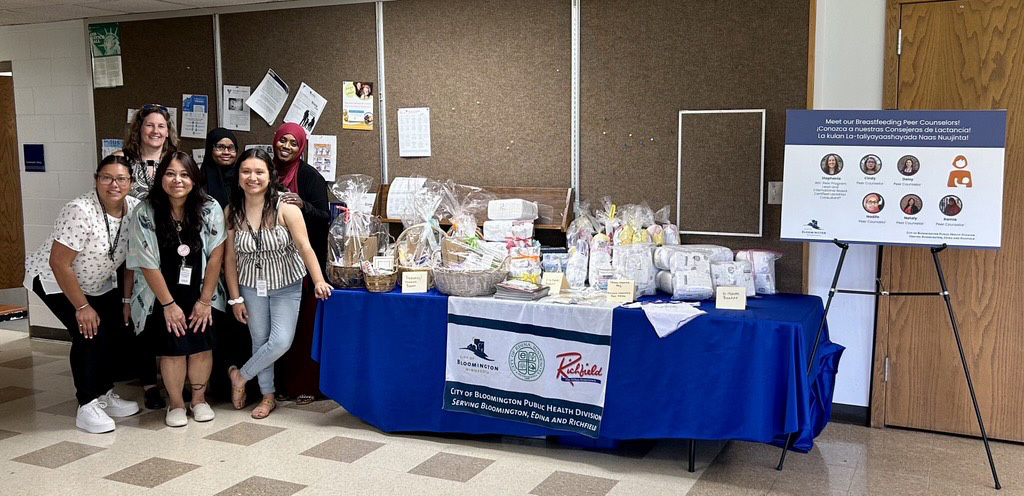
- The program is open to WIC participants in Bloomington, Richfield, and Edina and is led by an International Board Certified Lactation Consultant (IBCLC) with five peer counselors. The counselors are all parents with personal experience breastfeeding their own children.
-
Peer counselors are trained in breastfeeding education and in client-centered counseling skills. If there are questions beyond their training, they can partner with the IBCLC who has additional training and education.
-
Peer counselors are recruited from the communities they serve and often speak the same languages as their clients. They have similar life circumstances and experiences as participants, making them a trusted source of information and support.
-
The Peer Breastfeeding Program strives to help each parent reach their personal infant feeding goals until their baby is one year old.
Learn more about the local Peer Breastfeeding Program. Find out if you are eligible for the program by calling 952-563-8993 or submitting an online referral form.
Upcoming community events
Check out our events calendar to see where you can find us in the community!
|




