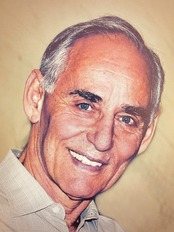
Ken Cloke is a world-recognized mediator, dialogue facilitator, conflict resolution systems designer, teacher, public speaker, author of numerous books and articles, and a pioneer and leader in the field of mediation and conflict resolution for the last 45 years.
Mr. Cloke, I was at a recent training you did for the Association for Conflict Resolution. You told us about a great project you worked on where there was a lot of consensus. How were you able to get diverse people to come together to design the Santa Monica promenade?
I have been a mediator for 45 years, and part of what I do is public policy mediation. I have done environmental cases, zoning ordinance issues, “not-in-my-backyard” (NIMBY) projects, and others, applying my skills to a wide variety of local political problems.
My colleague Joan Goldsmith and I worked with the Santa Monica Planning Commission to facilitate a series of meetings to get buy-in to develop Main Street and the “Mall” – including the Santa Monica Promenade. The area used to be a bit seedy – it’s close to Venice and was a not very populated beach town, and there wasn’t much being done to develop it in the past. We determined what the Commission had in mind in terms of improvements and came up with a proposal.
The process began with a needs assessment and convening the various parties, a starting point in what’s called consensus building or collaborative problem-solving. We conducted interviews and figured out who were the key stakeholders. We did interviews with homeowners, renters, business owners, small nonprofits, city government officials, police officers, local clergy, and others. We created ground rules, or what I call “protocols for constructive engagement.” We went from group to group to get their agreement, and the sense of their leadership about what would be needed to participate constructively in this process. Then we called them together and agreed on some ground rules – for example, that no one would issue press releases until we were done; that any press release would be a joint press release; and that at the end, we would report together to the City Council as a group, rather than merely as a collection of individuals and interests.
Then we started having what we called “accordion meetings” – where a small group of designated leaders and their alternates would meet and discuss issues, then go back out to their constituents and tell them what was happening in the process, ask for their advice about issues raised, anticipate possible future issues, then report back to the small group of leaders. We also held a series of “sidebar” meetings where, for example, landlords and tenants – two important groups that had previously experienced controversy – could discuss their concerns and commit to the process.
Then we conducted meetings about the project as a whole. We asked attendees questions like, “What words would you use to describe the kind of city you want to live in?” Those words were our guide to understanding whether our process was working. We also asked, “What would be the worst thing that could come out of this process?” Periodically we would check in to make sure we avoided those pitfalls. We had the flipchart with these words on it in every meeting, and periodically we would invite people to tell us how we were doing in avoiding them.
We began each meeting with a check-in to ask people how they were doing, how things were going, and what the mood was among their constituents. Based on the check-in, we would decide what needed to go onto the agenda. For example, we discussed ideas about what we needed to do in terms of a zoning ordinance, and collaborated with the Planning Commission, who partnered with us in these meetings. They would write up in zoning language what people had discussed, then bring it back to the group and we would accumulate points of consensus. It really was a gorgeous process.
After we reached consensus on many detailed parts of the plan, we would step back periodically and ask, “Is this really what we want?” “What have we not addressed?” “What do we need to address to make this work?”
At the end of the process, we had forged a team that represented each constituency in the process, and they presented the plan to the City Council. Each leader presented a part of it. The room was filled with people. The principal leaders described the process and how remarkable it was to sit down and reach not only consensus, but unanimity. The essence of their message was, “We are united on this plan – your role is to approve it. If there are problems, let us know and we will work them out.” The City Council had no option but to adopt the whole plan.
After that meeting, we debriefed the process. We put people into small mixed teams and had them give us their “plusses and minuses” regarding the process so we could learn from it. We scheduled another meeting about 3 months out to make sure we were still on track and that everyone was still on board. A group worked with the Planning Commission to make sure the construction, the signage, everything was done well and looked beautiful.
You said it was a “gorgeous process.” What made it feel that way?
We had a group that historically had been deeply divided, and they were able to create dialogues about how they really felt about important issues. Those dialogues brought people into connection and created empathy. We encouraged storytelling and asked people to give examples of what they described and invited others to respond and acknowledge what they heard. It wasn’t that they didn’t disagree, or that they ignored their roles [as group representatives], but that the enmity had dropped. They knew they had something in common. This encouraged joint problem solving.
We said to them, “If we don’t reach agreement here, the City Council will do what it wants without our input, so together we should work out some agreements.” It was the dialogue and the atmosphere of constructive, collaborative problem-solving that made it gorgeous. Having people imagine how they wanted the city to be was exciting.
Who initially engaged you in the redesign work?
Because we had done an earlier project with the Santa Monica Planning Commission where people were very angry about an issue and we successfully worked through it, we went to the Commissioner [about Main Street and the Promenade] and we said, “We might be able to help you.” What usually happened in Santa Monica – and what happens in many cities – is that city councils decide on a solution concerning a contentious issue, they announce it to the community, then people show up at a meeting, and yell at city council members. No one gets asked what they want beforehand. They don’t have a voice.
As a dispute resolution designer and a mediator, I could see that the zoning process was a system that didn’t work. Dispute system designers and mediators are able to come in and work on these disputes, identify what doesn’t work, and redesign them to produce the outcomes communities want.
What roadblocks did you run into and how did you navigate those to help the group move forward?
The biggest roadblock we faced at first was community organizations asking us the question “Why should we trust you?” The Chamber of Commerce, the tenants’ organization…everybody wondered who we were. They wanted to know if we had an “angle.” What we always do, and what we did here was, in the beginning, to say, “We have been brought in by ‘X’ party - but in our mind, you are our employers. If you decide you don’t want us, we will be gone. We report to you, we will tell you what we are doing, and you will tell us how we are doing.”
That’s interesting. How else did you help people develop trust in you and in the process?
In our process, we didn’t give attribution to what was said. There was no confidentiality, because the leaders had to talk about the process to their constituents. Also, we let them know that we worked for them, that they could fire us at any time, and that we wouldn’t say which group said what, but would focus on only solutions they built together – that built a lot of trust.
We were also responsive to their requests. We knew that we had to identify various parties’ interests and do what we could to satisfy them. So, when people said at the beginning that they didn’t think they would be listened to, we actually listened to them, and we would bring something back to them. For example, some people didn’t think landlords would listen to tenants. So, we asked the landlords separately, “Will you listen to tenants?” When they said yes, we brought that back as a proposed ground rule to the tenants.
If there was a problem on a key issue, we would stop everything and say, “We are not going forward unless we have an agreement on this issue.” We would put other things in the “parking lot” to address later, but only if everyone agreed. Then we would check in on the parking lot issues at every meeting. If it was a super-important issue, that item got onto the agenda. So we just kept listening and responding to move the group forward. Agendas were always drafts – we got feedback and then circulated the final draft before the meeting. But when we started the meeting, we would always review and get agreement on the agenda.
A lot of the way I approach consensus-building comes from my mediation practice. As mediators we learn how to acknowledge the underlying emotions that people are experiencing. We learn how to work with frustration, how to help people articulate what is troubling them. In this project, we did a lot of that. People experienced everything from unbridled optimism to complete despair. We worked with that. And we had to help people do a lot of relationship-building. There was a lot of joking, playing around. We made it relaxed. The check-ins helped with that. We would ask people how they were doing personally. Sometimes people weren’t okay. It was good to hear that, acknowledge it, and ask people if they could still participate. The core project issues were always heard and dealt with, but people were also emotionally taken care of.
What advice do you have for facilitators and collaborative problem-solvers as they engage with different audiences to work on a massive project like this one?
Trust the process and trust the people. It’s not that you agree with everyone but bringing people together into conversation with one another is going to reveal the way forward.
Also, don’t give up. There are moments when you may get stuck, and without knowing it, opportunities will arise for some new synergy, some higher form of combining interests, that will draw people into a successful outcome. You don’t know where those will appear until you start talking and trying to work things out.
Sometimes you will be flying blind, but it’s okay to fly blind. If your heart is in the right place, this will see you through. In Santa Monica, what drew people together was that they all cared about the city. We would sometimes say, “Everyone here cares deeply about this city, and about the kind of city they and their children will live in.”
Every mediation I do, every public policy dispute I work on, I have no idea what is going to happen. But I have done it so often that I know it is going to be good. No matter what the issue is, I know we are going to figure out how to make it better by the end. It helps to have a warm-hearted approach to everyone, and to enjoy the people and the process.
Is there anything else you would like to share?
The last thing I will share is an idea. We have discovered that mediation works beautifully on a small scale, and that it also works beautifully, as I have described, on a mid-scale. Now we have to think about how to apply it on a national level, and an international level. How can we apply these lessons to war-torn places around the world? For me right now, the fundamental project is to figure out how to apply this process in the deeply divided political system of the United States and globally.
|