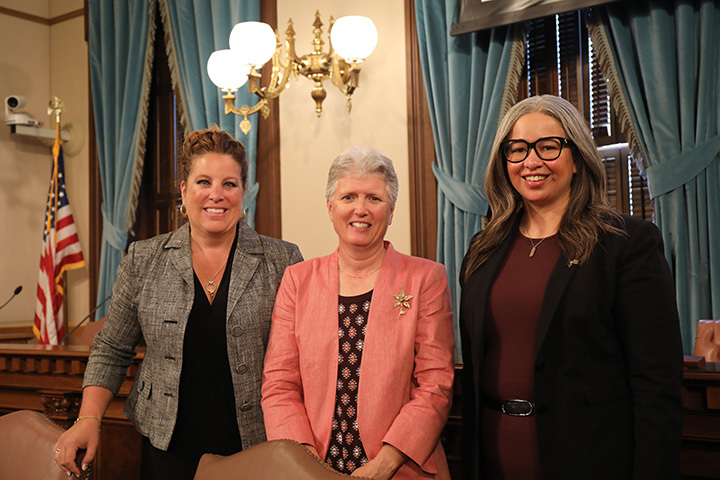
 Senate Fiscal Agency Director Kathryn Summers, House Fiscal Agency Director Mary Ann Cleary and State Treasurer Rachael Eubanks made history on May 20 as the first all-female principals at an in-person Consensus Revenue Estimating Conference.
This edition's stories:

Governor Gretchen Whitmer recently announced a total of $3 million is being awarded to fund infrastructure and public safety enhancements in 11 municipalities that will help move the municipality toward financial stability.
For fiscal year 2022, the Michigan Legislature appropriated $2.5 million for the program, with a $500,000 carryover from the previous fiscal year. The Financially Distressed Cities, Villages and Townships (FDCVT) Grant Program has a $2 million cap per municipality and grants are awarded based on applications submitted by the municipality.
Award recipients and local reactions can be found in the related press release.
“The Michigan Department of Treasury looks forward to working with our local partners to find projects that could help move a community toward financial stability,” said State Treasurer Rachael Eubanks. “Our team will ensure these grants are provided to our local communities as expeditiously as possible.”
Municipalities can participate in the FDCVT Grant Program if they are experiencing one or more conditions indicative of “probable financial stress” as outlined within state law. The grants fund specific projects, services, or strategies that move a city, village, or township toward financial stability.
|
Governor Whitmer Awards $5 Million to More than 60 Communities to Support First Responders
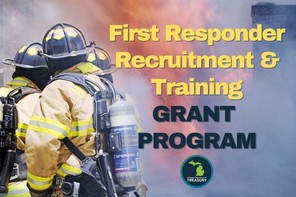
Governor Gretchen Whitmer recently announced that more than 60 Michigan communities will soon begin receiving awards from the $5 million First Responder Training and Grant Program.
“Michigan’s first responders put their lives on the line to keep us all safe and we must have their backs,” Governor Whitmer said. “Today’s grants will help more than 60 communities across Michigan train and recruit first responders. And in my budget for next fiscal year, I’ve proposed additional funds to help communities hire and train even more first responders including firefighters, police officers, paramedics, and EMTs. Let’s keep working together to keep Michiganders safe.”
As a part of the First Responder Training and Recruitment Grant Program, all Michigan cities, villages, townships, counties or fire authorities were eligible to apply for a grant related to first responder training and recruitment. First responders are police officers, firefighters, Emergency Medical Technicians (EMTs), paramedics and local unit of government corrections officers.
The grant program supports efforts of local governments to expand recruitment, improve training, and provide additional professional development and support to first responders in local governments.
A list of award recipients and regional quotes is available in the grant announcement press release.
Applications were selected for funding by the Michigan Department of Treasury based on program purpose, eligibility and criteria. Projects are funded on a reimbursement basis.
"Pushing these dollars to our communities will help with training the next generation of first responders,” State Treasurer Rachael Eubanks said. "Our priority will be to make payments to communities as soon as practical. Community leaders with questions about their grants should reach out to us to navigate the reimbursement process."
To learn more about the First Responder Training and Recruitment Grant Program, go to Michigan.gov/FRG.
|
Whitmer Kicks Off Tuition Giveaway to Celebrate Anniversary of Michigan Education Trust
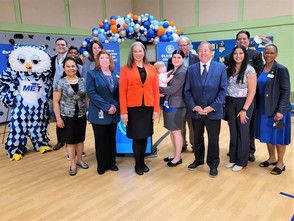
In celebration of the Michigan Education Trust’s (MET) 35-year anniversary, Governor Gretchen Whitmer recently announced the launch of the MET 35th Anniversary $1.5 Million Giveaway, a random, statewide drawing that friends and family can enter on behalf of a child for a chance to win one of 100 $15,000 prepaid tuition prizes.
The governor was joined by former Governor Jim Blanchard, State Treasurer Rachael Eubanks, former state Sen. William Sederburg, Lansing School District Superintendent Ben Shuldiner, and teachers, students, parents and community leaders at Riddle Elementary School.
“This life-changing giveaway is an awesome way to celebrate 35 years of helping Michigan families save for higher education,” said Governor Whitmer. “It will help more students attain the education and skills they will need to achieve their career goals and bring us closer to meeting our goal of 60% of working-age adults with a skill certificate or college degree by 2030. I applaud Treasurer Eubanks and the MET Board for making this opportunity possible, and I especially want to thank Governor Blanchard for his leadership and long-term vision that have left a remarkable legacy. I would encourage any family thinking about saving for higher education to look into MET — as my parents did for me — and start today.”
Under MET’s giveaway, Michigan residents 18 years or older on Aug. 31, 2022, are eligible to enter on behalf of beneficiaries ages birth to 5 by the same date for a chance to win $15,000 in prepaid tuition. A person may enter only once, but multiple people may enter on behalf of the same child. The prepaid tuition prize may be used to pay for future tuition and mandatory fees at a community college, college, university or trade school in accordance with MET terms and conditions.
“A lot has changed over the past 35 years, but one thing still holds true today — a family’s desire to help put their children on the path to a bright and successful future,” said former Governor Blanchard, who proposed the MET plan in his State of the State address in 1986 and signed it into law later that year. “Back then, parents and grandparents didn’t have a lot of options to save for a child’s higher education. We created MET, and it has been a key that has helped unlock opportunities for tens of thousands of Michiganders to receive the education, training and skills that lead to better jobs, social mobility and economic security. I’m proud of the lasting impact MET has had on so many.”
The giveaway is not being funded by state tax dollars. A prudent investment strategy over the last decade has resulted in a record surplus for MET, which can now be used to invest in Michiganders. Earlier this year, the MET Board of Directors unanimously agreed to use a portion of the surplus to elevate awareness of MET and provide more Michigan children with access to higher education that will help them prepare to compete in a modern workforce and solve future challenges.
“The idea behind the giveaway is to help make 100 dreams come true by reaching more families and helping more children achieve success through higher education,” said Treasurer Eubanks, who also serves on the MET Board. “We are excited to shine a $1.5 million spotlight on MET and show parents, grandparents and others how it’s a safe, secure and flexible way to make sure their loved ones meet their future education and career goals.”
Giveaway entry began on May 26 and ends on Aug. 31, 2022. Winners will be announced in a series of drawings beginning Sept. 12. Michiganders can enter the giveaway and review rules and eligibility criteria at www.METgiveaway.com.
“As the only school district in Michigan that offers free pre-K to all students living within our boundaries regardless of family income, the Lansing School District is committed to enriching our young learners by building a strong foundation for lifelong curiosity and well-being,” said Lansing School District Superintendent Ben Shuldiner. “But that foundation is just one part of the equation. Pursuing higher education can be financially unattainable for many students. MET is a great resource to help families save for future higher education even if it’s just in small increments a little bit at a time. This giveaway can help provide a child with a $15,000 head start toward his or her future. I strongly urge families in Lansing and across the state to enter.”
|
Fraudsters Using Fake Letters in Collections Scam; Taxpayers with Past-Due Tax Debts Urged to be Alert

Michigan taxpayers with past-due tax debts should be aware of an aggressive scam making the rounds through the U.S. Postal Service.
In the scheme, taxpayers receive a letter about an overdue tax bill that requests individuals to immediately contact a toll-free number to resolve an outstanding state tax debt. The letter aggressively threatens to seize a taxpayer’s property — including bank accounts, wages, business assets, cars, real estate, refunds and cash — if the debt is not settled.
“We have received reports that taxpayers are receiving these letters,” said Deputy State Treasurer Glenn White, who oversees Treasury’s Revenue Services programs. “Taxpayers have rights. If you have questions about an outstanding state tax debt, please contact us through a verified number so we can talk about options.”
The piece of correspondence appears credible to the taxpayer because it uses specific personal facts pulled directly from publicly available information. The scammer’s letter attempts to lure the taxpayer into a situation where they could make a payment to a criminal.
The state Treasury Department corresponds with taxpayers through official letters that use state of Michigan letterhead that embody both the names of the governor and state treasurer. These official letters are sent through the U.S. Postal Service, provide several options to resolve an outstanding debt and outline taxpayer rights.
Taxpayers who receive a letter from a scammer or have questions about their state debts should call Treasury’s Collections Service Center at 517-636-5265. A customer service representative can log the scam, verify outstanding state debts and provide flexible payment options.
|
Administration and Fiscal Agencies Reach Consensus on Revenue Estimates

Michigan Department of Treasury’s Fiscally Ready Communities (FRC) training program is the national winner of the “Excellence in Community Development Programming Team Award.” The award will be presented in June at the National Association of Community Development Extension Professionals conference in Indianapolis.
“This is an excellent recognition of the benefits of ‘best practice’ training in helping raise the financial and educational fluency of our local units of government,” commented Rod Taylor, administrator for Treasury’s Community Engagement and Finance Division (CEFD).
The Fiscally Ready Communities program was created by the CEFD as an extension of the Michigan Economic Development Corporation’s (MEDC) Redevelopment Ready Communities (RRC) program. While the Redevelopment Ready Communities program helped a community construct a strong foundation for economic development, local government units also required a strong educational foundation around finance, accounting, and operational best practices.
MSU partnership
Partnering with Michigan State University Extension (MSU Extension), Michigan Department of Treasury created FRC learning opportunities to prepare local units for capital asset management, internal controls, and budgeting for fiscal sustainability.
The first state-wide FRC programming was offered in 2019 and conducted in-person. When COVID-19 emerged, the FRC program shifted to webinar format which allowed stakeholders across Michigan to participate and learn together.
A typical FRC webinar is 90 minutes, with half of it presented by MSU Extension and half presented by Treasury staff. Webinars are scheduled at different times and on different days of the week to accommodate busy participants. These online learning events are focused on assisting small and medium-sized communities, where officials and staff wear many hats.
In addition to training webinars, a Fiscally Ready Communities Best Practice Guide was created for communities who want to establish, measure, and maintain policies to increase operational and financial effectiveness and safeguards.
Collaboration
The collaboration between a Community Services Division manager; a senior auditor, and a CEFD analyst; along with MSU Extension’s knowledgeable educators, has created an award-winning training program, offering something for everyone in local government. There are overarching principles and concepts for managers, practical tips on communication for boards and councils, examples of policies for clerks, and detailed information for specific account numbers and internal control.
Congratulations to our MSU Extension partners, Eric Walcott, Tyler Augst, and John Amrhein and to Treasury employees, Eric Cline, Roxanne Foster, and Jerry Nelson (previous Treasury contributors were Kayla Rosen and Stacie Stonebrook). The “Excellence in Community Development Programming Team Award” represents an enormous amount of teamwork and experience focused on assisting local government and the citizens of our Michigan communities.
|
|