July 2021
 Bond Falls in Michigan's western Upper Peninsula.
Gov. Whitmer Announces Credit Rating Outlook Boost as State Continues Economic Jumpstart and Puts Michigan Back to Work
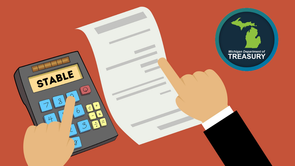
Governor Whitmer on July 7 announced that the state of Michigan's improving economy and multi-billion-dollar revenue surplus coming out of the COVID-19 pandemic have prompted S&P Global Ratings to improve the state's credit rating outlook from "negative" to "stable." The State of Michigan recently announced new revenue projections taking the state from a nearly $3 billion deficit to a $3.5 billion surplus. The move is an affirmation the state is headed in the right direction, saving taxpayers money by lowering borrowing costs for upcoming bond issues.
"This credit rating boost, the second we have received in the last month, is a sign of growing confidence in Michigan's communities and small businesses," said Governor Gretchen Whitmer. "Thanks to our early efforts to respond to COVID-19, we are poised to emerge from the pandemic stronger than ever and continue our economic jumpstart. With billions in federal stimulus and our $3.5 billion state budget surplus, we have a tremendous opportunity to raise wages, invest in schools and small businesses, and uplift families. I look forward to continuing my collaboration with legislature, local communities, and small businesses to put Michigan first. Together, we can get it done."
In its announcement, S&P noted the outlook revision reflects improved economic prospects, generating better than budgeted financial results, and continued budget stabilization.
"Michigan has emerged from the most recent recession better than originally anticipated, with a monthly unemployment rate currently below the national average, after initially being much higher; strong demand for its manufacturing products, particularly as vehicle sales have grown; and smaller draws on its rainy-day fund than initially expected," S&P Global Ratings said Wednesday. "Improved revenue forecasts and additional federal aid indicate that the state, in our view, will likely maintain adequate reserves for the near future."
S&P affirmed the state's AA general obligation rating and AA-minus rating on appropriation debt and Michigan State Building Authority fixed-rate revenue bonds. The outlook action also impacted transportation fund gas tax and truck line fund bonds that carry AA-plus ratings and Detroit Convention Facility Authority debt rated AA. All have ties to the state's rating.
Michigan's fiscal picture stabilized due to federal relief that bolstered the economy and increased tax revenue collections. Gov. Gretchen Whitmer's $67 billion budget proposal restores the reserve draw. Michigan expects a $3.5 billion revenue surge through the next fiscal year due to its accelerating economic recovery.
During the May Consensus Revenue Estimating Conference, the Michigan Department of Treasury and state House and Senate Fiscal Agencies agreed to revenues $3.5 billion more than anticipated in January. Federal stimulus programs and improving public health situation were attributed to the increase.
|
Gov. Whitmer Sends Letters of Gratitude to Small Businesses Who Stepped Up During Pandemic

Recently, Governor Gretchen Whitmer sent letters of gratitude to more than 200 small businesses across Michigan who stepped up in exceptional ways during the COVID-19 pandemic. These small businesses selflessly pivoted their business models and put their communities first, which strongly contributed to Michigan’s efforts to keep Michiganders safe and healthy amidst these historic challenges.
“I am completely in awe of the resilience and determination of Michigan’s small businesses to stand strong and push forward during such unprecedented times,” said Governor Gretchen Whitmer. “Small businesses are crucial to the success of our economy, and we are more than ready to get back on track and uplift our local entrepreneurs to continue to make this state a great place to work and live.”
Throughout the COVID-19 pandemic, small businesses converted their machines and labor to make and distribute personal protective equipment, fresh meals, and other necessary resources to frontline workers and people in need. They also provided inspiration and offered services to combat loneliness in quarantine.
“This pandemic has made it clear that small businesses have always been the heart and soul of our communities,” said Lt. Governor Gilchrist. “I am proud of the hard-working, selfless Michiganders who have supported their fellow residents and local economies. Their actions spread hope to all of us.”
Investing in MI Small Businesses
Because small businesses have been so important to the pandemic response in Michigan, it has been important to Governor Whitmer to personally commend their efforts. In addition to words of gratitude, Governor Whitmer is investing in small businesses in concrete ways. Central to her plan to jumpstart the economy is the Michigan Mainstreet Initiative, a $300 million investment to uplift small businesses.
Earlier this week, Governor Whitmer kicked off the MI Small Business Summer Tour and launched the Michigan.gov/SmallBusiness site to help Small Businesses navigate state programs and services available to help them not only recover, but grow and thrive in the years to come. Throughout the pandemic, the state’s dozens of economic relief programs for businesses supported more than 25,000 companies and retained more than 200,000 jobs.
The state of Michigan is already seeing promising economic results: Michigan’s economy grew 7.6% in the first quarter of 2021, the best in the Midwest, and an independent analysis from the financial publication Credible states that Michigan’s economic recovery is the 2nd strongest nationwide.
Small businesses from every corner of the state stepped up throughout the pandemic. To view the list and map of Michigan small businesses that stepped up, click the links below.
|
 |
Be Alert for Summer Tax Scams
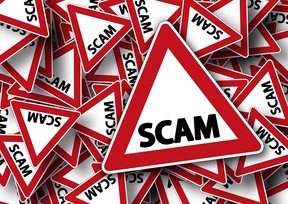
Now that it's July and summer, the Michigan Department of Treasury encourages Michiganders to remain alert for scammers impersonating tax officials through phone calls or emails - or even fake letters through the U.S. Postal Service.
In the summer, the state Treasury Department typically observes scams where criminals claim to be government officials and ask for cash through a wire transfer, prepaid debit card or gift card. These scammers tend to make "urgent" and "aggressive" requests through robocalls, emails or fake letters.
"Scammers don't take summer vacations," said Deputy Treasurer Glenn White, who oversees Treasury's Revenue Services programs. "Taxpayers have rights. If you have questions about an outstanding state tax debt, please contact us through a verified number so we can talk about options."
Scammers often alter their identity to portray themselves as the state Treasury Department, the Internal Revenue Service or another government agency. They often use employee titles, a person's name, address and other personal information to seem official.
The state Treasury Department does not:
- Demand an immediate payment using a specific payment method, such as a prepaid debit card, gift card or wire transfer. Generally, Treasury will first mail a bill to any taxpayer who owes taxes, outlining peaceful steps to be taken to resolve a debt.
- Threaten to immediately bring in local police or other law-enforcement groups to have the taxpayer arrested for not paying.
Threaten to seize a taxpayer's property ― including bank accounts, wages, business assets, cars, real estate and cash ― if the debt is not settled.
- Demand that taxes be paid without giving the taxpayer the opportunity to question or appeal the amount owed.
- Ask for credit or debit card numbers over the phone or through email.
- Taxpayers should hang up immediately if they receive a call from a scammer. Emails should be deleted immediately.
Individuals who have questions about their state debts should call Treasury's Collections Service Center at 517-636-5265. A customer service representative can log the scam, verify outstanding state debts and provide flexible payment options.
|
You’re Invited…

Treasury’s free educational events provide an opportunity to learn about important tax processing and tax compliance topics as well as Treasury updates. Our ongoing goal through this outreach program is to enhance communication, foster a culture of taxpayer service, and identify continuous improvement projects through your feedback.
Click “Register Here” for additional details. Sign up for as many sessions as you need.
- Withholding Rules: Tax, File, and Pay, Wednesday, August 4, 2021 at 1:00 p.m. ET, Register Here
- Withholding Tax and Treasury’s Web Service: Michigan Treasury Online (MTO), Thursday, August 5, 2021 at 1:00 p.m. ET, Register Here
|
Fostering Futures Scholarship Application Deadline Now Aug.1

Young adults who have experienced foster care on or after their 13th birthday now have more time to apply for a scholarship from the Fostering Futures Scholarship Trust Fund.
The Fostering Futures Scholarship application period for academic year 2021-22 will stay open until Aug. 1. Eligible students enrolled at a Michigan degree-granting college or university may now apply to receive scholarship funds for tuition, fees, room, board, books and supplies.
"As Michigan emerges out of the pandemic, we want to make sure all eligible applicants have more time to apply for this very important scholarship," said Robin Lott, director of the Office of Postsecondary Financial Planning. "A Fostering Futures Scholarship can make a real difference in the lives of our foster care youth who aspire to attend college. Every dollar helps create opportunities."
Since 2012, fundraising efforts have totaled more than $1.3 million. This money has been raised through individual donations, group donations, sponsorships, ticket sales, auctions and many volunteer-based fundraising events.
Most of the funds raised have been awarded as scholarships; however, the donor has the option to designate their contribution to the education endowment that supplies investment income for scholarships.
To learn more about the Fostering Futures Scholarship, go to www.fosteringfutures-mi.com.
Fostering Futures Scholarship applicants with questions should contact the state Treasury Department's Student Scholarships, Grants and Outreach Division at mistudentaid@michigan.gov or call toll-free at 1-888-4-GRANTS (888-447-2687).
|
Pizza Party Supports College Dreams

Help make the dreams of a college education a reality for youth who have experienced the foster care system…
JOIN US for the ninth annual Pizza Party on the Capitol Lawn from 11 a.m. to 1:30 p.m. on Aug. 5. Your $5 donation buys you lunch and supports the Fostering Futures Scholarship Trust Fund.
Scholarships are awarded annually to former foster youth enrolled in Michigan colleges and universities. Thanks to your participation, the pizza party events have raised nearly $35,000.
Register now
To help estimate the amount of pizza needed, please pre-register to attend the event. You may register and pre-pay online or register and pay the day of the event.
|
Gov. Gretchen Whitmer Releases Muskegon Heights School District from Receivership

On July 19, Gov. Gretchen Whitmer released the Muskegon Heights School District from receivership under the Local Financial Stability and Choice Act and dissolved its Receivership Transition Advisory Board (RTAB).
The governor's actions follow a recommendation to terminate receivership from the Muskegon Heights School District RTAB. Effective immediately, the school district will regain local control without state oversight, marking the end of any school district or community under active state oversight.
"Today is a new day for the Muskegon Heights School District and the state of Michigan," Governor Whitmer said. "The efforts of the school district and community to identify problems and bring together the resources to solve complex financial challenges are to be commended. I am proud to say that we no longer have any school district or community under state oversight."
Since the state oversight board was appointed in late 2016, the school district has had accomplishments toward continued fiscal stability, including:
-
Ended Fiscal Year 2019-2020 with a general fund balance of $653,744, or 46% of revenues.
-
Added to the general fund balance for three consecutive years.
-
Current on all required pension and other post-employment benefits.
-
Continued compliance with bond and note obligations to date.
The role of the RTAB was to work with local leaders to ensure the school district continued a path toward long-term financial stability. This includes ensuring the school board adhered to its assigned responsibilities and the school district had a balanced budget, which have both been accomplished.
Both the school district and public school academy have systems in place that will continue to govern the relationship of the board of education and academy.
The state of Michigan will continue to support Muskegon Heights schools to ensure a quality K-12 education is provided for its youth.
For example, the Michigan Department of Education has a Partnership Agreement with the school system to prioritize academic outcomes. Recently, the public school academy was awarded a $3 million state grant from the state Education Department to help with literacy initiatives.
The state Treasury Department will continue to provide technical assistance as needed to support long-term financial stability, as well as monitor the district's fiscal health, including the repayment of debt obligations.
Background
In December 2011, the Muskegon Heights School District's Board of Education voted to engage an emergency manager to address the fiscal challenges of the district.
In January 2012, then-Gov. Rick Snyder appointed a six-member Financial Review Team to examine the school district's conditions indicative of a financial emergency. The review team concluded a financial emergency was present in the district and an emergency manager was appointed.
In July 2012, the Muskegon Heights School District entered into a Charter Agreement with the Muskegon Height Public Schools Academy System to operate the district's K-12 education system. This contract remains until long-term debts are paid off.
Upon the conclusion of the emergency manager's term in October 2016, then-Governor Snyder appointed the RTAB to ensure a smooth transition to local control and continued stability for the school district.
Under state law, the RTAB's sole function is to oversee the school district's finances, including working through budgets, debt and deficient elimination plans.
|
Seven Ways To Be Alert and Informed When Considering Student Loans

As Michiganders prepare for the upcoming fall semester and start paying their college tuition bills, the Michigan Department of Treasury's MI Student Aid Team is asking students and their families to be alert and informed when considering student loans.
"More and more, students and families have to cover a considerable amount of their higher education costs," said Robin Lott, director of the Office of Postsecondary Financial Planning. "When student borrowers become financially empowered, they can better understand how to manage and leverage the financial aid they receive."
To make the best decision regarding student loans, the MI Student Aid team recommends seven financial aid best practices tips:
-
Complete the Free Application for Federal Student Aid (FAFSA). Colleges use information from the FAFSA to determine their financial aid awards. By completing and submitting the FAFSA, students maximize all their financial aid options.
-
Understand loans must be repaid. Not all financial aid included in a financial aid award letter is free money. Many financial aid awards will include federal student loans. Unlike grants and scholarships, loans must be repaid with interest.
-
Check the amount of interest being offered on a loan before accepting it. Federal student loans, Parent Loan for Undergraduate Students (PLUS) loans, and private loans have varying interest rates and repayment terms. Before taking out loans, students should identify and compare each loan's interest rate and then accept the loans with the best interest rates and repayment terms.
-
Only accept the amount you will need. Students can either turn down a loan or request a smaller loan amount, and the financial award letter should include instructions on how to do this.
-
Be aware of loan scams. In a typical student loan scam, a scammer will ask for banking information from a student searching for loans. The scammer typically claims they will use the information to make a direct deposit into a student's account in return for upfront fees and gift cards. Instead, the scammer accesses the student's banking account and withdraws funds.
In addition, be aware of repayment scams. You don't have to pay for help when repaying student loans. Contact your servicer if you have repayment questions.
-
Visit the school's financial aid office once a semester. Even though students may not have to begin repaying their loans while they are in school, students should not wait to understand their responsibilities. Students should know the status of their college's or university's student account and keep track of the types of aid they receive. By making this a habit, students can avoid overborrowing and stay within their budget.
-
Create a studentaid.gov account. Studentaid.gov, managed by the U.S. Department of Education, is a one-stop shop for managing federal student aid. With a studentaid.gov account, students can track all their student loans, check the interest rate of each one and total interest accumulated to date. Students can also look over different repayment options, estimate monthly payments and learn who their loan servicer is for when repayment begins.
Individuals have around $1.7 trillion nationwide and more than $52.5 billion statewide in outstanding student loan debt, according to the National Student Loan Data System (NSLDS).
For more information, go to www.michigan.gov/mistudentaid or contact MI Student Aid at mistudentaid@michigan.gov, 1-888-447-2687 or @mistudentaid on Facebook, Twitter, Instagram and Snapchat.
|
MI Classroom Heroes: GSRP, Head Start, Adult Education, and Young Adult Special Education Teacher COVID-19 Grant Program Update

The Great Start Readiness Program (GSRP), Head Start, Adult Education, and Young Adult Special Education Teacher COVID-19 Grant Program gives eligible classroom teachers up to $500 for the sacrifices made and expenses incurred as a result of the COVID-19 pandemic. The state of Michigan’s Fiscal Year 2021 budget provided $2.5 million for eligible classroom teachers participating in this grant program.
On July 16, the state Treasury Department began sending grant checks to eligible recipients through the U.S. Postal Service.
Grant amounts have been "prorated" due to overwhelming demand and only $2.5 million available for all eligible recipients. The term "prorated" simply means that grant awards will be adjusted fairly among recipients based on the dollars available for the program and number of recipients.
In June, the state Treasury Department emailed correspondence to school districts and nonprofit nonpublic schools with their eligible recipients list for the GSRP, Head Start, Adult Education and Young Adult Special Education Teacher COVID-19 Grant Program. Schools had the opportunity to appeal any information provided on their eligible recipient lists due to the grant program's limited funding
More information and resources on the MI Classroom Heroes COVID-19 Grants are available at Michigan.gov/MIClassroomHeroes.
Questions regarding this grant program can be directed to the Michigan Department of Treasury by e-mail at TSSC19Grants@michigan.gov or by phone at (517) 241-6000.
|
 |
State Treasurer Announces Grants for Distressed Municipalities

State Treasurer Rachael Eubanks on July 26 announced a total of $2.7 million is being awarded to 16 municipalities through the Financially Distressed Cities, Villages and Townships (FDCVT) Grant Program.
Municipalities can participate in the FDCVT Grant Program if they are experiencing one or more conditions indicative of "probable financial stress" as defined in state law. The grants fund specific projects, services or strategies -- including infrastructure and public safety enhancements -- that move a city, village or township toward financial stability.
"This grant program helps those municipalities that have faced recent financial challenges," State Treasurer Rachael Eubanks said. "Infrastructure and public safety projects are critical services that residents depend on every day. By proactively assisting our local units of government, we are enabling our entire state to thrive."
For fiscal year 2021, the Michigan Legislature appropriated $2.5 million for the program, with a $200,000 carryover from the previous fiscal year. The FDCVT Grant Program has a $2 million cap per municipality and grants are awarded based on applications submitted by the municipality.
A complete list of award recipients is available on the state Treasury Department's website.
|
Fiscally Ready Communities Upcoming Training Webinars

The Michigan Department of Treasury and Michigan State University Extension (MSU Extension) are excited to announce our next four Fiscally Ready Communities training opportunities. Each FREE training is an hour-and-a-half webinar that's designed to assist appointed and elected officials with entry and intermediate budgeting knowledge.
Option 1: Capital Asset Management and Planning Trainings
This session will cover the basics of a Capital Improvement Program (CIP), best practices, and give participants a chance to share techniques that have worked for their community. Additionally, the training will assist both elected and appointed local officials in outlining your policies and procedures for capital asset management and planning. This will ensure that their local government is being proactive, while discussing the interconnectivity of many local government requirements.
These trainings will take place on:
All three sessions will have the same content, you may register via the Capital Asset Management and Planning Event Registration page.
Option 2: Budgeting for Fiscal Sustainability
This training will provide best practices for local governments' fiscal health including budgeting, long-term planning, dealing with uncertainty, and financial policies and procedures.
This training will take place on:
Please register via the Budgeting for Fiscal Sustainability Event Registration page.
Questions?
For more information about Fiscally Ready Communities, please check out the Treasury Fiscally Ready Communities webpage. This webpage includes Treasury’s 32-page Fiscally Ready Communities Best Practices document, which we encourage all local officials to review.
If you have any questions, please email TreasLocalGov@michigan.gov with the subject line “Fiscally Ready.”
|
New Numbered Letters Regarding Defined Benefit Retirement Systems
 |
Madaras Named State Administrative Manager in City Taxes Division

The Michigan Department of Treasury is pleased to welcome Robin Madaras to the State Administrative Manager 15 position in the City Taxes Division over Compliance and Collections.
Robin is coming to us from the Tax Compliance Bureau, and she is bringing 14 years of field audit experience and over 12 years of management experience as the supervisor of field audit teams in Grand Rapids and Kalamazoo. She has collaborated on several continuous improvement projects and has developed and delivered training for new audit managers in her tenure.
We are looking forward to adding Robin to our CITA ‘Dream Team’ and are excited to begin expanding and developing our work area. Her dedication to service and employee growth will be great assets to our division.
Robin began her new role the week of July 12. Please join us in congratulating her!
|
Berry Named State Administrative Manager in Tax Compliance Bureau

The Michigan Department of Treasury pleased to announce the selection of Trisha Berry to State Administrative Manager 15 within the Tax Compliance Bureau, effective July 11, 2021.
Trisha will provide oversight to the Operations Division's Business Operations area, which supports staff with interpretation and application of statutory changes and litigation, among other duties.
She has been employed with the state of Michigan and Tax Compliance Bureau for 10 years as a senior auditor in the Field Audit area. Trisha holds a master's degree in accounting from University of Phoenix and bachelor's degree in economics from University of Michigan-Flint.
Her prior experience as a senior auditor, dedication and strong commitments to provide outstanding customer service, improvement strategies, cross-forum team-work, leadership in training initiatives and support goals identified by the department will serve her well in this new assignment.
Please join us in congratulating Trisha in her new assignment!
|
Gaudard Named State Administrative Manager in City Taxes Division

The Michigan Department of Treasury is pleased to welcome Gretchen Gaudard to the State Administrative Manager 15 position in the City Taxes Division, overseeing Returns Processing and Customer Contact.
Gretchen is bringing her experience as a departmental manager over two different business tax teams, as well as her experience as a business analyst and trainer.
Her current participation in Treasury’s Change Management Team and previously on the project team that implemented sales, use and withholding taxes onto SAP will make her a great resource for our entire customer service team.
Gretchen began her new role the week of May 30. Please join us in congratulating her!
|
Why did you get vaccinated?
 The Michigan Department of Health and Human Services and the Protect Michigan Commission launched television spots featuring stories from Michiganders on why they chose to get the COVID-19 vaccine.
Can you picture a world without COVID-19? Vaccinations are the way to end the pandemic. The vaccines are tested for safety and trusted by doctors. Protect yourself and others. Find your vaccine at www.Michigan.gov/COVIDvaccine. #MIDoseofHope
|