|
 May 2026 | Volume 16 | Issue 5 | 
|
|
|
May 14, 2026 | 9 a.m. | Board Meeting
May 28, 2026 | 9 a.m. | Board Meeting
View Meeting Minutes & Agendas
Need to report an issue?
Have a pothole or other roadside issue to report to us?
You can utilize our online service request reporting tool!
Service requests can also be submitted by calling our office at 616-842-5400, or by emailing info@ottawacorc.com.
|
|
The Ottawa County Road Commission summer hours
are in effect beginning Monday, May 4, 2026, through Friday, Sept. 25, 2026.
Main office hours are:
Monday-Thursday:
7 a.m. to 4:30 p.m.
Friday:
7-11 a.m.
OCRC maintenance staff remain on-call 24/7 to respond to any after-hours road-related emergencies.
In the event of an after-hours road or public utility-related emergency, please contact 9-1-1 so that our crews may be dispatched.
In observance of the Memorial Day holiday, the Ottawa County Road Commission will be closed on Friday, May 22, and Monday, May 25, 2026.
Our offices will reopen on Tuesday, May 26, 2026, at 7 a.m.
|
|
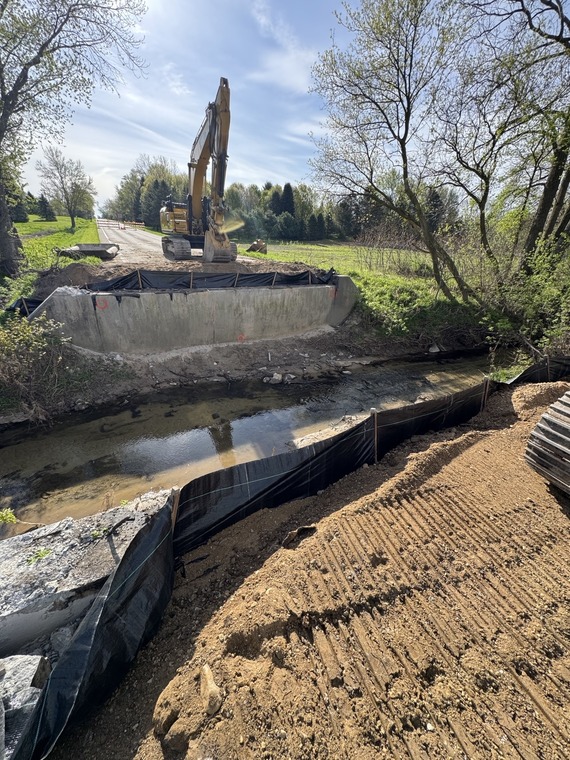
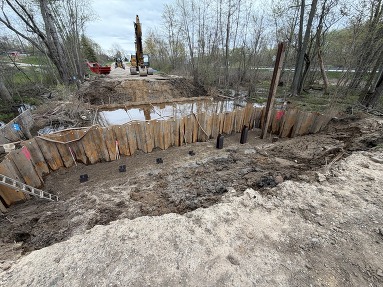
As warmer weather arrives, the Ottawa County Road Commission is gearing up for another active construction season — and this year, several bridge projects are taking center stage.
Bridge infrastructure is a critical part of Ottawa County's road network, and keeping these structures safe and functional requires ongoing investment.
This summer, contractors will be working at multiple locations across the county to replace and rehabilitate aging bridges.
Work is already underway at the Adams Street and Cleveland Street bridge replacement projects, where contractors have been busy with demolition, excavation, and foundation work.
Other projects on 104th Ave. over Black Creek in Holland Township, and 12th Ave. over Rush Creek in Georgetown Township, are slated to take place later this construction season.
Residents traveling near these areas should expect road closures and detours in place while construction is ongoing.
Bridge replacement projects are complex undertakings that involve careful planning and coordination. From removing old structures to driving foundation piles and pouring new concrete abutments, each phase must be completed before the next can begin — which means patience from the community goes a long way.
The Road Commission appreciates the cooperation of residents and motorists as this important work takes place.
Completed projects will serve Ottawa County drivers safely for decades to come.
For the latest project updates and detour information, visit our website, or follow the Ottawa County Road Commission on Facebook.
|
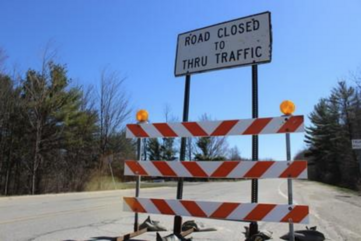
Whenever a construction project impacts the normal use of a county road, warning devices such as barrels, signs, and arrow boards are placed in accordance with a traffic control plan.
The basic objective of a traffic control plan is to permit construction work within the county road right of way in an efficient and effective manner, while maintaining a safe, uniform flow of traffic.
Work in the construction zone, along with motorists, bicyclists, and pedestrians traveling through the work zone, must be given equal consideration when developing a traffic control plan.
Each traffic control plan is developed to be consistent with the national standards contained in the Manual on Uniform Traffic Control Devices (MUTCD).
The latest information concerning road closures and/or detours on county roads can be found on our website, or by following the Ottawa County Road Commission on Facebook.
|
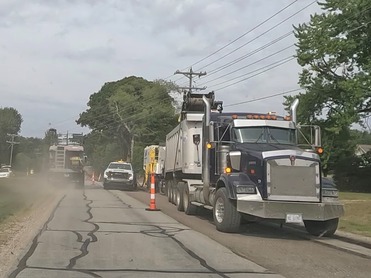
Warmer weather means the arrival of road construction season again here in Ottawa County.
We are often asked how we determine what, and when, certain roads are repaired.
The Ottawa County Road Commission (OCRC) continuously evaluates road conditions to identify replacement, repair, and maintenance items on an ongoing basis.
Our project lists are developed with priorities based on the evaluation of data such as:
- Pavement Surface Evaluation and Rating (PASER) Road Ratings
- Traffic Volumes
- Capacity and Congestion Issues
- Accident History
- Maintenance Problems
- Funding Sources
Every year the OCRC gathers input from local governmental officials, Metropolitan Planning Organizations (MPO), and the general public to determine improvement needs and develop a 5-year Strategic Improvement Plan (SIP).
Improvement needs not included in the SIP are typically addressed through the recurring, day-to-day maintenance activities by the OCRC.
Since 100% of the costs associated with resurfacing or other surface treatments applied to Subdivision Streets have been paid by the Townships and/or residents, the townships determine which Subdivision Streets are selected.
|
|
|
|
|
|