|
As you've likely heard in the news, flu season is here, and has been for a few weeks. If you've noticed quite a few people around you getting sick lately, you're seeing what our local healthcare providers are seeing too—flu is still spreading in our community.
What We're Seeing
While it looks like fewer people are seeking care for flu or flu-like illness over the last couple of weeks, influenza is still causing a significant amount of illness locally. This matches what's happening across Michigan and in other countries with similar seasonal patterns to ours.
New: Weekly Respiratory Illness Tracker
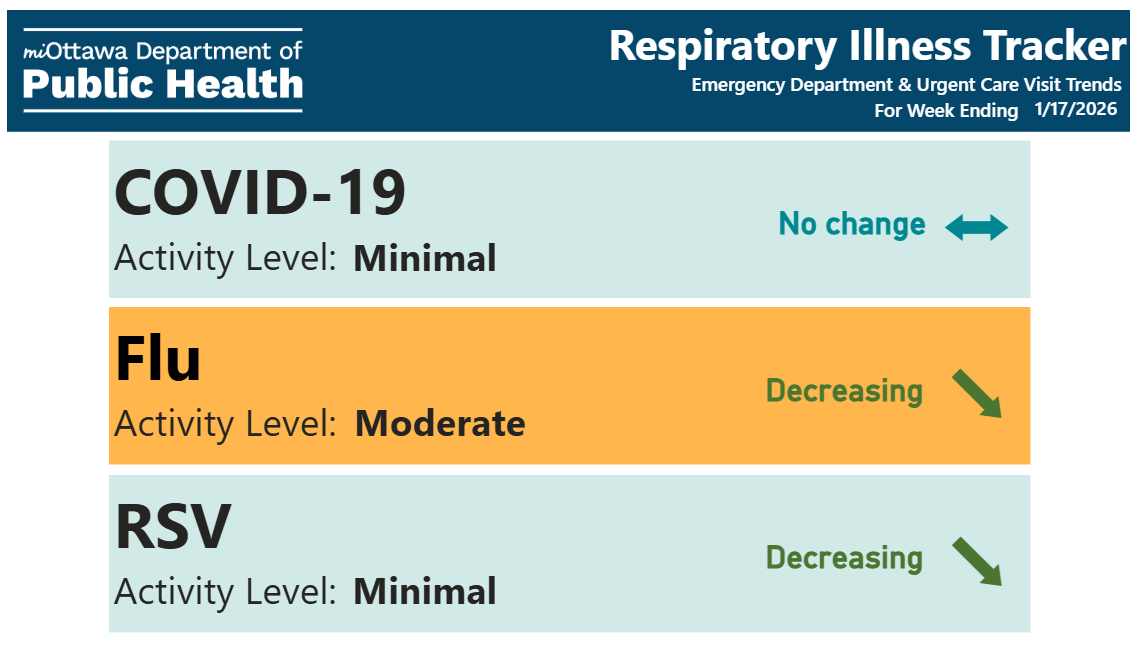
To help keep our community informed, OCDPH is now sharing a simple visual tracker each week showing respiratory illness trends in Ottawa County. You'll be able to see at a glance whether flu, COVID-19, and RSV activity is rising, steady, or declining in our area. We believe this will help you plan ahead and make informed decisions for keeping you and your family healthy. And, if you're interested in more detail about illness trends in Ottawa County, you can read our weekly Respiratory Illness Report.
 |
"At this time of year, it seems like everybody knows somebody who's sick," noted Dr. Gwen Unzicker, OCDPH Medical Director. "Checking out our website can give people an idea of what's going around so they can take steps to keep themselves healthy. The basics are the same for all of these sicknesses: get your vaccines, stay home if you're sick, and if you can't stay home, wear a mask to help keep your germs to yourself. If you do get sick, check with a healthcare provider to see if testing and treatment are available."
Flu Vaccination: Reducing Severity
OCDPH recommends flu vaccination for everyone 6 months and older. Research shows the flu vaccine can help decrease how sick you get even if you do get the flu—what some call taking flu from "wild to mild."
Getting a flu vaccine doesn't guarantee you won't catch flu, but it greatly lowers your risk of serious complications like having to be treated in the hospital.
"Think of a flu vaccine as similar to a seatbelt," Unzicker continued. "A seatbelt doesn't prevent every injury in an accident, but it can greatly reduce the risk of severe harm."
This matters especially for:
- Young children under 5
-
Pregnant women
-
Adults 65 and older
-
Anyone with asthma, diabetes, heart disease, or other chronic conditions
"It's not too late to get vaccinated. Flu season typically continues through spring, so getting vaccinated now will still provide protection as we continue through these winter months when flu spreads most easily," Unzicker said.
What About the New Variant?
You may have heard about a newer flu strain causing illness this year. Even though this year's vaccine is not a perfect match, it does provide protection against it. Early studies from the United Kingdom show that vaccinated people who do catch this strain are much less likely to end up in the hospital—particularly children.
Where to Get Vaccinated
Flu vaccines are available now at pharmacies and your doctor's office. You can also call OCDPH at 616-396-5266 to see if you qualify for the flu vaccine at our clinics throughout Ottawa County, or to get more information on where to get your flu vaccine.
Other Simple Steps Everyone Can Take
Whether or not you choose vaccination, these everyday habits help reduce flu spread:
- Stay home when you're sick – this is one of the best ways to keep from spreading the flu. If you can’t stay home, wear a well-fitting mask to help prevent spreading flu to others
- Wash hands frequently (especially before eating and after being in public)
- Cover your coughs and sneezes
- Consider wearing a well-fitting mask like an N-95 or KN-95 in crowded indoor spaces to reduce risk of catching the virus or spreading it to others
- Open windows when possible for fresh air
Questions?
We're here to provide information and answer questions—about vaccination, symptoms to watch for, or how to reduce the spread of flu.
|