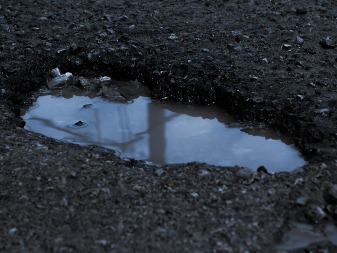
As snow and ice melt, water works its way into small cracks in the roadway. When temperatures drop again, that water freezes and expands, causing the pavement to weaken.
Repeated freeze–thaw cycles accelerate this process and can lead to potholes, rutting, and surface deterioration.
Traffic also plays a role. As vehicles travel over softened pavement during warmer periods, the surface can become compacted or displaced, especially on lower-volume roads and in shaded areas where melting and refreezing occur unevenly.
During late winter, crews focus on monitoring conditions, addressing safety concerns as weather allows, and making temporary repairs where possible. Permanent repairs require warmer temperatures and dry conditions, which are not always available this time of year.
While late-winter conditions can be frustrating, they are a normal part of the seasonal cycle in West Michigan. OCRC crews continue to assess road conditions and prepare for more lasting repairs as spring approaches and conditions improve.
|
 Did you know that each year, the Ottawa County Road Commission and road
agencies across the state enforce seasonal weight restrictions to help protect roads from the impacts of freeze and thaw cycles?
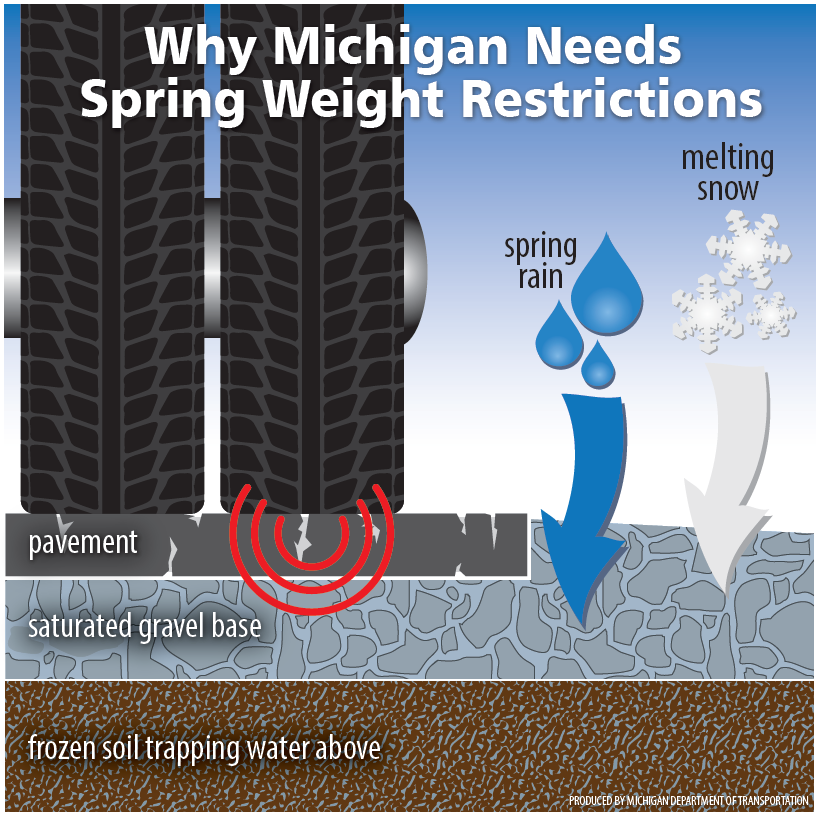
The intent of the restrictions is to protect the integrity of the road when frost is coming out of the ground.
With the onset of warmer weather, more thawing is occurring beneath the road’s surface.
This creates a saturated roadbed, with water trapped between the pavement and the remaining ice layer below. Heavy trucks and equipment traveling over inadequately supported road surfaces can result in permanent
cracks and damage.
Enacting seasonal restrictions is based on multiple factors including solid frost depths, pavement and air temperatures, visual signs of pavement bleeding, pavement distress, saturation levels of roadbeds, and the ten-day forecast.\
Neighboring cities and counties work closely together to discuss these factors and align enforcement when possible.
The OCRC has a 24-hour Seasonal Weight and Speed Restriction Hotline can be reached at 616-842-0086 or 1-800-394-0290. The OCRC also posts information about the status of seasonal weight restrictions on its website.
The Lower Grand River Organization of Watersheds (LGROW) offers the following tips this winter to help you make sure your snow removal is also environmentally responsible this year.
Here are several tips from LGROW to keep your snow removal sustainable:
Recycle Your Salt
After a snow storm, don’t let leftover salt on your sidewalks or driveways go to waste. By sweeping or vacuuming the solid granules, you can collect unused salt and store it for the next snowfall.
Not only does this practice save you money by stretching your supply, but it also reduces environmental impacts by preventing excess salt from washing into storm drains and nearby waterways.
A quick cleanup after the storm can make a big difference for both your wallet and the environment!
Shovel Snow Smartly
When clearing unsalted snow from sidewalks and driveways, consider
shoveling it onto vegetated areas such as lawns, gardens, or other landscaped
spaces.
These areas act as natural filters, helping to capture and absorb the water as the
snow melts. By doing this, you reduce the volume of runoff that flows directly into
storm drains, which often leads straight to rivers, streams, and other water bodies.
This simple practice not only protects aquatic ecosystems from excessive pollutants and sediment but also provides your plants and grass with much-needed moisture during the drier months.
A little forethought in snow management can go a long way toward protecting the environment!
|
|