|
The Ottawa County Road Commission has set its schedule for Board meeting dates for 2026.
Regular Board meetings begin at 9 a.m. on their scheduled date, and are held at the OCRC main office at 14110 Lakeshore Drive in Grand Haven unless otherwise noted.
A calendar of meeting dates is available online at the Ottawa County Road Commission website.
All official minutes of the Board are located and available at the OCRC main office or can be downloaded off of our website.
All special meetings or changes in the following schedule will be noticed in accordance with the Open Meeting Act.

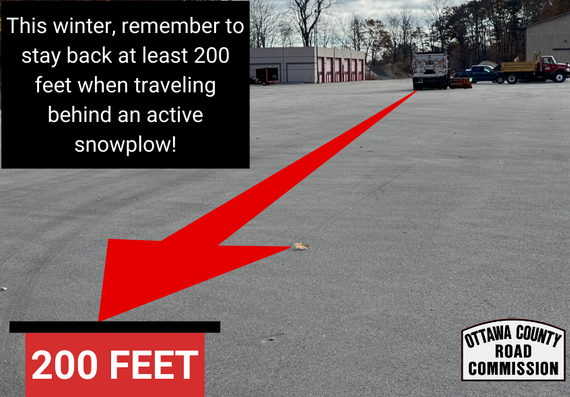 Winter officially begins this month! The Ottawa County Road Commission wants to once again remind motorists to be aware of the rules of the road when it comes to driving around snowplows as winter weather will soon set in.
Michigan law requires that motorists stay a safe distance from snowplows that are in active operation. More specifically, that law states drivers should:
Stay Back 200 Feet: If a snowplow is engaged in clearing snow, spreading salt or sand, and has its flashing strobe lights on, you are required to stay at least 200 feet back from the plow truck. A good rule of thumb is to keep at least 12 car lengths between you and the snowplow to adhere to the 200-foot distance.
Keep Back at Intersections: If an active snowplow is stopped at an intersection, you are required to keep back at least 20 feet. Snowplows often back up and make other unexpected movements at intersections. Limited visibility means it could be tough for drivers to judge if there are vehicles in the intersection if you stopped too close.
Passing is Allowed: Legally, you can pass a snowplow on the left if you need to on a multi-lane road, but make sure conditions allow for it and use extra caution, especially when you are directly next to the plow truck. Additionally, you should never pass a snowplow on the right side due to wing plows and other hazards.
What's the deal?
Keeping a safe distance is crucial for the safety of everyone on the road. Keeping an adequate distance behind a plow truck allows you to get to and from your destination safely, and it also allows snowplow drivers to get their jobs done safely and efficiently, minimizing the risk of damaged equipment and downtime.
If you're driving 45 mph during a snowy day, that 200-foot distance between you and the plow gives you about three seconds of reaction time — a lifesaver on icy roads -- especially if you need to make an abrupt stop!
By keeping this buffer, you reduce the risk of any winter weather mishaps, avoiding damage to both your vehicle and the plow.
Make sure you do your part this winter to keep our plow trucks moving safely and efficiently across Ottawa County!
The OCRC wants to remind residents that when they are plowing or shoveling out this winter, they do so lawfully!
Not only is pushing, shoveling, plowing or blowing snow back into the street or across the street dangerous, it is against the law and can result in fines of up to $100!
Instead, remove snow the smart and efficient way this winter season!
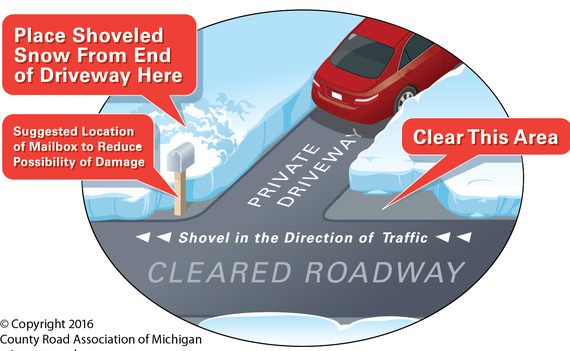
When shoveling, always move snow in the direction of traffic flow, depositing it to the left as you face your property. This helps keep the plow's snow from piling back onto your driveway when the snowplow goes past.
For a visual guide, refer to the illustration below from the County Road Association of Michigan, which demonstrates these best practices.
With a bit of planning, you can save time and avoid unnecessary frustration when clearing your driveway.
Michigan's winter weather can make it difficult for snowplows to avoid garbage cans placed alongside the road.
To avoid a scenario where a snowplow vehicle damages your trash cans, it may be necessary to postpone putting your trash out on pick-up days during a snowstorm.
Here are a few helpful tips that are sure to come in handy during the winter months when it comes to dealing with roadside waste:
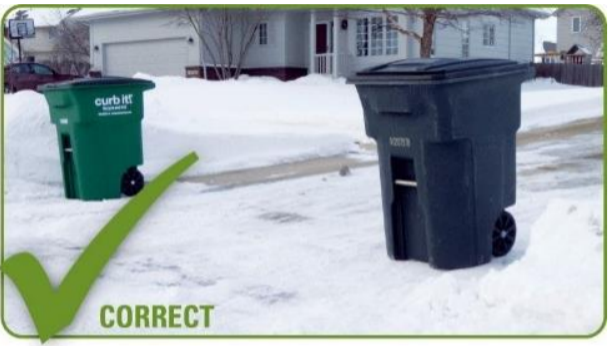
• Dig out a spot adjacent to your driveway for your garbage can. Having a place for the can to go can help keep it protected during snow removal operations.
• Do not place garbage cans in the street. We realize this cleared area is an enticing location to place garbage cans, but it creates a hazard as they could get hit by vehicles or snowplows.
|
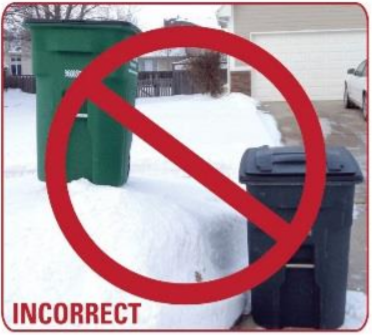
Incorrect Trash Can Placement
Additionally, most garbage trucks are equipped with a hydraulic extending arm that grasps garbage cans. It is recommended that garbage cans be placed at least 3 to 5 feet off the edge of pavement, into your driveway. In this location they are out of the way of the snowplow or snow being pushed aside while the snowplow is going down the road.
Do not place garbage cans on top of the snow piles. This might cause your garbage can to tip over and litter your garbage along the street. Placing them high off the
ground can also make it difficult for garbage trucks to set carts back down.
Retrieve your garbage cans soon after collection. Garbage cans often sit at the roadside on collection day until the evening. Empty cans are vulnerable to winds and snow removal operations and could cause a hazard if knocked into the roadway.
Prompt removal of empty containers is recommended.
These tips can make garbage collection day safer and easier for snowplow and garbage truck drivers.
|
|