|
Help the Ottawa County Road Commission make a difference this holiday season!
The OCRC is taking donations for Toys for Tots. We have a drop box located in the main lobby of our office, located at 14110 Lakeshore Dr., Grand Haven.
If you wish to donate, feel free to bring in an item by Dec. 13. The boxes are being collected the week of Dec. 16.
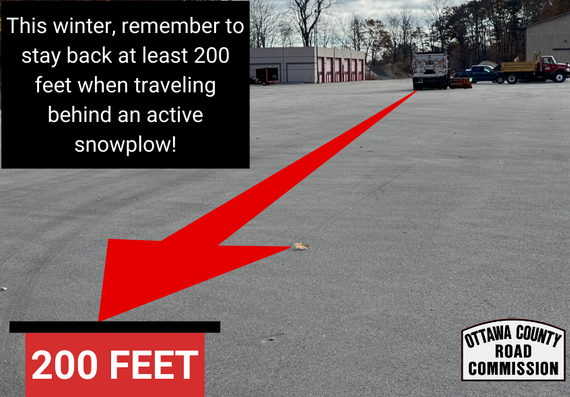 Before you hit the road this winter, you should be aware of a new state law regarding snowplows that took effect this past summer: Public Act 72 (PA 72) of 2024.
Here’s the scoop on what PA 72 requires:
Stay Back 200 Feet: If a snowplow is engaged in clearing snow, spreading salt or sand, and has its flashing strobe lights on, you are required to stay at least 200 feet back from the plow truck. A good rule of thumb is to keep at least 12 car lengths between you and the snowplow to adhere to the 200-foot distance.
Keep Back at Intersections: If an active snowplow is stopped at an intersection, you are required to keep back at least 20 feet. Snowplows often back up and make other unexpected movements at intersections. Limited visibility means it could be tough for drivers to judge if there are vehicles in the intersection if you stopped too close.
Passing is Allowed: Legally, you can pass a snowplow on the left if you need to on a multi-lane road, but make sure conditions allow for it and use extra caution, especially when you are directly next to the plow truck. Additionally, you should never pass a snowplow on the right side due to wing plows and other hazards.
What's the deal?
Keeping a safe distance is crucial for the safety of everyone on the road. Keeping an adequate distance behind a plow truck allows you to get to and from your destination safely, and it also allows snowplow drivers to get their jobs done safely and efficiently, minimizing the risk of damaged equipment and downtime.
If you're driving 45 mph during a snowy day, that 200-foot distance between you and the plow gives you about three seconds of reaction time — a lifesaver on icy roads -- especially if you need to make an abrupt stop!
By keeping this buffer, you reduce the risk of any winter weather mishaps, avoiding damage to both your vehicle and the plow.
Make sure you do your part this winter to keep our plow trucks moving safely and efficiently across Ottawa County!
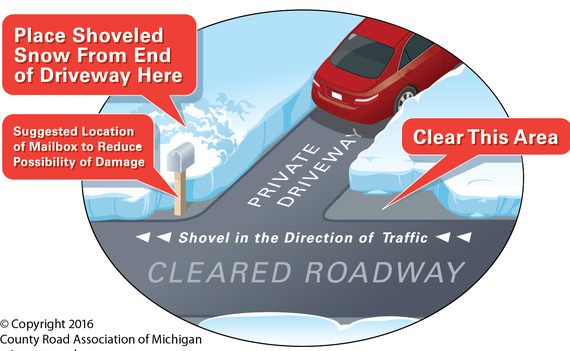 Avoid the frustration of seeing the end of your freshly shoveled driveway buried in snow by a passing plow truck with a simple strategy.
To prevent this dreaded "second shovel," create a cleared area before your driveway, large enough to catch the snow pushed off the plow blade. This area should be to the right of your driveway as you face your home or business.
When shoveling, always move snow in the direction of traffic flow, depositing it to the left as you face your property. This helps keep the plow's snow from piling back onto your driveway.
It's also a good idea to position your mailbox in this area to reduce the risk of damage from plowed snow. However, check with the U.S. Post Office before moving your mailbox, as they may have specific placement requirements.
For a visual guide, refer to the illustration above from the County Road Association of Michigan, which demonstrates these best practices.
With a bit of planning, you can save time and avoid unnecessary frustration when clearing your driveway.
Occasionally, despite the diligent work of winter maintenance crews, lawns along the road's edge may sustain damage during snow removal operations.
If your lawn has been affected in the road right-of-way due to winter maintenance activities, please contact the Road Commission at (616) 842-5400 during regular business hours, Monday through Friday, from 7:30 AM to 4:00 PM.
Alternatively, you may also utilize our online service request form.
Your address will be added to a spring cleanup list, and once the snow has melted, Road Commission crews will restore any damage by applying topsoil and grass seed.
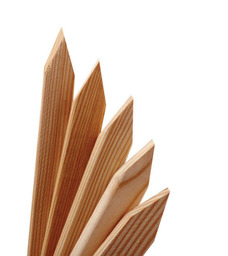
To help prevent lawn damage, the Road Commission places wooden stakes in key areas to mark the edge of the pavement before the first snowstorm. These stakes are typically installed at intersections or on curves in subdivision streets where snowplow drivers may find it challenging to gauge the edge of the road.
Although these stakes may break after a few plowing operations, they are crucial for defining plowing boundaries. We kindly ask that you avoid removing or disturbing them to help maintain clear plowing limits.
Thank you for your understanding and cooperation as we work to balance efficient snow removal with protecting your property.
|
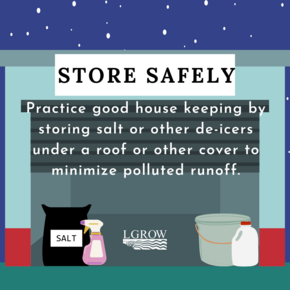
The Lower Grand River Organization of Watersheds (LGROW) encourages everyone to adopt eco-friendly practices when using deicers on driveways and sidewalks. Proper salt usage not only helps manage winter conditions but also protects aquatic ecosystems from harm caused by excessive runoff.
Here are some key tips for property owners and contractors to minimize the environmental impact of salting this winter:
-
Pile Snow Wisely: Move snow onto grassy areas where it’s less likely to refreeze, reducing the need for additional deicing.
-
Clear Snow First: Always remove snow before applying salt for better efficiency.
-
Plow Frequently: Regularly plow, blow, or shovel new snow to minimize reliance on deicers.
-
Choose Safer Alternatives: Use chloride-free deicers on sidewalks and near entrances to reduce environmental harm.
Finally, remember to store salt indoors or in a covered space to prevent runoff and keep pollutants out of our waterways.
By practicing mindful salting, we can all play a part in protecting our local ecosystems this winter.
|
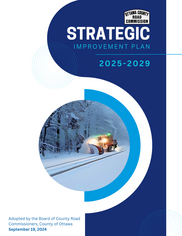
The Ottawa County Road Commission (OCRC) has made available its 2025-2029 Strategic Improvement Plan (SIP), a comprehensive roadmap to maintain, improve, and expand the county's transportation infrastructure.
The report is available to download on the Road Commission website.
The SIP serves as a strategic guide for the Road Commission, leveraging innovative asset management to maximize efficiency and deliver safe, high-quality roads for Ottawa County residents.
|
|