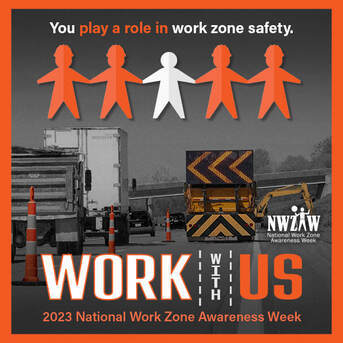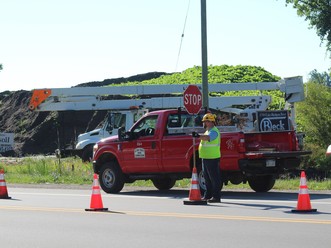
Work Zone Safety Tips
With work zones being a sign to slow down, please keep the following tips in mind:
-
Plan Ahead. Before traveling, look up the latest traffic conditions on the route you plan to take. Information on active work zones is available from many agency and private-sector websites, apps, and on social media to help you plan your trip, and possibly avoid work zones altogether.
-
Minimize Distractions. Be aware of your surroundings, avoid changing radio stations, and put your phone away when driving through a work zone. Work zones can change daily, so anticipate new traffic patterns and look out for other drivers and road users.
-
Look Out for Workers. In 2020, 117 workers died in highway work zones.
-
Check Your Speed. Obey posted work zone speed limits, look out for stopped or slow traffic, and maintain a safe following distance from the vehicle in front of you to reduce the risk of crashes with other vehicles and with highway workers.
-
Be Careful Around Large Vehicles. Large vehicles can be harder to maneuver and slower to respond, so avoid making sudden lane changes in front of trucks or buses, and look out for construction vehicles.
-
Be Prepared for Sudden Stops. Work zones sometimes cause congestion, delays, and traffic queues. Be alert and watch for sudden stops. In 2020, 20 percent of all fatal work zone crashes involved rearend collisions.
-
Read the Signs. Signs provide guidance to road users of traffic laws or regulations within the work zones. Remember that signs, cones, barrels, and flaggers are there to help maneuver you safely through the work zone.
-
Do Your Part. Everyone is responsible for doing all we can to work together and ensure we all stay safe.
|
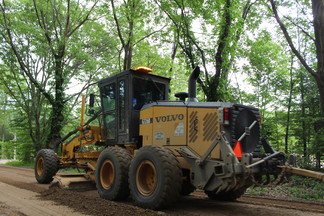
Road commission crews reshape or “pull” shoulders on paved roads throughout the county every spring before the grass begins to grow on the side of the road.
This maintenance helps restore the shoulder shape and function.
A typical problem that develops is that the gravel surface of the shoulder does not meet the paved edge of the roadway. If the shoulder is too high, the road will not drain properly; if the shoulder is too low, a hazardous drop-off condition can result.
Reshaping a gravel shoulder is a routine maintenance activity performed by Road Commission staff using a motor grader. This maintenance is done to reclaim gravel that has been pushed into the shoulder as well as to remove the berm which keeps the water from flowing off the road.
A similar process is done on gravel roads where gravel is displaced onto the shoulder from either rain washing it off the road or from vehicles kicking it up from normal driving.
By pulling shoulders on gravel roads and reclaiming it back into the roadway surface, the Road Commission saves thousands of tons of gravel each year.
Throughout the year, maintenance crews check on both paved and gravel road shoulders and regrade them as necessary.
|
The Ottawa County Road Commission was recently honored with three IMPRESS Awards during the annual County Road Association of Michigan (CRA) Highway Conference in Lansing.
The awards highlight great things that road commissions are doing in the areas of operations, communications and collaboration.
County road agencies are able to submit one entry in each category. The OCRC received awards in all three of the eligible categories.
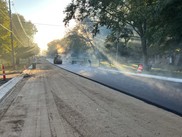
Collaboration-- In 2022, the Ottawa County Road Commission worked on a collaborative project with several other local entities to improve infrastructure in the community of Holland.
A joint project with the Holland Board of Public Works (BPW), Holland Charter Township (Holland Township), and the Ottawa County Road Commission, the three entities completed various infrastructure improvements along Lakewood Boulevard, between Lakeshore Avenue and North River Avenue
As part of the project, the Ottawa County Road Commission:
- Widened Lakewood Boulevard, between Division Avenue and Aniline Avenue, and installed new curb and gutter and storm sewer.
- Resurfaced Lakewood Boulevard, between Lakeshore Avenue and 144th (Division) Avenue, and between Aniline Avenue and North River Avenue.
This work was done in conjunction with projects completed by the Holland BPW and Holland Township. This other work included:
- Holland BPW installation a new 36-inch water transmission main in Lakewood Boulevard and North River Avenue.
- Holland Township replacement of existing water main and storm sewer in Lakewood Boulevard.
These projects were originally slated to take place in separate years. However the Ottawa County Road Commission moved up its reconstruction project to coincide with the water transmission main project.
This resulted in minimizing disruptions to residents and allowed all parties involved to take advantage of a single construction season instead of dragging multiple projects over multiple years.
|
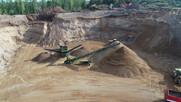
Operations-- Decades ago, the Ottawa County Road Commission (OCRC) had the sensible foresight to acquire several properties with aggregate resources located throughout the county.
These “pit” properties were developed to provide aggregate, specifically sand and gravel, for construction and other operational needs of the county road system. Over time, the resources on these properties were periodically extracted, reflecting the ebbs and flows of market demand for such construction materials.
Since then, the needs of the county road system have changed and a new chapter for these properties has presented itself. In more recent years, a decline in the availability of aggregate commodities has been noted globally as well as in West Michigan.
This decline – combined with the heightened need to invest in aging infrastructure convinced the OCRC Board that the time was right to consider extracting the remaining aggregate from selected pit properties.
The Road Commission has selected sites in Zeeland, Jamestown and Georgetown townships as the leading sites for restarting aggregate extraction on its pit properties, and has worked to partner with aggregate companies to help extract these resources located on these 3 county properties.
The OCRC’s goal is to conduct this process in a way that is responsive and sensitive to community concerns yet allows for reasonable resource production and appropriate site reclamation.
The extracted materials from these sites will be used for road, drainage, water main, and sanitary sewer improvements, as well as be available for commercial sales.
Royalties that the OCRC obtains from the mining operations at all three of the sites will be used for the maintenance and upkeep of OCRC facilities and equipment. This unique funding source will allow the OCRC to use more of its traditional road funding sources directly toward the much-needed road and drainage infrastructure improvements across Ottawa County.
|
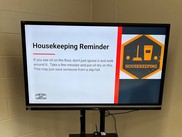
Communications-- The Ottawa County Road Commission is a large organization with physical locations that include one main office building and four maintenance garages.
With nearly 120 employees spread out at all these separate locations, it can often be difficult to communicate to everyone at once.
The Road Commission wanted to find a way to get information out to all its employees in a more effective and timely manner.
In 2022, the OCRC completed a digital signage project at all its locations, which involved the placement of display monitors in all the breakrooms at the Road Commission’s main office and its four maintenance garages.
The large screens are set up to allow the Road Commission to communicate timely messages with employees across the organization.
Each screen can also be used as a monitor to display information such as employee trainings and other presentations. This has allowed the Road Commission to conduct more trainings and events at each individual garage location.
|
 In the spring many homeowners start undertaking landscaping projects in their yards. But it's important to keep in mind the activities you do in the road right-of-way.
What is the road right-of-way?
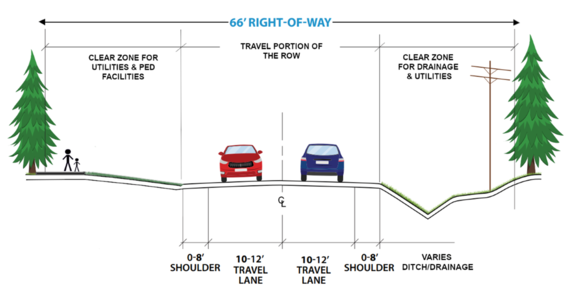
The road right-of-way is the piece of land on either side of a public road. The area is used by the Road Commission to ensure the safety of drivers and improve the road. It is also utilized by townships and the parks department to place non-motorized paths and sidewalks. It is used to place utilities, such as telephone and cable lines.
Maintaining the right-of-way is the responsibility of the Road Commission to make sure that anything placed there, or any work done there is not going to be hazardous to drivers.
The size of the right-of-way can vary. However, a typical right-of-way is 66’ wide (33’ from the centerline on each side of the road). Please keep in mind that as this is not always the case. Homeowners are encouraged to verify the right-of-way on their property before doing any work.
What can, or can’t I do in the right-of-way?
To ensure the safety of the public, the Road Commission is mandated by law to be the caretakers of the right-of-way. The law also states that any work performed in the road right-of-way requires a permit from the Road Commission to keep the road safe for public travel.
Objects placed in the right-of-way can become a hazard and make it difficult to improve the road, pathway, or utility installations in the right-of-way.
Some examples of the types of work that require a permit are:
- Adding or improving a driveway approach
- Adding, improving, or maintaining a public or private utility
- Adding or improving a sidewalk or non-motorized path
- Adding storm water to or improving a roadside drainage system
- Surveying and other engineering operations
- Placing a banner, decoration, or similar object
- Grading or excavation, landscaping, tree planting, tree trimming or tree removal
- Any construction activity that impacts storm water runoff into or around county road right-of-way
- Permanent landscaping objects, such as fencing, are not generally allowed in the right-of-way and can be removed by the Road Commission if they are placed without a permit
Mailboxes are always allowed in the road right-of-way, without a permit, if they conform with the specifications from the Road Commission and the US Postal Service.
This spring, when you are planning to do lawn work and landscaping improvements, know where the right-of-way is and obtain a permit if necessary from the Road Commission.
By doing this you can help the Road Commission in maintaining the right-of-way and keeping the roads safe for drivers.
Please contact the Road Commission if you have any questions regarding right-of-way work.
|