|
Communicable diseases are reported to the Ottawa County Department of Public Health for surveillance and investigation to prevent their spread. The data in the monthly disease reports are subject to change, as they are based on current reports in the Michigan Disease Surveillance System (MDSS). The MDSS is a dynamic, continually active system; counts of disease are constantly changing as cases are investigated, confirmed as cases, or ruled out as not meeting the case definition. Each monthly disease report reflects this constant activity as the numbers may slightly fluctuate each month. Therefore, keep in mind that numbers in the monthly disease reports are NOT final and should be used only to generally monitor trends over time. Unknown, suspected, probable, and confirmed cases of the reportable condition are included in the report. Questions on this report should be directed to Derel Glashower or Derick Chia.
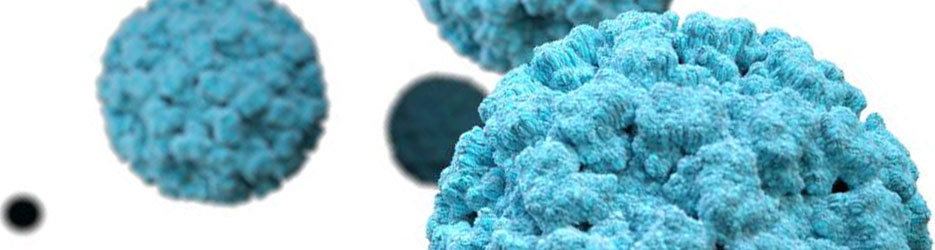 Norovirus is a very contagious virus and the most common cause of vomiting, diarrhea, and foodborne illnesses. Anyone can get infected and sick with norovirus. People can get infected through direct contact with an infected person, consuming contaminated food or water, or by touching contaminated surfaces and putting their unwashed hands in their mouth. Norovirus outbreaks are common and can happen anytime, though they occur most often from November to April.
You may hear norovirus illness be called “food poisoning,” “stomach flu,” or “stomach bug.” Norovirus illness is not related to the flu, which is caused by influenza virus. Noroviruses are the leading cause of foodborne illness, but other germs and chemicals can also cause foodborne illness.
Norovirus can easily contaminate food and water because it only takes a very small amount of virus particles to make you sick. Food and water can get contaminated with norovirus in many ways, including when:
- An infected person touches food with their bare hands that have feces (poop) or vomit particles on them.
- Food is placed on a counter or surface that has feces or vomit particles on it.
- Tiny drops of vomit from an infected person spray through the air and land on the food.
- The food is grown or harvested with contaminated water, such as oysters harvested from contaminated water, or fruit and vegetables irrigated with contaminated water in the field.
Symptoms
The most common symptoms of norovirus include:
- Diarrhea
- Vomiting
- Nausea
- Stomach pain
Other symptoms can include:
- Fever
- Headache
- Body aches
Norovirus causes inflammation of the stomach or intestines. This is called acute gastroenteritis.
A person usually develops symptoms 12 to 48 hours after being exposed to norovirus. Most people with norovirus illness get better within 1 to 3 days.
If you have norovirus illness, you can feel extremely ill, and vomit or have diarrhea many times a day. This can lead to dehydration, especially in young children, older adults, and people with other illnesses.
Symptoms of dehydration include:
- Decrease in urination
- Dry mouth and throat
- Feeling dizzy when standing up
Children who are dehydrated may cry with few or no tears and be unusually sleepy or fussy.
LEARN MORE
Norovirus Activity in Ottawa County
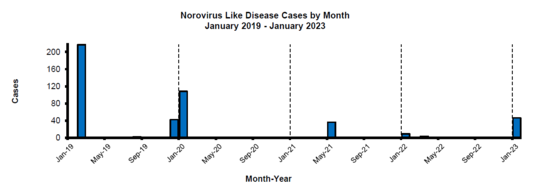
A total of 46* cases of norovirus-like illnesses were reported in January. This is higher than that reported at a similar time over the last 2 years, but is returning to pre-pandemic levels. The decreased frequency of norovirus cases over the last 2 years also corresponded to a period of heightened hand hygiene in response to the COVID-19 pandemic.
*Norovirus cases are reported as aggregate counts into the Michigan Disease Surveillance System.
See the latest communicable disease report
Who is at risk?
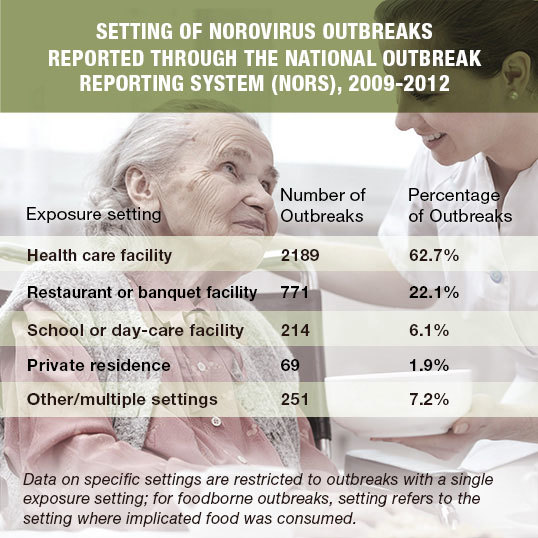
Three out of four norovirus outbreaks occur in nursing homes. Restaurants and schools follow. Cruise ship outbreaks usually make the news, but only account for 1% of outbreaks.
Children under 5 years old and adults aged 85 years and older are more likely to have an outpatient or emergency department visit than people of other ages. Of those who die, 90% are persons aged 65 years and older.*
*Your Local Epidemiologist
LEARN MORE
Prevention and Treatment
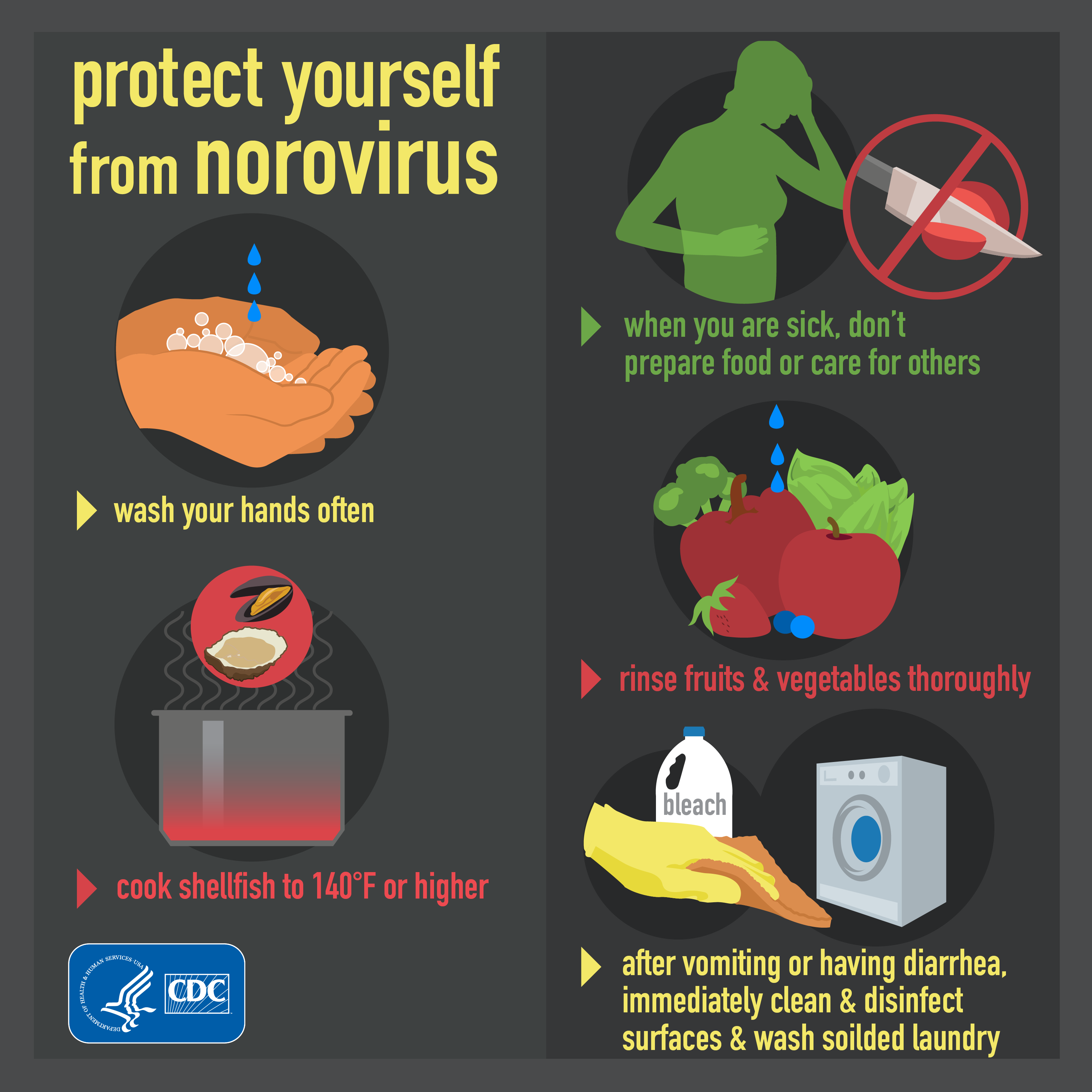
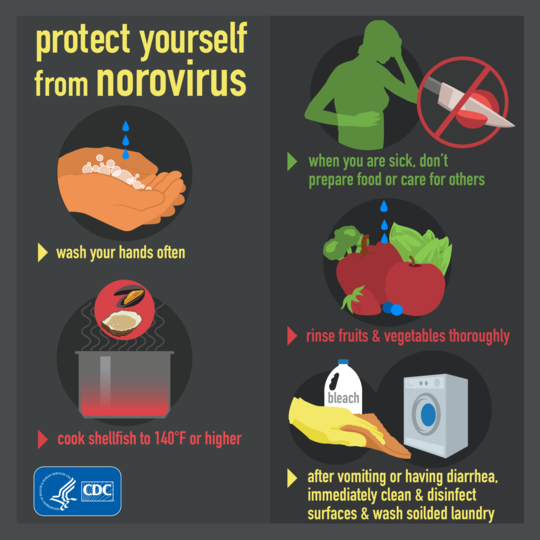
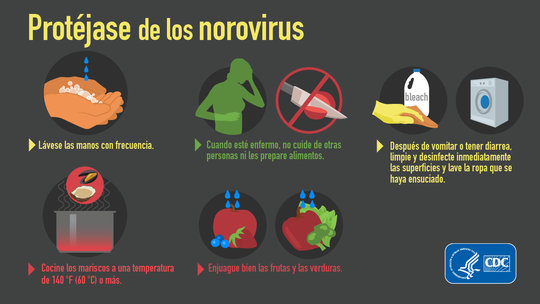
Norovirus can be prevented through proper hand hygiene; safe food preparation and handling; and cleaning and disinfecting surfaces, soiled linen, or clothes.
-
Wash your hands thoroughly and often with soap and water. Hand sanitizer does not work well against norovirus. Be sure to wash your hands:
- After using the toilet or changing diapers.
- Before eating, preparing, or handling food.
- Before giving yourself or someone else medicine.
-
Handle and prepare food safely. Before preparing and eating your food:
- Carefully wash fruits and vegetables.
- Cook oysters and other shellfish thoroughly to an internal temperature of at least 145°F. Be aware that noroviruses are relatively resistant to heat. Quick steaming processes that are often used for cooking shellfish may not heat foods enough to kill noroviruses.
- Food that might be contaminated with norovirus should be thrown out.
- People who are sick should not prepare or handle food.
-
Clean and disinfect surfaces. After someone vomits or has diarrhea, always thoroughly clean and disinfect the entire area immediately:
- Put on rubber or disposable gloves and wipe the entire area with paper towels. Then disinfect the area using a bleach-based household cleaner as directed on the product label.
- Leave the bleach disinfectant on the affected area for at least five minutes, then clean the entire area again with soap and hot water. Finish by cleaning soiled laundry, taking out the trash, and washing your hands.
- To help make sure that food is safe from norovirus, routinely clean and sanitize kitchen utensils, counters, and surfaces before preparing food.
-
Wash laundry thoroughly. Immediately remove and wash clothes or linens that may be soiled with vomit or feces. You should:
- Handle soiled items carefully without shaking them.
- Wear rubber or disposable gloves while handling soiled items and wash your hands afterwards.
- Wash the items with detergent and hot water at the maximum available cycle length and then machine dry them at the highest heat setting.
There is no specific medicine to treat people with norovirus illness. If you have norovirus illness, you should drink plenty of liquids to replace fluid lost from vomiting and diarrhea. This will help prevent dehydration.
LEARN MORE
For more information about norovirus, visit:
CDC - What You Need to Know - Norovirus
CDC's Food Safety Website
You received this email as a subscriber to Diseases & Outbreaks or Disease & Health Reports. To find other Ottawa County health-related reports, please visit miOttawa.org/healthdata. For more Ottawa County topics or to make any changes to your subscriptions, please click here.
|