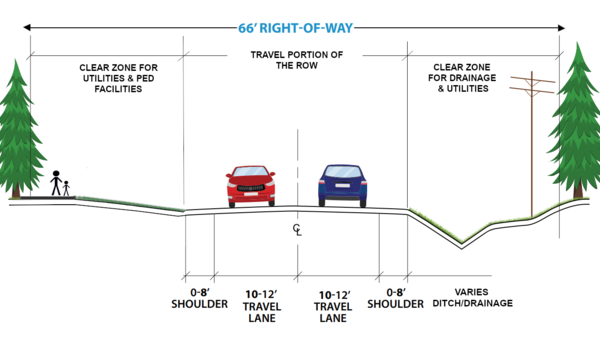
 If you live on a public road, you may not be aware that your property borders the road right-of-way under the management of public road agencies.
The ROW is intended for all county road, pedestrian facility and public utility purposes.
The Ottawa County Road Commission has the responsibility and authority to regulate all activities and work in the road ROW to assure safe and efficient use and operation of the road system.
What are the road right-of-way limits?
Standard road ROW is 66 feet wide on most county roads. There are some exceptions where the ROW is narrower or wider, or an additional easement was granted to the Road Commission.
Avoiding right-of-way hazards
The Road Commission appreciates the public’s cooperation in keeping the road ROW free of all potential hazards and clear for all county road, pedestrian facility, and utility construction and maintenance.
PA 368 of 1925 prohibits the placement of any object, except authorized mailboxes, within the county road ROW unless permitted by the Road Commission. If someone gets injured by an unauthorized object in the ROW, the property owner is liable.
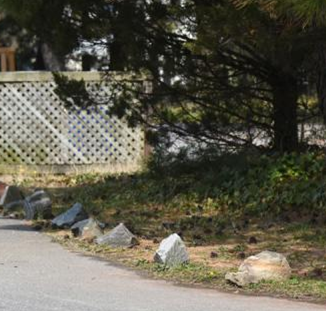
The ROW and Safety
In many instances, property owners or contractors place fences, rocks, trees/shrubs, headwalls, retaining walls or other objects within the road right-of-way as a measure for improving landscape.
These fixed objects can become safety hazards to motorists who leave the roadway, and can also be visual obstructions for motorists at intersections and driveways.
|
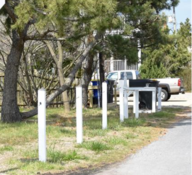
Clear & Efficient ROW Space
Items within the ROW can be hindrances to road, pedestrian
facility and public utility improvements.
Unapproved objects within the road ROW make it challenging for work crews to perform roadside maintenance, and also for utility companies to install, maintain, and replace their facilities located in the ROW.
|
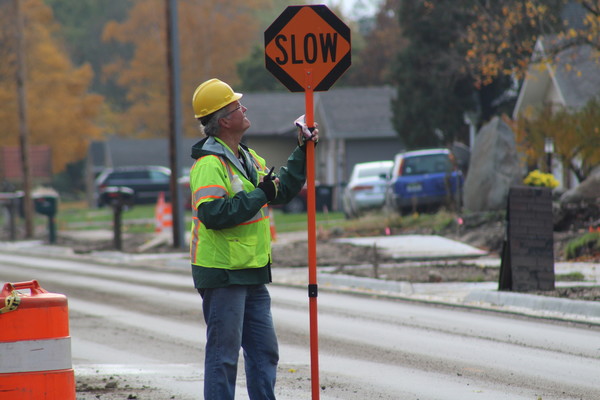
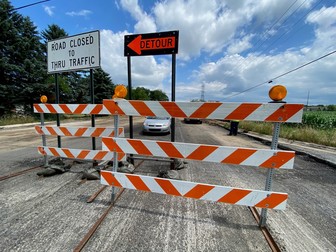
As construction season progresses here in Ottawa County and elsewhere, we remind motorists to please be careful when traveling in work zones.
When a road is closed, the condition of the road is far different from when it would be open to traffic.
The lack of pavement, presence of heavy construction machinery and materials, and possible hazards such as trenches, large holes and precarious objects sticking up from the ground are just some of the obstacles found in a road closure area.
These obstacles are an obvious hazard, and can damage vehicles, and even cause severe injury or worse.
In addition to being important for motorist safety, it is also important for the safety of the men and women working in a construction zone.
Excess traffic -- meaning anything beyond the vehicles involved in the construction project and those residents/citizens who live/work within the closure limits -- can increase hazards for workers on the job site.
Those living or working within a road closure zone who must drive into a road closure should be mindful and extra careful of construction crews and heavy equipment, and know that the road will not be able to be driven on like if it were open to traffic.
Drivers should slow down, drive with caution, and be on the lookout for workers, materials and equipment, and add extra time to get from one place to another. Additionally, drivers should follow all instructions given by people on the scene directing traffic.
|
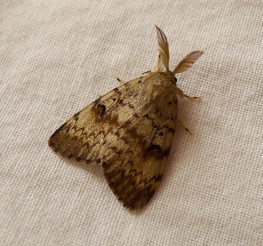
This summer, gypsy moth outbreaks are being observed across the State.
Gypsy moths made their debut in Michigan in 1954 and got quite out of hand during the 1980s and 1990s before an effective biological control was deployed.
But in the last couple of years, significant outbreaks have been observed once again, here in Ottawa County and across the State.
But if residents are blissfully unaware of what ‘frass’ is, then they probably don’t have these unwelcome guests camping out in your trees!
During June and July, gypsy moth caterpillars are in a feeding frenzy before they spin their cocoons. And if they are munching all the leaves off of the oak, aspen, and other trees in area yards, what comes next is frass, as the scientists call it. And a lot of it.
While they can be unpleasant to live with, gypsy moth caterpillars are not typically harmful to trees in the long term. With regular watering, some trees that have been defoliated by these pests will actually re-flush and produce another set of leaves this year!
To take action this year, or learn how to prevent or reduce outbreaks next year, check out these resources:
- Visit Michigan State University Extension’s Gypsy Moth page
- Contact the local forester, Ben Savoie - ben.savoie@macd.org | 269-908-4134
|

|