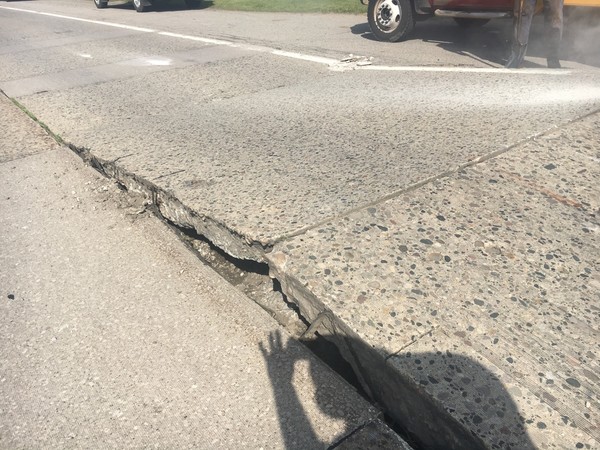
The freeze/thaw cycle from Michigan's winters aren't the only weather element that has an effect on our roads.
High temperatures, like what we had in Ottawa County this past July, can also cause major problems.
On extremely hot days, it isn't uncommon to see concrete roads buckle and break due to the heat.
This keeps our road crews busy as they respond quickly to repair buckles on area roads, as most of the time concrete buckling requires immediate attention for the safety of those using the road.
What causes pavement to buckle?
Pavement buckles can occur when the air temperature changes from moderate to extreme heat.
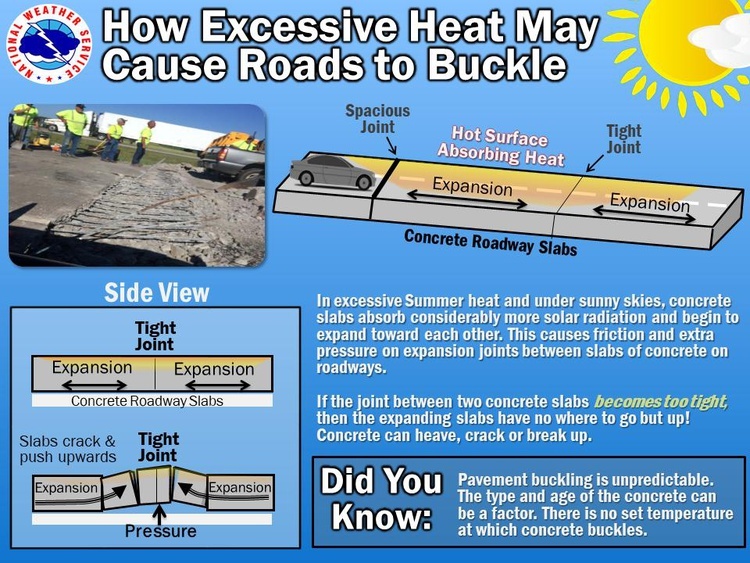
When a concrete road is constructed, it is cut into segments to create a space for expansion and contraction. Sometimes that space is not enough and when that happens, the pavement buckles or blows up -- particularly when the pavement is older and weaker.
The warmer the temperature, the more the pavement material expands. The sun heats the pavement, the pavement expands and then buckles. Buckles more commonly occur on older concrete surfaces.
Blacktop pavement is more flexible and does not usually blow up, but it may create a bump that is similar to frost heave, especially in sections of road where concrete and blacktop surfaces meet.
What do I do if I come across a buckle?
Pavement buckles can be very dangerous for motorists. Slow down and safely move into another lane if you see buckled pavement. Call 911 if you encounter one so that they may dispatch us to correct the issue.
|
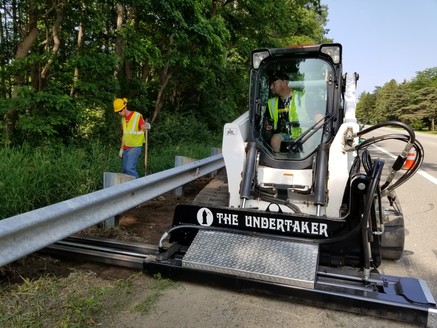
A new device is out on our streets performing routine maintenance, thanks to the ingenuity of the staff here at the Ottawa County Road Commission.
The new machine, dubbed "The Undertaker" by our maintenance crew, was fabricated in-house by the North Holland garage's own Dylan Lemke. The device is a tool that attaches to the front of a Bobcat loader.
This tool allows for the easy and efficient cleaning of compacted sediment, dirt and debris from the area underneath guardrails along area roads. This sediment and debris can build up over time, and if not cleaned, it can cause a drainage hazard along roads.
Prior to the arrival of the new machine, Road Commission crews would have used a much larger Gradall excavator to clean beneath these guardrails. This was a much lengthier process which, in addition to taking more time, had a bigger impact on traffic, as lane closures were often necessary to conduct the work.
The OCRC put the tool through its paces for the first time in July along M-45, with the Grand Haven garage's John Gappa at the controls. We're excited to put this new tool to use elsewhere in Ottawa County as our crew gets the hang of its operation.
|
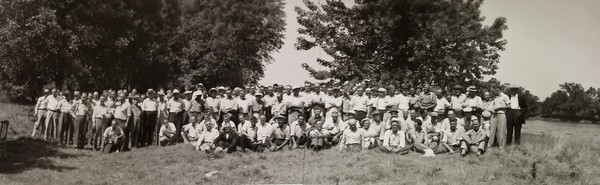
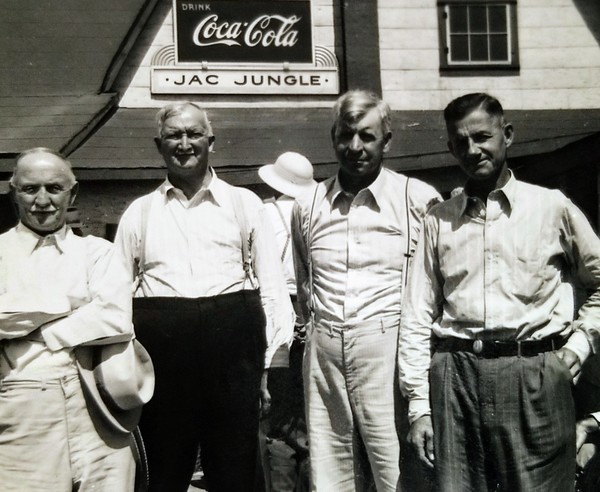 Here's another shot from our photo archives, this one showing an Ottawa County Road Commission picnic at Jac Jungle in 1941.
According to Ottawa County Parks, Jac Jungle -- located near the current-day Riverside County Park -- was the most popular dance hall in rural Ottawa County. It featured live music, a beautiful dance floor, floor shows, food and drinks.
The name originated from the owners - initials for Julia and Al Cortis (the original owners); the second part because the original barn was in a wildly growing, unkept area referred to as the ‘jungle.'
Dancing to live bands such as savoring home cooked chicken dinners (with seating for up to 200), and enjoying family reunions, banquets, picnics, and even baseball; all were popular.
The barn burned to the ground on July 21, 1951, and was never rebuilt.
|