
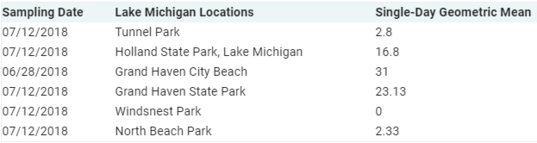
Beach water test results: Sampling date - July 12
Ottawa County, Michigan sent this bulletin at 07/13/2018 02:07 PM EDT
|
 Our team at the Ottawa County Department of Public Health exemplifies equity, integrity and excellence. Our vision is for healthy people. We work with our community to help assure conditions that promote and protect health. We are dedicated to preventing diseases and providing evidence-based public health programs and services. Public health has a vital role in all of our lives. It empowers communities with the necessary resources, knowledge and opportunities to make lasting change. To learn more, visit www.miOttawa.org/miHealth or check out what we’ve been doing at www.miOttawa.org/AnnualHealthReports.
Having trouble viewing this email? View it as a Web page. |




 |
 |
| STAY CONNECTED: | |||||||
 |
 |
 |
 |
 |
|||
The Ottawa County Board of Commissioners:
Chairman Greg DeJong | Vice-Chairman Roger Bergman | Philip Kuyers | Jim Holtvluwer | Don Disselkoen | Matt Fenske | Al Dannenberg | Mike Haverdink | Joe Baumann | Frank Garcia | Kelly Kuiper
Images included with press releases may be reproduced for editorial use.
Questions? Contact Us
SUBSCRIBER SERVICES:
Receive fewer or more messages | Unsubscribe | Help