|
The Digest is back. In the 15 years that I have provided the Digest, there have been times of feast and famine and in recent months it has been more famine than feast. My intention is to be much more regular with the Digest as I continue to receive a lot of feedback from readers. Many great things are happening in Ottawa County as you will see below and in upcoming editions.
 (Submitted by Paul Sachs)
Ottawa County’s Groundwater Management Plan
In February 2018, Michigan State University (MSU) completed their scientific study of the quality and sustainability of Ottawa County’s groundwater system. The findings confirmed that the County’s groundwater levels deep in the bedrock aquifer have been gradually declining over the last 20 years and, in certain areas, chloride levels in the bedrock aquifer have been increasing. Based on anticipated future water-withdrawals, these trends are expected to continue – unless proactive planning occurs to ensure continued access to abundant, fresh groundwater. Accordingly, the County’s Planning and Performance Improvement Department is spearheading an effort to develop a collaborative, countywide groundwater management plan.
An Executive Committee has been formed to steer development of the Plan that includes representation from the Road Commission’s Public Utilities Department, the Department of Environmental Health, and County Administration, as well as the Michigan Geological Survey, and GVSU’s Annis Water Resources Institute. The County’s appointed 13-member Groundwater Task Force also serves to assist in the development and implementation of the Plan.
The Plan will be a multi-faceted endeavor that incorporates, at minimum, recommended actions for educational outreach, water conservation strategies, land use planning techniques, policy and permitting updates, and water and wastewater infrastructure expansions. The target date for a draft Plan is Summer 2019. An informative website is currently in development that will include educational videos, explanations of groundwater-related concepts, as well as provide updates on the County’s progress towards developing a groundwater sustainability plan.
Additionally, in collaboration with GVSU, students in the Advertising and Public Relations program will be assisting the County this fall with creating concepts for an Educational Campaign designed to inform residents and business owners about the County’s groundwater challenge and the importance of water conservation.
|
(Submitted by Sheriff Steve Kempker)
On
Tuesday, November 6, 2018, Michigan citizens will be asked whether they want to
legalize recreational marijuana. Medical marijuana was made legal in 2008, and
voting “NO” on this proposal will not affect medical marijuana.
This
Proposal Will:
1. Allow the highest per person marijuana possession limit of any state in the
nation.
- Adults
will be able to possess 10 ounces or approximately 600-880 joints at home
and 2.5 ounces of personal possession in public.
- Adults
will also be allowed to have 12 plants in their home (12 plants per
adult).
- In
the seven states that have legalized recreational marijuana, the personal
possession limit is 1 ounce. The exception is Maine, which allows 2.5
ounces for personal possession. Massachusetts allows the possession of 10
ounces of harvested marijuana at home.
- Michigan
would allow possession in both categories - at home and personal
possession.
2. Aggressively advance an agenda without easy citizen regulation. If initiative passes on November 6, every Michigan community - whether their members want it or not - will be open for “marijuana business” as of January 2019. Towns will be forced to allow recreational Marijuana businesses until they choose to “opt-out”.
- Every
community means - every municipality or township in Michigan.
- Business
refers to commercial growing and retail shops.
- To
opt-out or limit the number of recreational marijuana businesses in your
community, an individual in the community must petition to initiate an
ordinance to “opt out” of the law, after it goes into effect. Said
individual must gather 5% of voter signatures from the last governor
election, and create a ballot proposal for a regularly held election
(cannot be a special election), and get enough community support to pass
the initiative at the next election.
3.
It will not regulate like alcohol: there is limited specified regulations. The
penalty for selling to minors is vaguely stated.
- Also,
if a young person, ages 18 to 20 (under the age of legal purchase,
possession, and use in this proposal) is ticketed, they need not be
advised or required to take drug education or counseling.
4.
It will allow the transfer (or giving) of 2.5 ounces of marijuana to someone
else without any regulation.
5.
This initiative does not regulate the potency of marijuana.
- Today's
drug is much more potent - containing up to 2 to 7.5 times more THC, the
addictive chemical compound in marijuana, than in the 1980s.
- The
THC level in highly potent marijuana edibles (80% to 99% THC) is not
regulated.
6.
This initiative has unforeseen consequences for Michigan businesses and the
economy.
- Expect
decreased work safety and productivity with workers under the influence.
- Expect
an increase in absenteeism (employees not showing up to work).
- Expect
decreased workforce with applicants (and workers) that can't pass a drug
test, etc.
-
The
US Navy estimates each drug user costs his or her employer an average of
$6,600 more than
non-substance using coworkers.
- In
accordance with the National Drug Control Policy, the estimated national
cost of lost worker productivity including absenteeism and poor job
performance due to illicit drug use was 129 billion dollars.
7.
Increases Law Enforcement’s Job.
- This
will make it difficult for police to prove a driver is under the influence
of marijuana.
- This
will affect enforcement and potentially accident liability and insurance
rates.
- The
PER/SE (BAC of .08+) criterion for driving under the influence of alcohol
will not apply.
This
Proposal Will Not:
- The ballot initiative does not address possible dangerous additives to
marijuana cigarettes.
- This ballot initiative does not prohibit marijuana and alcohol sale and
consumption in the same place of business (it allows consumption at the site of
purchase). This further raises concerns about car crashes and fatalities, given
the potential for drugged/drunk driving.
- This ballot initiative does not allow citizens to FOIA Information to discover
who owns/operates a grow establishment, even if the business creates a public
nuisance.
- This ballot initiative does not allow marijuana use/addiction to be used as a
factor in determining child custody.
States that legalized recreational marijuana saw an increase of 16% in
average auto insurance premiums the year after legislation passed, as compared
to the year prior.
Colorado
saw a 33% and Nevada saw a 40% increase in average yearly premiums within the
year prior and year after legalization passed.
To
learn more about this topic and to join our efforts to STOP the legalization of
recreational marijuana in November in Michigan please visit www.HealthyandProductiveMI.org.
 (Submitted by Sandi Metcalf)
“This experience has taught me how I truly feel deep inside
and that I used to hold on to so much, it would drag me down way deep inside. I
have learned I have the strength to overcome it all.” - Destiny
“I am more than what others call me.” - Kiara
The 20th Circuit Court, Juvenile Court Division
in Ottawa County is excited to announce the submission of a sculpture in the
2018 ArtPrize, youth division. A
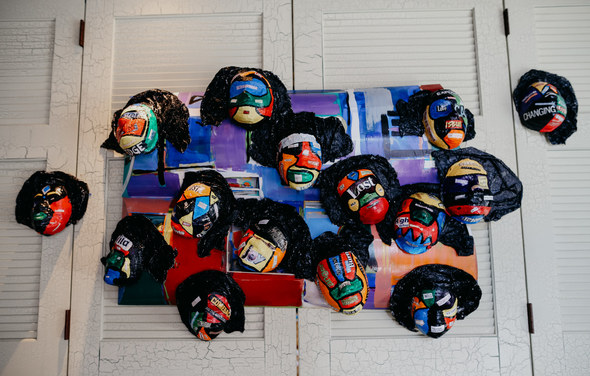
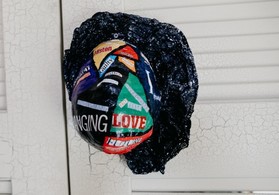
creation by the girls who are court-ordered into the Court’s trauma- informed, female-specific, Lighthouse program within the Juvenile
Detention Center, the masks clearly represent the histories of trauma each have
experienced. Under the direction of Bob
Alward (superintendent of detention), the guidance of art teacher, Angie
Briggs-Johnson, and program supervision of Michelle Anguiano, the masks are a
powerful, therapeutic expression of the girls’ pain and suffering. They are also evidence of the girls’ ultimate
hopes and visions of their lives without these negative experiences.
Over the past five – eight years, the Court has witnessed an
increase in complexity of cases referred for help. Because girls are often overlooked in the
system due to being minorities in numbers, and manifest different needs than
boys, the 20th Circuit Court started Lighthouse
to treat mental health and behavior disorders through intensive services,
education, and support. Creating a
connection to the community and developing new skills is critical to the
success of all the girls, and the arts function as a conduit to helping them
create a brighter future for themselves.
This sculpture is the second entry into ArtPrize for the
Ottawa County Juvenile Detention Center residents. A large mural that represented
multi-culturalism was entered into the 2009 ArtPrize competition, and the
residents also created ceramic soup bowls for auction to support God’s Kitchen.
The B.O.B. in Grand Rapids graciously offered to be a venue
for this sculpture and the girls’ stories.
It is displayed on the third floor, and the girls and staff will be
present on preview day, Wednesday, Sept. 12 and opening day, September 19, 1:00
– 4:00 to talk with the public about their entry. The 20th Circuit Court and Ottawa
County encourage the public to mark it on their map of entries to see. Also, please support the Lighthouse girls in their healing and empowering endeavor by
registering and voting for their entry in ArtPrize.
For more information, please contact: Sandi Metcalf, Juvenile Court Director at smetcalf@miottawa.org.
|

 (Submitted by Kevin Bowling)
Ottawa County, Michigan, September 12, 2018: Lynn A. Helland, Executive Director and
General Counsel of the Michigan Judicial Tenure Commission announced the
appointment of the Hon. Jon H. Hulsing as Commissioner for the Judicial Tenure
Commission and will represent all of the circuit court judges in Michigan. Judge Hulsing will begin his three-year term
as Commissioner on January 1, 2019.
Judge
Hulsing was appointed Circuit Court Judge for the 20th Circuit Court
on April 26, 2006 and subsequently elected twice for six year terms. Before his judicial appointment, Judge Hulsing
served as an assistant prosecutor for Ottawa County, along with several years
in private practice. In 2004 he was
recognized as Prosecutor of the Year by the Michigan Arson Prevention
Committee. He graduated summa cum laude earning a Juris Doctor
degree from the Thomas M. Cooley Law School and magna cum laude earning a Bachelor of Arts degree from Grand Valley
State University. Judge Hulsing currently presides over felony criminal and
civil cases, and was previously assigned to the Family Division.
The Judicial
Tenure Commission is an independent state agency and is responsible for
investigating complaints of judicial misconduct and judicial incapacity, and
for recommending discipline of judges by the Michigan Supreme Court. Its
jurisdiction includes all active judicial officers, as that term is defined in
the Michigan Court Rules. The Judicial Tenure Commission was established by a
1968 amendment to the Michigan Constitution.
The
Commission protects the public from unethical judicial conduct, preserves the
institutional integrity of the judiciary, and attempts to ensure that
unsubstantiated complaints do not interfere with the important work judges do. The Commission investigates allegations of
judicial misconduct and disability, conducts hearings as appropriate,
recommends sanctions to the Michigan Supreme Court, and otherwise works to
enhance the integrity of the judiciary.
|
 (Submitted by Kristina Wieghmink)
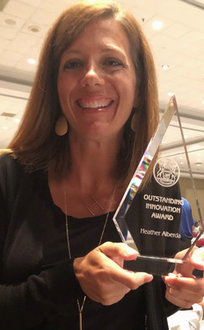
Heather Alberda, AASECT certified sexuality educator with the
Ottawa County Department of Public Health (OCDPH), received the Michigan
Department of Health and Human Services 2018 Outstanding Innovation Award.
During the Roadmap to Health Conference, state leaders recognized Alberda for
her innovative work to address sexually transmitted diseases (STDs). In 2014,
she created the Wear One program to help remove barriers such as cost,
embarrassment and lack of access to condoms for people 18-24 years of age.
Through this program, various locations within Ottawa County give out free Wear
One packages. Places such as colleges, retail stores, tattoo studios, nail
salons, gas stations and community organizations give out these free packages
that include 10 condoms, lubricant, sexual health resources and STD testing
information. People 18-24 years of age can also order packages online and
receive them in an unmarked and confidential envelope.
“We are thrilled to announce Heather has been selected to
receive the 2018 Outstanding Innovation Award! Her work with the Wear One
program is so innovative and deserves to be recognized,” said Irda Kape with
the Division of HIV and STD Programs at the Michigan Department of Health and
Human Services.
"Heather’s creativity, dedication and enthusiasm is an
asset to both the Sexual Health program and the community," said Connie
Kross OCDPH Sexual Health Services Team Supervisor.
Heather Alberda, AASECT Certified Sexuality
Educator
For more than 16 years, Heather Alberda has
taught abstinence, consent and healthy sexual behaviors to thousands of
people in Ottawa County. She also provides resources to parents, schools and
community organizations. In addition, Alberda mentored four public health
interns who gained insight into health education to help
further their studies and careers.
"With the increase of STDs across the state and nation, the Wear
One program enables us to reach our community beyond the brick and mortar of
our health department. It helps create access to sexual health services
across county lines; promoting knowledge, testing and breaking down
stigma," said Alberda.
LEARN MORE at miOttawa.org/SexEd
|
 Since 2014, Alberda has expanded the Wear One program to 40 locations in Ottawa County and more than 100 locations across 40 counties in Michigan. To-date, more than one-quarter of a million condoms have been given out. This does not include condoms given out by the Ottawa County sexual health clinics, which could easily place the number well beyond half a million condoms!
LEARN MORE at miOttawa.org/WearOne
|
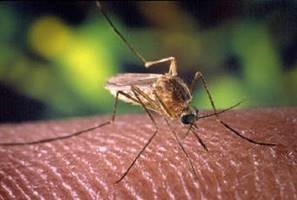
The best way to reduce your risk of West Nile virus is to prevent mosquito bites.
(Submitted by Kristina Wieghmink)
The Ottawa County Department of Public Health (OCDPH) has
confirmed the first human case of West Nile virus (WNV) for 2018 in Ottawa
County. Health officials urge residents to protect themselves against mosquito
bites to reduce their risk for WNV.
West Nile is a virus most commonly spread
to people by mosquito bites. Mosquitoes become infected when they feed on
infected birds. Infected mosquitoes then spread WNV to people and other animals
by biting them. In North America, cases of WNV occur during mosquito
season, which starts in the summer and continues through fall. There are no
human vaccines to prevent or medications to treat WNV. Fortunately, most people
infected with WNV do not have symptoms of illness. About one-in-five
infected people will have mild illness which may include fever, headache, body
aches, joint pain, vomiting, diarrhea or rash. About one in 150 infected people
will become severely ill and may experience symptoms such as a stiff neck,
stupor, disorientation, coma, tremors, muscle weakness, convulsions or
paralysis. People 60 and older and those with other health conditions are more
likely to have severe complications such as meningitis and encephalitis.
LEARN MORE - English I Spanish
The
best way to reduce your risk of West Nile virus is to prevent mosquito bites.
Prevent mosquito bites
- Use insect repellent that
contains DEET.
- Wear light-colored,
long-sleeved shirts and long pants when outdoors.
- Dress children in clothing that
covers arms and legs.
- Cover crib, stroller and baby
carrier with mosquito netting.
Control mosquitoes inside and outside your home
- Use screens on windows and
doors. Repair holes in screens to keep mosquitoes outside.
- Use air conditioning when
available.
- Use nets and/or fans over
outdoor eating areas.
- Sleep under a mosquito bed net
if air-conditioned or screened rooms are not available or if sleeping
outdoors.
- Empty and scrub, turn over,
cover or throw out items that hold water (such as tires, buckets,
planters, toys, pools, birdbaths, flowerpots or trash containers). Check
inside and outside your home. Mosquitoes lay eggs near water.
English I Spanish
Be aware of
sick-acting or dead birds, especially crows and blue jays, as it may indicate
WNV in a community. Residents can report sick-acting or dead wildlife to the
DNR by submitting an online report here.
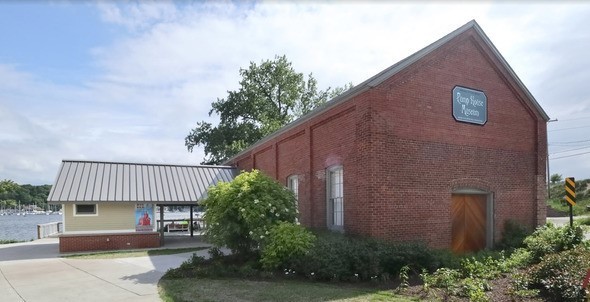 Museum exterior from Ottawa Beach Road, courtesy of Lou Schakel Photography
(Submitted by Jessica VanGinhoven)
Restored between 2014
and 2017, the Pump House Museum and Learning Center in Holland, Michigan
opened in 2018 with three permanent exhibits and a temporary exhibit
about Holland’s iconic lighthouse, Big Red. More than 600 people toured
the museum in its first month of operation.
At
their annual event on September 22, the Historical Society of Michigan will award
the 2018 State History Award in the Restoration/Preservation category to
the Historic Ottawa Beach Society for their
collaboration with Ottawa County Parks to restore the pump house
building.
The renovated building is located on the Lake
Macatawa waterfront within Historic Ottawa Beach, a collection of park
properties owned and operated by Ottawa County Parks. Visitors can access the
building via the Black Lake Boardwalk, a popular waterfront walkway that
extends a half-mile to connect to the Holland State Park. The Historic
Ottawa Beach Society leases the building from Ottawa County to operate the Pump
House Museum and Learning Center, which officially opened June 1, 2018.
"We're
celebrating the end of a big year for the museum," said Daniel Aument, president
of the Historic Ottawa Beach Society. "We were open seven days a week in
July and August and our free admission drew on average 35 people per
day. We also had four live speaker events which drew a total of about
300 people."
The
museum is currently hosting an exhibit featuring Holland's iconic lighthouse,
Big Red. The exhibit, designed by the award-winning firm Lafferty, vanHeest and
Associates, interprets the history of Holland Harbor and its lighthouses. Also
on display is an exhibit of the Hotel Ottawa guest register and artifacts
from the hotel.
"We are thrilled to be the recipient of
such a prestigious award, which comes only three years after restoration began
in 2015," said Aument. "In each of the summers since then, we worked
with our donors and supporters to further improve the building and tried to
open the doors to the public with a few small exhibits as often as possible. We
are gratified by the success and popularity of the Big Red exhibit, but to be
recognized by the Historical Society of Michigan leaves me speechless with
amazement and appreciation."
The
brick building originated in 1901 as an electric generating plant for a nearby
hotel. It was later converted to a domestic water pumping station for nearby
cottages, a use that continued into the 1980's. In 1987, local residents
formed the Ottawa Beach Historic Committee to preserve and restore the building
and to collect and interpret the area history in a museum.The Historic
Ottawa Beach Society (HOBS) incorporated in 2010 to raise money for a
restoration and renovation of the Pump House to its condition in 1924. Work
commenced on the restoration project in 2014.
"The
first phase of the project was focused on restoring the structure of the
building. This included brick repairs and tuck-pointing to the building’s
exterior and the addition of a new roof. Windows and doors that were
boarded up for many years were restored and supports and a beam were added to
improve the roof’s structural integrity," said Curt TerHaar, Coordinator
of Park Planning & Development with Ottawa County Parks.
Phase
one of the project cost $304,693, with nearly half of the funds contributed by
the Historic Ottawa Beach Society.
Phase two of the project began in 2017 and
focused on making the building more visitor-friendly. A new hardwood floor and
ceiling fans were added and improvements to an existing historic water
pump were completed. It also included the construction of an addition with
modern restrooms that are open to the public. Phase two cost just over $277,000
and included contributions from HOBS and Park Township.
The
Historic Ottawa Beach Society is currently seeking underwriters and donors to
cover operating expenses for next year. "We're attracting attention
from groups who want to hold meetings in the museum, and we're working
with the Tulip Time Festival to become a destination for visitors arriving
during Tulip Time. We will offer docent - guided tours by students and other
groups from early May through the end of September in 2019," said
Aument.
The Pump House Museum and Learning Center is the
historic Ottawa Beach Society’s first major project, established to support the
nonprofit organization’s goals to preserve area history, present
educational programs, promote good stewardship practices, challenge the
imagination, network with other institutions, and enrich the Ottawa Beach and
West Michigan experience for residents and visitors alike. Learn more
about the Historic Ottawa Beach Society by visiting historicottawabeachsociety.org.
Previous
award recipients in the Restoration/Preservation category include:
- Walter P. Reuther Library, Wayne State University in
Detroit for its Michigan Labor History Mural Restoration
- Yankee Air Museum in Belleville
- Restoration of the Kalamazoo Ladies’ Library
Association Building
- Mackinac State Historic Parks for the reconstruction of
the South Southwest Rowhouse at Colonial Michilimackinac
- Hull’s Trace, the only surviving section of the
corduroy road figured prominently in the War of 1812.
Detroit Public Library for their preservation of the
Burton Historical Collection
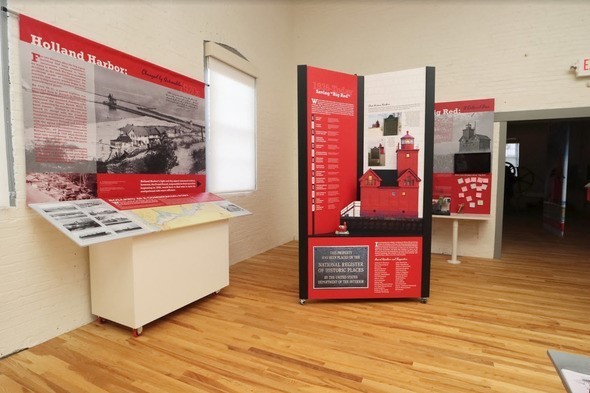 Museum interior, courtesy of Lou Schakel Photography
 (Submitted by Matt
Chappuies)
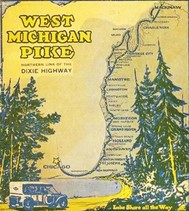
The West
Michigan Pike was a series of roads and state parks spanning
from Michigan City (Indiana) to Mackinac City, following the Lake Michigan
coastline.
Developed in the early 20th century, the Pike was
designed to provide easy access to West Michigan’s natural splendor and
flourishing tourism industry for out-of-state motorists.
The actual route of the Pike would vary somewhat over time
as new and better roads were built.
US-31, which MDOT designated as a Pure Michigan Scenic Byway in 2016,
represents a portion of the early Pike route in Ottawa County. However, located off-the-beaten-path exists
the original scenic route. Stone markers,
such as the one pictured (right), were placed along the route in Ottawa County
to help travelers find their way.
Over 100 years after they were
made, a few of the original stone markers can still be found around the
County. Two of these historical markers
have recently been recovered from a behind a vacant house adjacent to the
Spring Lake Country Club. With
permission from the Country Club, the County’s Department of Planning and
Performance Improvement (PPID) retrieved the markers, which had been hidden
from view of the road.
After light restoration, one of the
markers has been put on display in the PPID’s lobby for public viewing. The other marker is currently being stored as
the County considers options for displaying it at area museums or other venues. In addition to displaying the markers, the PPID
is working on plans for recreating and promoting the scenic travel route
through Ottawa County.
|
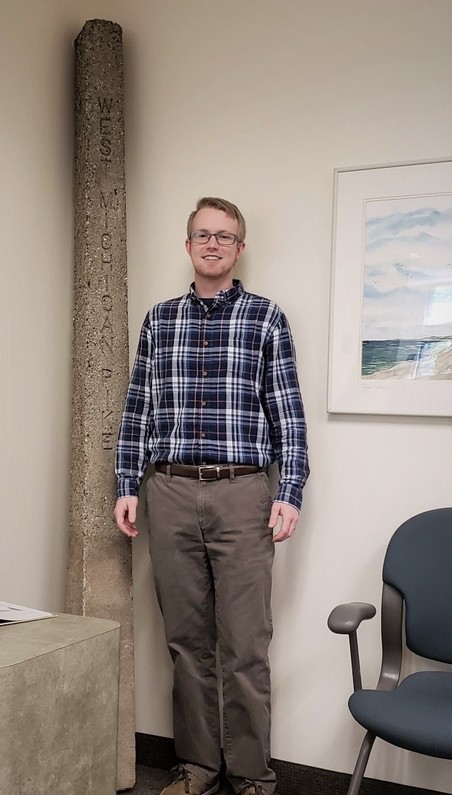 |
Stephen Graeser (PPID Research and Evaluation Analyst) poses next to the marker located at the Fillmore Complex


 Fourth Annual 231 River Run Promotes West Michigan Trails
Registration is now open for the 231 River Run taking place on October 27. The starting line, finish line and post-race festivities are at Connor Bayou along the Grand River. The location not only provides a beautiful backdrop, but offers access to the newest segment of the race course: The Idema Explorers Trail. This year's event is offering 10K and 4-mile events which will traverse the Idema Explorer’s Trail, the Henry Plant M231 Pedestrian Bridge and the Spoonville Trail.
The goals of the run are to:
- promote the paved trails (Last year, runner surveys reported a significant increase in awareness.)
- raise funds for the Spoonville and Idema Explorers trails (To date the runs have raised approximately $20,000.)
- showcase West Michigan as a healthy, active, growing and thriving region
- build community and
- advocate for wellness.
Get Involved
If running is not for you, get involved by volunteering or sponsoring a course sign for just $50. We'll display your name or logo and a motivational message on a sign along the running route. Contact Shannon or use this form and select "Mile Marker Sponsor."
Special Thanks
This event could not be possible without the help of our generous sponsors. Please thank them with your business. The Ottawa County Parks and the Ottawa County Planning & Performance Improvement departments, plus Ottawa County employees from various other divisions also volunteer to make this event happen and are appreciated. Finally, a note of gratitude is extended to the army of community volunteers who support the run.

Meeting Notes | September 19, 2018 | 3:00 p.m.
Attendees: Don Disselkoen, Commissioner; Joe Baumann, Commissioner; Brett Laughlin, Road Commission
Managing Director; Al Vanderberg, County Administrator; John Shay, Deputy County Administrator; Paul Sachs, Planning &
Performance Director
Construction Update
- Brett handed out a written construction update.
- The Michigan Infrastructure & Transportation
Association (MITA) has locked out employees represented by Operating Engineers
324 over a labor-contract dispute. This
will delay construction projects, which use equipment operators that belong to
this specific union. In Ottawa County,
it will delay the following projects:
- Osborn/Bass/Warner (104th to 68th
Avenue)
- James Street (US-31 to Chicago Drive)
- Cottonwood Drive (Baldwin to Bauer)
- Most of this year’s projects have been completed
with the exception of Beeline Road and Cottonwood Drive, with James Street and
Osborn/Bass/Warner on hold due to the lockout.
- Beeline Road (Lakewood to Riley): The top course
of asphalt will be applied shortly.
- Cottonwood Drive (Baldwin to Bauer): Sewer work
has been completed. Water main work is
proceeding with laborers to replace the locked-out equipment operators and is
expected to be completed by the end of October.
It is unknown if the road can be graded for paving work, as the grader
operator is a member of the locked-out union.
The paving contractor, Superior Asphalt, has non-union employees, so it is
unaffected by the lockout.
- Minor work may be performed on some of the
locked-out projects to ensure that it is safe and provides reasonable access to
local traffic during the winter months.
Funding Issues
- Brett handed out a FY 2014-2018 history of
Michigan Transportation Fund (MTF) revenues received by OCRC. It reflects receiving additional funding from
MDOT in February 2018 following recent legislation to increase road funding.
- The price of road salt increased from $36.46/ton
last year to $62.84/ton this year. OCRC
was able to purchase 3,300 tons of road salt in August at last year’s
price. OCRC is required to buy 80% of
its allocation each year (up from 70%) and may go up to 130% of the allocated
amount.
M-231
- Al stated that the County does not yet own the
property for the extension of M-231 adjacent to its current terminus. He will have further discussions with the
property owner about this and will explore all options to acquire this
property.
- Paul stated that the County is still waiting for
MDOT to conduct its traffic modeling for the Part A section of Phase II of the
M-231 project. Part A of Phase II would
run from I-196 west to US-31 along either New Holland Street or Riley
Street. Part B of Phase II would run
from this Part A section north to the existing terminus of M-231 at Lake
Michigan Drive (M-45).
MDOT Maintenance Contract
- OCRC performs routine maintenance and
snowplowing on state trunklines and federal highways. OCRC has provided the required one year’s written
notice to MDOT that it plans to terminate its maintenance contract effective
September 30, 2019. OCRC expects to save
about $600,000 per year in labor and equipment by terminating this contract. The anticipated financial savings from
dropping the state contract will be beneficial for maintaining and improving
the county road network.
- OCRC has provided similar written notices in the past,
but has always agreed to extend the maintenance contract. It is not likely to do this after September
30, 2019, as it is not receiving sufficient reimbursement of expenses from
MDOT. Previously, there were 26 snowplow
routes on MDOT roads and highways, which required 26 employees. However, MDOT only reimburses OCRC based on a
year-round average of about 12 employees since OCRC obviously doesn’t plow snow
365 days per year. In working with the
local MDOT representatives, OCRC has been able to reduce the number of
employees dedicated to MDOT roads and highways to 21, as other jurisdictions
have taken over some of the maintenance duties (e.g. City of Walker now plows
M-11). However, these efforts are not
enough to economically justify continuing to renew the maintenance
contract. Since 2005, the amount of
revenues received from MDOT for routine maintenance on a statewide basis has
increased only 17%. During this same
time period, MTF revenues have increased 78%, so MDOT is spending most of the
MTF on capital projects and not increasing routine and preventative-maintenance
budgets. In addition, MDOT does not
allow maintenance funds to be carried over past the end of the fiscal year on
September 30th, which would be more efficient and cost effective.
(Submitted by Megan Boos)
Click here for the most recent Ottawa County Conservation District Newsletter.
(Submitted by John Weiss)
Click here to view GVMC latest developments.
|