|
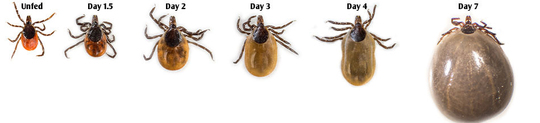
Lyme disease is the most commonly reported tickborne disease in Michigan. It is spread by an infected blacklegged (deer) tick. According to the CDC, tickborne diseases more than doubled in 13 years and were 77% of all vectorborne disease reports. Lyme disease accounted for 82% of all tickborne cases. Most humans are infected through the bites of immature ticks called nymphs that feed during the spring and summer months. Nymphs can be difficult to see since they are about the size of a poppy seed. In most cases, the tick must be attached for 36 to 48 hours or more before the Lyme disease bacterium can be transmitted. Prompt removal of ticks is the best method to decrease the chance of Lyme disease. Seek medical attention if you develop a fever, a rash, severe fatigue, facial paralysis or joint pain within 30 days of being bitten by a tick.
Unfed Tick to Engorged Tick Comparision
 The most important way to protect against Lyme disease is to prevent tick bites.
Avoid direct contact with ticks
- Walk in the center of trails.
- Avoid wooded and brushy areas with high grass and leaf litter.
- Create tick-safe zones in your yard. Keep patios and play areas away from vegetation, regularly remove leaves, clear tall grasses and brush around home, place wood chips or gravel between lawns and wooded areas, and use a chemical control agent.
Use insect repellent
- Apply repellent containing DEET (20-30 percent) or Picaridin on exposed skin.
- Treat clothing and gear (such as boots, pants, socks and tents) with products containing 0.5% permethrin. Do not use permethrin directly on skin.
- Always follow the manufacturer’s instructions when applying any repellents.
Find and remove ticks
- Bathe or shower after being outside in tick-infested areas (preferably within two hours).
- Conduct a full-body tick check (under arms, in and around ears, inside belly button, behind knees, between legs, around waist and especially in hair).
- Examine gear and pets. Ticks can ride into the home on clothing and pets, and then attach to a person later. Use tick prevention products on your pets.
- Wash clothing in hot water and dry on high heat after being outside to kill ticks.
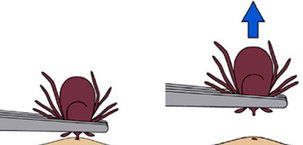
- Use fine-tipped tweezers to grasp the tick as close to the skin’s surface as possible. Pull upward with steady, even pressure. Don’t twist or jerk the tick; this can cause the mouth parts to break off and remain in the skin. Clean the area with rubbing alcohol, an iodine scrub or soap and water.
|
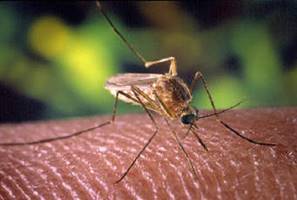
West Nile is a virus most commonly spread to people by mosquito bites. Mosquitoes become infected when they feed on infected birds. Infected mosquitoes then spread West Nile virus (WNV) to people and other animals by biting them. In North America, cases of WNV occur during mosquito season, which starts in the summer and continues through fall. There are no vaccines to prevent or medications to treat WNV. Fortunately, most people infected with WNV do not have symptoms. About 1 in 5 people who are infected develop a fever and other symptoms.
The most important way to protect against West Nile virus is to prevent mosquito bites.
Prevent mosquito bites
- Use insect repellent.
- Wear long-sleeved shirts and long pants.
- Dress your child in clothing that covers arms and legs.
- Cover crib, stroller and baby carrier with mosquito netting.
Control mosquitoes inside and outside your home
- Use screens on windows and doors. Repair holes in screens to keep mosquitoes outside.
- Use air conditioning when available.
- Sleep under a mosquito bed net if air conditioned or screened rooms are not available or if sleeping outdoors.
- Empty and scrub, turn over, cover or throw out items that hold water (such as tires, buckets, planters, toys, pools, birdbaths, flowerpots or trash containers). Check inside and outside your home. Mosquitoes lay eggs near water.
|