|
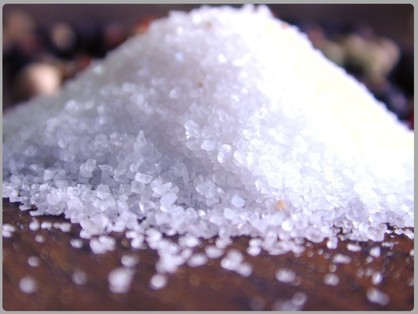
Have you ever wondered why we put salt on the roads? How
exactly does salt make the roads safer or less icy? It’s a simple chemical
process that allows the Road Commission to make the roads a little less
dangerous
When water
freezes into ice the molecules bind together to form a solid structure. Any
particle that can be dissolved into water will help slow down the process of
forming ice, and it turns out that salt is very effective at doing that. When
salt dissolves in water it lowers the freezing temperature of water, making it
more difficult for ice to form. By lowering the freezing temperature of the
water, salt prevents ice from forming at the typical 32 degree freezing mark.
The number of degrees the freezing temperature is lowered depends on the amount
and type of salt used.
So how
does this process work when dry salt is placed on existing ice? Ice has a very
thin layer of water on it (especially at warmer temperatures). The salt
dissolves in this thin layer of water and that salty water then melts the ice
beneath it and the process continues. This process is also very effective on
snowpack over top of ice. The salt melts the snowpack and the salty water then
begins to work on lower layers of ice.
As is
often noted in weather forecasts, salt doesn’t work as in extreme cold
temperatures. When temperatures are less than 20 degrees the salt takes too
long to melt the ice and meltwater will quickly refreeze. As the temperature
gets colder (below 10 degrees) and refreezing becomes faster, adding salt can
cause more problems than good results. In these instances, there are some other
ways the Road Commission can help combat the ice on the roads.
Sand and
other abrasives are sometimes added to the roads. Sand doesn’t help melt the
ice, but when salt is no longer effective, sand can help cars maintain their
grip. While sand doesn't melt ice, it aids drivers by adding traction for
tires. In contrast, calcium chloride and other deicing liquid treatments do
melt
ice, sometimes better than salt (sodium chloride) in some situations. These
deicing liquids can also be used to decrease ice on roads.
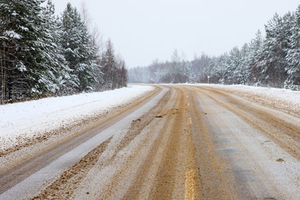 It should be noted, that salt is usually only effective
when placed on the roads after a snowfall. If salt is placed on bare roads,
even though they are sometimes icy, most of the salt gets wasted by being blown
or knocked off the road before it even has time to work. Salt does not stick to
dry roads very well, and so it is generally a waste of salt and money to treat
bare roads.
The Road
Commission works hard to manage its winter maintenance budget effectively. In a
bad winter the cost of winter maintenance can easily rise to above $3 million,
and use up to 25,000 tons of salt. It is essential
for the Road Commission - and helpful for drivers - to understand how salt works
and in what situations it is most effective to avoid wasting it and adding to
the already high cost of winter maintenance.
Even
though the Road Commission has ways to help battle the snow and ice, it is
always best to drive safely and err on the side of caution. Especially as the
roads get colder, the ice won’t melt as fast and, even with salt on the roads, winter
driving can be dangerous. It’s always important in winter to be aware of the
weather conditions and drive at safe speeds, giving yourself plenty of time to
stop in case of snow and ice.
|
Why
isn’t my road being plowed?
The Ottawa County Road Commission has a snow plowing policy
in place to clear the roads as quickly and effectively as possible. This means
the highest volume roads are cleared first, and in a large storm event it may
take some time to get to less traveled roads. The order is:
Priority 1
– State Trunk-lines (US-31, I-96, etc.)
Priority 2 – Multi-lane
Primary Roads
Priority 3 – Primary Roads
Priority 4 – Local Paved Roads
Priority 5 – Subdivision
Streets
Priority 6 – Local Gravel
Roads
Priority 7 – Dead End Streets
and Cul-de-sacs
So, please remember to be patient and know that we are
getting to your road as soon as possible. You haven’t been forgotten.
Why
does the plow truck push snow back into my driveway?
The
snowplow blade will push snow to the right. This means that if you pile snow at
the end of your driveway and to the left side of your driveway (facing the
road) it is likely that the snow could get pushed back in to your driveway. We
recommend piling snow on the right-hand side (facing the road) of your driveway
to help prevent snow being pushed back in.
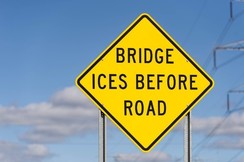 Why do
bridges freeze faster than other roads?
You have probably seen the signs warning drivers, but many
people are still caught off guard. Especially early in the winter, the warmth
of the ground can help keep ice from forming on roads, but bridges don’t have
contact with the ground. This coupled with wind factors can lead to bridges
icing before other roadways. Always be cautious when the temperature drops and
you’re driving on bridges and overpasses.
What
should I do if my mailbox is damaged?
When we get large snowstorms in Ottawa County, especially
with heavy snow, mailboxes sometimes get damaged. While the Road Commission
can’t do anything about nature or the weather, if your mailbox is damaged by
one of our snowplows we have a replacement policy. You need to contact our office
and set up an appointment and bring either a picture of your damaged mailbox or
your actual damaged mailbox to one of our locations to get a standard
replacement mailbox and post.
How do
I find out about current road conditions?
We
recommend staying up to date on local weather and advisories. You can check the
Michigan State Police website: www.michigan.gov/roadconditions to
see current travel advisories. This page also has some useful links to an MDOT
interactive map that shows current road conditions on Interstates around
Michigan. Make sure that you always check local weather and other advisories
before traveling during winter.
|
 |
 |
|