
Spread the cheer this holiday - not food poisoning!
Ottawa County, Michigan sent this bulletin at 11/14/2017 03:57 PM EST
How do I know if I have food poisoning?Symptoms may range from mild to severe, and include:
What should I do?If you experience symptoms of food poisoning, such as diarrhea or vomiting, drink plenty of fluids to prevent dehydration. See your doctor or healthcare provider if you have symptoms that are severe, including:
How do I prevent food poisoning?Following four simple steps at home — Clean, Separate, Cook and Chill — can help protect you and your loved ones from food poisoning.
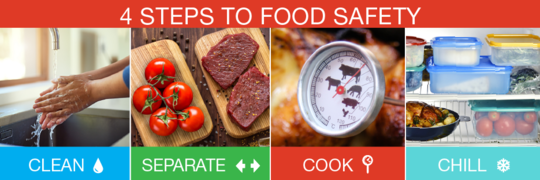
CLEAN - Wash your hands and surfaces often. SEPARATE - Don’t cross-contaminate. COOK - To the right temperature. CHILL - Refrigerate promptly.  www.miOttawa.org/food - www.cdc.gov/foodsafety - www.foodsafety.gov If you believe you or someone you know got sick from food, even if you don’t know what food it was, please report it to the Ottawa County Department of Public Health. Reporting your illness may help public health officials identify a foodborne disease outbreak and keep others from getting sick. To report a foodborne illness, call 616-396-5266.
Media contact: Kristina Wieghmink
|  Ottawa County Department of Public Health is dedicated to protecting health and promoting quality of life through prevention and control of disease, injury and disability. We help assure conditions in which all people can achieve optimum health, so residents may benefit from using our evidence based public health programs and services. Public Health has a vital role in all of our lives, and empowers communities with the necessary tools, knowledge, resources and opportunities to make lasting change. Having trouble viewing this email? View it as a Web page. |





 |
 |
| STAY CONNECTED: | |||||||
 |
 |
 |
 |
 |
|||
The Ottawa County Board of Commissioners:
Chairman Greg DeJong | Vice-Chairman Roger Bergman | Philip Kuyers | Jim Holtvluwer | Don Disselkoen | Matt Fenske | Al Dannenberg | Mike Haverdink | Joe Baumann | Frank Garcia | Kelly Kuiper
Images included with press releases may be reproduced for editorial use.
Questions? Contact Us
SUBSCRIBER SERVICES:
Receive fewer or more messages | Unsubscribe | Help