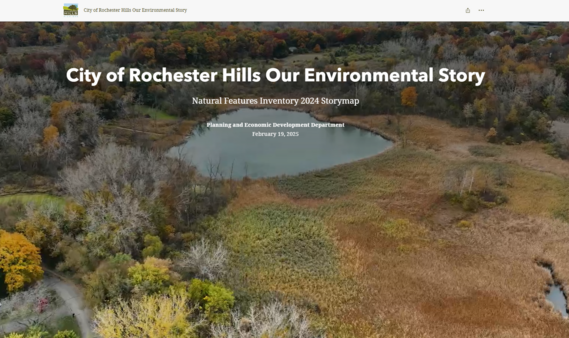
Rochester Hills has a long-standing reputation of being an environmental leader in southeast Michigan. Just last year, the City adopted a major update to its Natural Features Inventory that provides an in-depth analysis of the City's natural features including size, quality, and interconnection, as well as giving an overall ranking as to their sensitivity and necessity for preservation.
To make this information easy for the public to understand, a digital "story map" has been created to provide residents with an interactive experience. The Natural Features Inventory Map will provide users the ability to determine if their property includes identified natural features, the quality of those natural features, and what rules and regulations may be applicable to them. This innovative way of conveying technical data and a wide variety of information will hopefully encourage residents to learn more about the City's environmental story and help write the next chapters.
On the City side, this data will assist us as we weigh future land use decisions, both public and private as they relate to the conservation and enhancement of the City’s vast natural resources. The identification, preservation and enhancement of these areas is essential in protecting the City’s natural character.
To view the interactive website, click here.
Explore Archery
Take aim at the bullseye during Explore Archery at 1pm on Sunday, March 9 at Bloomer Park. Equipment is provided for this educational program focused on beginners. Suitable for ages 10+. Cost is $15 per person.
Click here to register!
|
|
 |
 |
|
Antler Amble
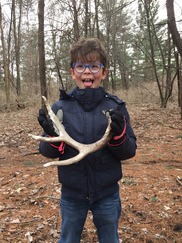
Be on the lookout for the antlers from a white-tailed deer at Antler Amble at 1pm on Friday, March 28, at Bloomer Park. White-tailed deer lose their antlers each winter and you may be lucky enough to take home a souvenir during this educational hike through the woods. Recommended for ages 7+. Cost is $7 per person.
Click here to register!
|
Sap to Syrup Pancake Breakfast
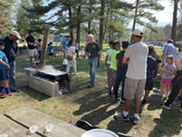
Enjoy pancakes topped with maple syrup fresh from the trees at the Sap to Syrup Pancake Breakfast on Saturday, April 12 at Bloomer Park. Timeslots are 9am, 10am and 11am. Participants will see an old-fashioned sap-to-syrup boiling operation before chowing down. All ages welcome, children 2 and under are free. Cost is $14/adult and $7/child ages 3-12.
Click here to register!
|
|
 |
 |
|
Summer Camp Schedule
Be on the lookout for our always popular camps this summer taking place at Bloomer Park!
Click here to register!
|
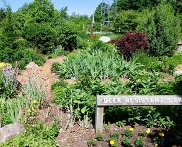
Gardening in the Rochester Hills area can be a bit tricky with white-tailed deer roaming around. But that doesn't mean all is lost. Join us and our friends from Bordine's at 7pm on Wednesday, March 26 at City Hall for our free Gardening and Landscaping with Deer Program. Space is limited and registration is required.
Click here to register!
|
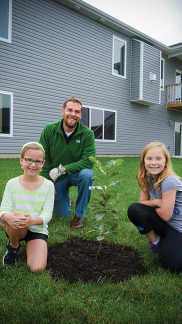
Starting March 23, residents can sign up for a free tree to plant on their private property through our Community Canopy Program.
Residents can reserve up to one tree that will be mailed to them, and they are then required to plant and care for them in the location chosen through an online tool. Trees from this program tend to get scooped up fast so don't wait to reserve yours!
Available trees include: River Birch, Serviceberry, Northern Red Oak, Sycamore, and Red Bud.
Reserve your free tree here!
|
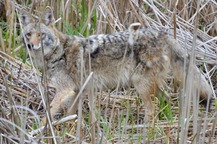
A member of the Canidae (dog) family, the eastern coyote is native to and common throughout Michigan in rural and urban areas.
The coyote is active day and night, but most active around sunrise and sunset. People are most likely to see them during their breeding period, which occurs in Michigan from mid-January through March. You may also see the adults throughout the summer as they care for their pups if there is a den nearby.
Pups leave the den site in the fall and these young dispersing animals are sometimes
more visible. Coyotes' coloration is generally greyish brown with lighter fur on their throat and belly, individual colors and patterns may vary. Their fur is dense and thick, often giving them a larger appearance. Their ears are pointed and stand up, unlike the ears of domestic dogs that often droop.
Coyotes eat a variety of foods: small mammals such as mice, voles, shrews, rabbits, hares and squirrels are preferred foods. However, insects, fruits, berries, birds, frogs, snakes, deer, plants and seeds are also eaten. Coyotes are very social animals; they do not form packs but rather live in family groups.
|
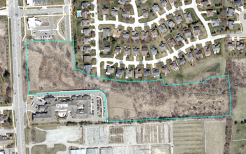
The City's newest open space property off Rochester Road is an important natural corridor that connects other natural areas with the community. Located on the east side of Rochester Road, south of Eddington Boulevard, the 11.5 acres was donated to the City in 2023. The general plan for the property is to remain natural open space with the potential for paths in the future. Wetlands and a small watercourse run through it, and phragmites can be found all over; making it an ideal spot for future stewardship efforts to restore it to a higher functioning wetland and natural feature. The wetlands not only offer habitat, but offer valuable storage for stormwater.
|
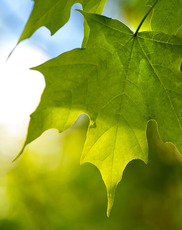
The black maple is a tree closely related to the sugar maple, and sometimes even considered a subspecies. It's known for its similarities to the sugar maple, including its sap which can be used to make maple syrup, and its valuable hardwood. However, it also has distinct features, such as leaves that tend to be hairier and often turn yellow in autumn. Black maples thrive in moist soils and are found in mixed hardwood forests across eastern North America.
Beyond its close kinship with the sugar maple, the black maple boasts several noteworthy characteristics. Its bark, darker than the sugar maple's, becomes deeply furrowed with age. The tree's overall form is typically robust, reaching heights of 60 to 100 feet. Ecologically, it plays a vital role in its native habitats, providing sustenance and shelter for various wildlife.
The black maple's tolerance for slightly wetter soils than the sugar maple allows it to occupy different niches within forests. While its sap production is slightly lower than that of the sugar maple, it still contributes significantly to maple syrup production in certain regions. Furthermore, its lumber is valued for its strength and appealing grain, making it suitable for furniture, flooring, and other woodworking projects.
|

Rochester Hills Parks and Natural Resources is now on Instagram! Follow us @rochesterhillsparks and tag us in your photos on your visits to our parks and green spaces. We will be using this page to share program information, wildlife, staff spotlights and so much more.
Follow us on Instagram here.
|
|