
Updated Interim Clinical Considerations—Optimal Interval Between 1st and 2nd mRNA Vaccine Series
Oakland County, Michigan sent this bulletin at 02/25/2022 10:37 AM ESTThis email is being sent to VFC, Non-VFC and Covid-19 Providers in Oakland County, Michigan by the Oakland County Health Division (OCHD) Immunization Action Plan (IAP)

Dear Immunization Partners,
On February 22, 2022, the Centers for Disease Control and Prevention (CDC) updated the Interim Clinical Considerations for Use of COVID-19 Vaccines with additional information to help vaccine providers determine the optimal interval between the first and second dose of an mRNA vaccine series, based on the individual patient. These additional considerations followed a thorough evaluation of the latest safety and effectiveness data, and evidence from hundreds of millions of COVID-19 vaccines that have already been safely administered in the United States, and the billions of vaccines administered in other countries.
New data indicate that some people ages 12 through 64 years—and especially males ages 12 through 39 years—would benefit from getting their second mRNA COVID-19 vaccine dose 8 weeks after receiving their first dose. Extending the time interval between primary mRNA COVID-19 vaccine doses from the FDA-approved or authorized 3 weeks (Pfizer-BioNTech) or 4 weeks (Moderna) to 8 weeks may help increase how long protection lasts against COVID-19. It may also help lower the (small) risk of myocarditis (inflammation of the heart muscle) and pericarditis (swelling of tissue around the heart), which has been associated—mostly among adolescent and young adult males—with mRNA COVID-19 vaccination.
This updated guidance is specific to the mRNA (Pfizer-BioNTech or Moderna) COVID-19 vaccine primary series and is only for some patients who are not yet vaccinated.
- Specifically for people ages 12 through 64 years who are not moderately or severely immunocompromised
- Males ages 12 through 39 years—may benefit from getting their second mRNA COVID-19 vaccine dose 8 weeks after their first dose
It’s important to note this update does not apply to everyone. The extended interval is not recommended for all people ages 12 through 64 years and providers should continue to recommend the 3-week or 4-week interval for:
- People who are moderately or severely immunocompromised
- Adults ages 65 years and older
- Others who may need early protection due to concern about an increased risk of severe illness from COVID-19 or high levels of community transmission
Regardless of the interval between the first and second dose, mRNA vaccines are highly effective at reducing the risk of hospitalization and serious complications from COVID-19 infection. And people who have already received their primary mRNA series at the 3-week or 4-week interval remain well-protected—especially if they have received a booster dose.The COVID-19 vaccination primary series schedule, with updates highlighted (Table 2. COVID-19 vaccination schedule for the primary series in the general population*):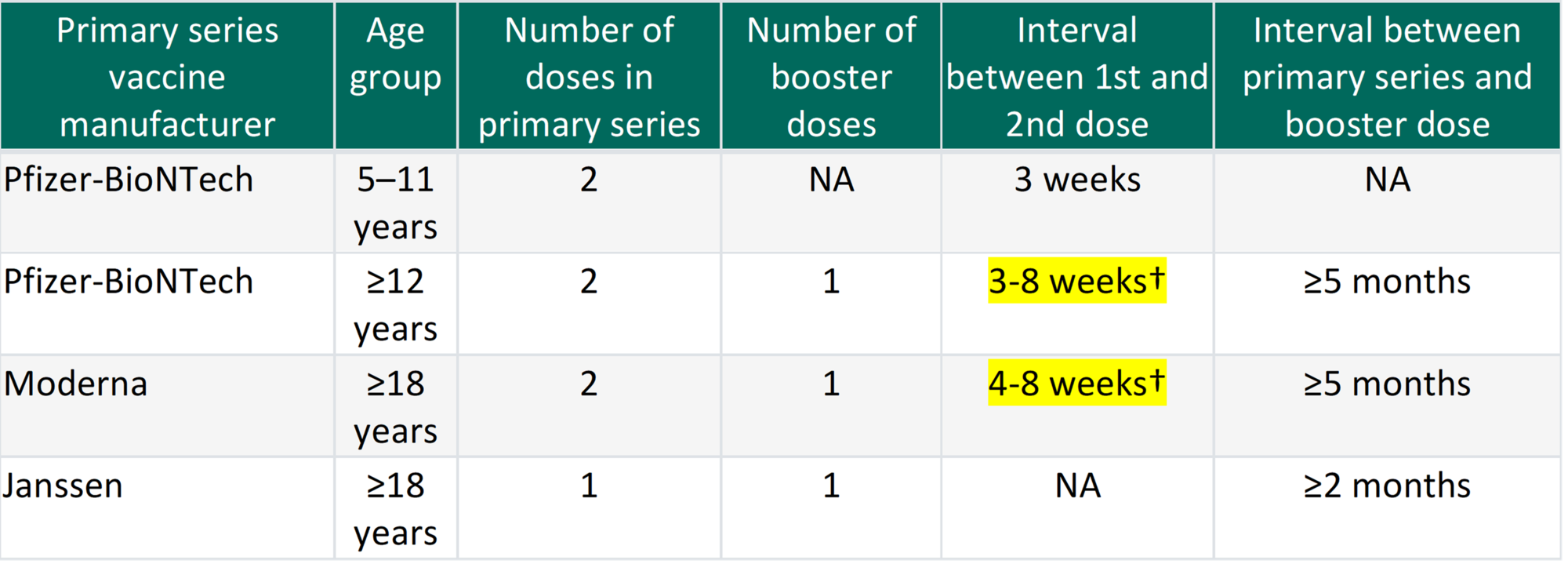 *For the vaccination schedule for people who are moderately or severely immunocompromised, see Table 3.Additional information regarding children 5 through 11 years.Why are children ages 5-11 years not recommended to consider a longer interval between the 1st and 2nd doses of mRNA COVID-19 vaccines?
- There are currently no data available for children younger than age 12 years regarding any impact of intervals longer than 3 weeks between the 1st and 2nd doses of the Pfizer-BioNTech COVID-19 vaccine, which is an mRNA vaccine. Children younger than 12 years are not eligible for any other COVID-19 vaccine at this time.
Below is a list of resources and upcoming informational activities related to the recommendation:
- Updated Interim Clinical Care Considerations for COVID-19 Vaccination
- COCA call regarding the Updated Guidance for Clinicians on COVID-19 Vaccines on Thursday, February 24, 2022, at 2:00 PM – 3:00 PM ET
Thank you for all your hard work to protect Michiganders from vaccine-preventable diseases.
Oakland County Health Division, Immunization Action Plan
Any questions should be directed to Letha Martin, preferably by email at martinl@oakgov.com

 |
Questions? Contact Us |
| STAY CONNECTED: | |||||
 |
 |
 |
 |
||
SUBSCRIBER SERVICES:
Manage Preferences | Unsubscribe | Help
This service is provided to you by Oakland County, Michigan.