|
New School Safety Academies Planned for Summer and Fall
 |
|
The Michigan School Safety Academy (Mi-SSA) is back with brand new content and dynamic sessions. This year’s programs will explore suicide prevention and wellness, emerging state and local trends in adolescent substance use, behavioral and digital threat assessment, emergency operations planning, and the latest in school safety law. We are excited to welcome a mix of new and returning speakers for two days of impactful learning. |
Mark your calendars. Registration is now open!
-
August 18-19, 2026: Bay College, Escanaba
-
September 15-16, 2026: Radisson Plaza Hotel, Kalamazoo
-
October 20-21, 2026: University of Michigan, Dearborn
-
November 17-18, 2026: University of Michigan, Flint
Visit the Michigan School Safety Academy page for more information.
Standardized Response Terminology: What You Need to Know
The requirement for standardized response terminology in K–12 schools was established by the Michigan Legislature through an amendment to the Revised School Code (1976 PA 451):
-
Public Act 271 of 2024 added Section 380.1308c to the School Code, directing the Department of State Police—working with the School Safety and Mental Health Commission—to develop and promulgate standardized response terminology (including a color‑coding system) for use in both public and nonpublic schools in certain situations.
- Additionally, Public Act 270 of 2024 added Section 380.1308d, mandating that, beginning with the 2026–2027 school year, the governing bodies of public and nonpublic schools must adopt and implement the terminology previously defined in Section 1308c.
- Currently, the proposed rules are under review by the Joint Committee on Administrative Rules (JCAR). Once approved by JCAR, the rules will become final and will be published by the Secretary of State.
Public Act Summary of Approval Flow
|
Step
|
Responsible Party
|
Role
|
|
1
|
Executive Agency
|
Drafts rule, conducts hearings
|
|
2
|
Michigan Office of Administrative Hearings and Rules
|
Reviews and certifies compliance
|
|
3
|
Public
|
Provides input via hearings
|
|
4
|
Joint Committee on Administrative Rules
|
Reviews; may object or request changes
|
|
5
|
Secretary of State
|
Files and publishes the final rule
|
Before Posting Back-to-School Photos: Share Smiles, Not Sensitive Information
Note: The following information is intended for schools to share with parents and caregivers before the start of the school year.
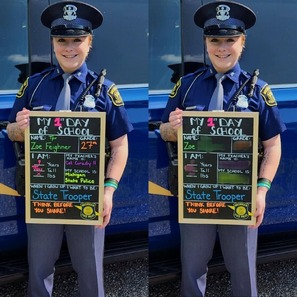
As the school year kicks off, social media will light up with proud parents posting first-day photos. It's a heartwarming tradition, but it can also unintentionally expose sensitive information about your child.
Details like school name, grade level, teacher, age, and even physical characteristics may seem harmless, but they can be exploited by predators or scammers targeting your child or family.
 |
|
Even with strict privacy settings, the safest choice is to limit what you share online.
Avoid posting:
❌ School name or location
❌ Age or birthdate
❌ Teacher’s name or classroom
❌ Physical details like height or weight
❌ Personal clues (e.g., answers to security questions)
|
It is worth treating everyday details with the same caution you would give to a password or a PIN. Celebrate safely with fun captions, close ups of backpacks or shoes, or a creative back-to-school sign that does not include identifying information. Let's keep the memories joyful and private.
|
|
School Safety and Mental Health Commission Information
Public Act 263 of 2024 and Executive Order 2025-1 established the School Safety and Mental Health Commission. Details regarding the commission, its meeting schedule, and current members are available on the Commission webpage. The most recent meeting of the commission was March 18, 2026. Meeting minutes are available online.
Legislative Compliance Reminders
Public Act 258 of 2024, effective October 1, 2025, requires every public and private school to annually inform parents and legal guardians about secure firearm storage practices. Each year, schools must distribute the Michigan Department of Education’s Safe Storage Notice by mail or electronically to every parent or legal guardian of each enrolled student.
Public Act 272 of 2024, effective April 2, 2025, amends the Revised School Code to require public and nonpublic schools to ensure each school has a behavior threat assessment and management team. These teams are tasked with, among other things, defining prohibited and concerning behavior; monitoring, assessing, and performing inquiries into concerning behavior; and developing a written plan to assist a student who is engaging in concerning behavior. Schools are required to have these teams operational by October 1, 2026.
Public Act 436 of 2018 requires that every school district, intermediate school, or public-school academy — and at least one local law enforcement agency with jurisdiction — conduct a biennial review of its emergency operations plan (EOP), including a vulnerability assessment. Under Michigan law, school districts are not required to submit the full EOP document directly to the state.
Instead, this process must be followed:
-
Certification: Districts must certify electronically in the NexSys System that their EOP exists and includes all legally required components.
-
Biennial Review: The EOP must be developed or reviewed every two years in conjunction with at least one local law enforcement agency.
-
Notification: Within 30 days of completing a review or adopting an EOP, the district must notify the Michigan Department of Education of the completed review.
-
Cell Phone Policy: Starting with the 2026-27 school year, school districts must adopt a policy prohibiting student cell phone use during instructional time and be posted publicly on their website. These policies should include required exemptions for medical needs, special education, district-issued devices, and updated emergency operation plans to address how students may use devices during an emergency. 2026 Local School District Cell Phone and Emergency Plan Policies
BTAM Resources Strengthening Safety Together
BTAM and Michigan’s “Extreme Risk Protection Orders” can work hand‑in‑hand — proactive tools that strengthen safety, support intervention, and help keep communities protected. For more information, start here.
For BTAM trainers in your area, visit the OSS website.
An Important Reminder – You Can Help Keep Kids Safe!
 |
|
The Michigan Child Protection Law requires certain individuals, known as mandated reporters, to report any suspicions of child abuse or neglect to Children’s Protective Services (CPS). Mandated reporters include school administrators, social workers, counselors, and teachers.
With the new school year beginning, schools are encouraged to participate in refresher training for mandated reporters. Training materials, including a training guide, can be found on the Michigan Department of Health and Human Services (MDHHS) website, along with an updated list of trainers by county.
|
It is important to remember that reporting through the OK2SAY student safety tipline is not sufficient. Proper reports must be submitted directly to CPS via the MDHHS Centralized Intake website or by calling 855-444-3911.
|
|
 Professional Development Resources
The Office of School Safety (OSS) has developed and published several free online resources to aid school administrators in leading staff professional development.
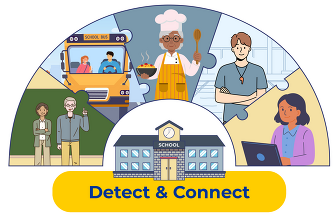
- The Detect & Connect video series is a five-part series for school staff to help recognize and respond to student concerns. It covers a staff member’s role in school safety, recognizing signs of distress, connecting students to support, and more. The accompanying Facilitator’s Guide provides practical tools for leading meaningful discussions on key school safety concepts and can be adapted to fit your unique school, community, roles, and local context. The Detect & Connect series is intended for training school support staff, but the video series may be beneficial to other groups, too—such as parents, school resource officers, or new school personnel.
- The OSS has published three school safety toolkits that provide practical guidance for today’s school safety challenges.
- The School Crisis Communication Planning toolkit is designed to help school leaders develop and implement messaging strategies that support safety, reduce confusion, and build trust during critical incidents. This toolkit contains worksheets, best practices, and messaging templates.
- The Emergency Preparedness for School Events toolkit is to help educators and school leaders prepare for emergencies before, during, and after school-sponsored events, both on and off campus. It contains checklists, planning templates, and real-world considerations.
- The Best Practices for Investigating Student Online Activity toolkit is designed to help educators and school staff responsibly navigate online investigations with real-world examples and clear guidance. It offers step-by-step strategies for recognizing concerning content, understanding digital language, and balancing student privacy with safety.
|
Safer Schools Together: Tracking Trends Shaping Youth Online
Keeping up with the ever‑evolving world of social media, video games, movies, music, and other online content can be challenging in today’s fast‑moving digital landscape, especially with the broad range of material accessible to youth. That’s why Safer Schools Together actively monitors online activity, tracks emerging digital trends, and equips schools and parents with the knowledge they need to stay informed and proactive. The Addressing Extremism, Radicalization, and the 764 guide is designed to help navigate the emerging challenges of digital radicalization and extremism and their impact on our students and youth. The goal is to provide real-world context and tools needed to feel prepared when supporting youth as they navigate the digital world.
Protecting Our Students: A Fresh Toolkit for Secure Firearm Storage
The School Communication Toolkit for Secure Firearm Storage is now available from the Michigan School Safety Initiative to help schools meet the requirements of Michigan’s Secure Storage law (effective February 13, 2024) and the Safe Homes, Safe Schools law (effective October 1, 2025). These laws require schools to provide families with accessible, annual information on secure firearm storage to help prevent unauthorized access by children and teens. While schools must share Michigan Department of Education materials, this toolkit offers additional resources, best practices, and messaging tools to further strengthen school and community safety efforts.
GUN LOCKS
Free gun safety locks for distribution to students, families, and staff are available through the MSP Grants and Community Services Division. Please email MSP-SchoolSafety@michigan.gov with the requested amount (in multiples of 25), a contact name, and the name and address of the school. The email must come from the principal or superintendent.
Are You Ready to Start a Cartoonversation at Your School?
 |
|
Tim Wheeler of Wheeler Creative Studios is “on a mission to rescue childhood.” With creative animations in videos, books, and games, Cartoonversation is tackling big topics for little people. Those big topics cover a range of subjects, from wearing a helmet and seat belt to gun and fire safety, in digestible ways to educate younger students. Check out Cartoonversation to see the various resources available. |
Share This with Families: A New Resource from the Office of School Safety
We’re excited to share a new parent/caregiver resource newsletter created by the OSS, and we invite you to distribute it to families in your community.
This resource can be downloaded in Microsoft Word or as a Google Doc.
|
|
 Keeping Our Communities Safe: Vital OK2SAY Updates for School Administrators
As we work together to maintain safe, supportive learning environments, OK2SAY Michigan’s Student Safety program remains a critical resource. Please review the following legal requirements, actionable updates, and free resources available to your school.
OK2SAY EMERGENCY CONTACT
Under Public Act 401 of 2020 all Michigan public and nonpublic schools are legally required to provide the Department of State Police at least one school official's emergency contact information biannually.
Why it matters: This ensures OK2SAY technicians can immediately reach school personnel after hours regarding potential harm, threats, or criminal activity targeting your students, staff, or school.
-
Privacy Guardrails: This contact information is kept strictly confidential. It is only accessed during an after-hours emergency involving imminent danger to the safety or well-being of a student.
-
What to do: If you have not done so already, please provide the emergency contact information for your school on the OK2SAY website under Register School Contacts.
All individuals designated as an OK2SAY Emergency Contact should program the following numbers into your mobile phone so you recognize them if OK2SAY reaches out:
-
Incoming Calls from OK2SAY: 517-284-3020 (Caller ID)
-
Direct Callback Line: 517-284-3137 (Use this number if you miss a call and need to reach the technician’s desk immediately).
TECHNICAL CHECK: WHITELIST OK2SAY EMAIL DOMAINS
To ensure seamless and uninterrupted communication during a crisis, your school network settings should be configured to allow all OK2SAY communications to bypass firewalls, spam filters, and other email security measures that could delay or block critical messages.
Please whitelist the following domains and email addresses:
- ok2say@mi.gov
- ok2say@michigan.gov
BRING OK2SAY TO YOUR SCHOOL: STUDENT SAFETY PRESENTATIONS
OK2SAY offers free, engaging student safety presentations for elementary, middle and high schools, along with optional community seminars for parents and guardians.
Designed to educate, empower, and encourage action, each presentation is tailored to the age and developmental level of the audience, addressing the real-world digital and physical safety challenges students face today. The presentations also emphasize the critical role every student can play in creating a safer, more supportive school environment.
Click here to register for a free presentation at your school.
HELP PROMOTE AND ADVERTISE OK2SAY IN THE SCHOOL
Building a culture of prevention requires constant visibility. To make promoting student safety effortless, OK2SAY provides a comprehensive library of free physical promotional items and digital materials for Michigan schools.
These ready-to-use assets are designed to plug directly into your school’s existing communication channels—saving your staff valuable time while ensuring families and students know exactly how to report concerns confidentially.
Digital Toolkit Integration
Keep student safety at the forefront of your virtual environments. Easily download and integrate these digital assets into:
-
School Websites & Parent Portals: Place prominent banners where families look for regular updates.
-
Social Media & Newsletters: Share pre-written graphics and reminders throughout the school year.
-
Digital Signage: Cycle OK2SAY safety slides on hallway and cafeteria monitors.
Physical Visibility
Reinforce the message on the ground by ordering physical promotional items (posters, stickers, etc.) to display in high-traffic learning areas:
-
Classroom & Hallway Displays: Keep confidential reporting channels visible to students daily.
-
Student Handbooks and Planners: Embed the contact methods where students can always find them.

|
|
|
|
|