 Macomb County residents will save $4.4 million over the next several years thanks to the refinancing of several bonds by the Macomb County Public Works Office.
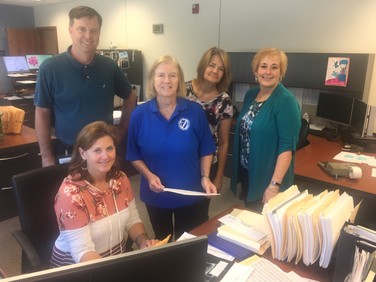
MCPWO is in the process of refinancing four bonds, all of which were used to pay for sewer work in various Macomb County communities. Together, the savings in lower interest rates will total $4.4 million. In 2017, MCPWO also refinanced several bonds, saving $6.7 million. Together, Macomb County sewer ratepayers have realized a savings of $11,100,000 in finance costs since Commissioner Candice S. Miller took office in January 2017.
“We continue to work every day to ensure that we not only provide the best possible service to our residents, but we do so in the most cost-effective manner,” Miller said. “My team and I continue to review every aspect of our operation, looking for ways to either to enhance our service and to lower the cost to our residents. Nobody ever complains about a little extra change in your blue jeans.”
In the current round, MCPWO is re-financing four bonds.
- A 2006 bond for the North Gratiot Interceptor. The re-fi will save Lenox Township and New Haven residents about $290,000.
- A 2010 bond for the Lake St. Clair Clean Water Initiative. The re-fi will save residents of St. Clair Shores, Roseville and Eastpointe a combined $600,000.
- A 2011 bond that paid for upgrades to the Clintondale Pump Station in Clinton Township. The re-fi will save sewer rate payers $3.2 million spread over 11 Macomb County communities.
- A 2010 bond that paid for upgrades in the Oakland-Macomb Interceptor District. The $300,000 in savings will be spread among 11 Macomb County communities and 12 in Oakland County.
Some of the refinance savings will be refunded to the various communities. Part will be used to pay for upcoming improvement projects, negating the need for a possible future rate increase.
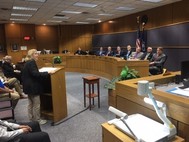
MCPWO completed a key step in the refinance process on Wednesday, Sept. 25, when the Macomb County Board of Commissioner voted to pledge the “full faith and credit” of the county as a whole to back the bonds.
“The Board of Commissioners, as a whole and as individuals, have been very engaged with our office. Asking questions and taking an interest in our operations. We appreciate their input. MCPWO continues to work to build partnerships at every level of government,” Miller said.
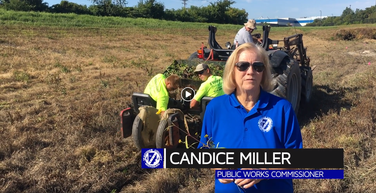 Planting season has arrived at the Sterling Relief Drain, where the first of thousands of plants are being planted along the drain. Later this fall and in the spring, they will be joined by thousands of trees and shrubs. These plants and trees will allow mother nature to act as a natural sponge to absorb sediments and excess nutrients in stormwater runoff. It is important that we reduce the number of excess nutrients because they can harm our beautiful Great Lakes. The landscaping design firm we are working with to complete his project has carefully chosen plants that will be able to withstand the drain conditions and are also native to Michigan. Watch this short video to learn more.
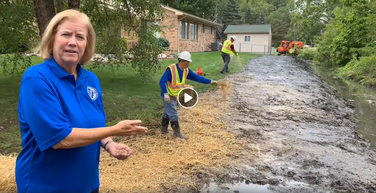 After our crews finish cleaning out a drain and reshaping the bank, we plant a native seed mix. This native seed mix will help bring pollinator plants like milkweed back to all areas of our county and help the monarch butterfly population. Watch this video for more information!
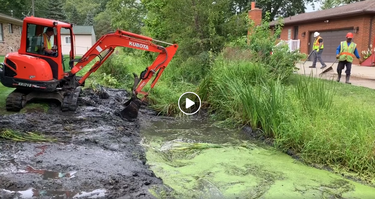 Another example of how important our drain match program is for residents in Macomb County. This is the Vanter De Beuff drain in Harrison Township. Through a 50/50 match in funding with the township, we were able to get in and fix a drain that had become so overgrown that it was preventing water from flowing. This drain is largely in a residential area so it is important the drain flows as intended to prevent flooding and property damage. As you can see from the overgrowth, the drain was largely untouched for decades which allowed it to get to this condition. Our crews are pulling out the dense vegetation and muck, opening up the drain, and reshaping the drain banks to restore it back to how it was originally designed to work. After the drain is reshaped, a native seed mix is spread to bring native plants like milkweed back to the drain banks. These native plants not only look good and will be easier to maintain, but benefit endangered pollinator species and help to clean the water before it reaches the Clinton River and eventually Lake St. Clair. |