 Having trouble viewing this email? View it as a Web page.

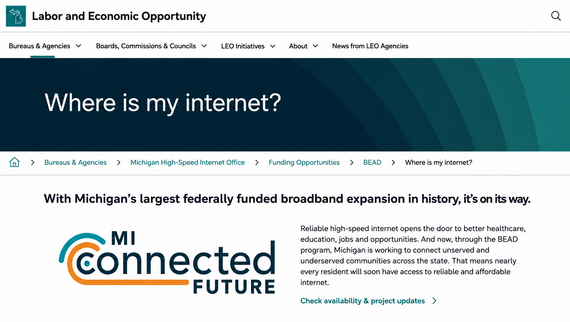 The Michigan High-Speed Internet Office (MIHI) has launched a new “Where is my internet?” webpage to help Michigan residents learn about efforts to expand high-speed internet across the state. Through Broadband Equity, Access, and Deployment (BEAD), Michigan is working to bring reliable, high-speed internet to homes and communities that currently lack access.
The new webpage gives residents a central place to learn about this work and find the latest information about internet projects and service availability in their area.
Visit the Where is my internet? webpage to learn more and in your community.
The National Telecommunications and Information Administration (NTIA) recently released a Supplemental Deployment Policy Notice announcing a new round of BEAD funding for deployment projects which will be made available in the future. MIHI is currently reviewing this new information and will release further information publicly as soon as possible. MIHI’s intent and mission is to use BEAD funding, as well as funding from other programs, to create a more digitally equitable state where everyone has the opportunity to leverage technology to improve their quality of life.
Spam is more than an inconvenience. Unwanted emails, text messages and calls can clutter your inbox and waste your time. Some spam can also be used to steal personal information, spread malicious software or trick you into sending money. While you may not be able to stop spam completely, the National Cybersecurity Alliance recommends taking these steps to reduce how much you receive:
-
Keep spam filters on your email accounts and smartphones turned on. These tools can automatically identify and filter suspicious messages.
-
Do not respond to spam. Even replying with “stop” can confirm that your email address or phone number is active and may lead to more unwanted messages.
-
Report unwanted messages and report junk texts through your messaging app or wireless carrier. Reporting spam can help improve detection for everyone.
-
Be careful when sharing your contact information. The more places you share your email address or phone number, the more opportunities there are for that information to be sold, leaked or exposed in a data breach.
-
Keep your software updated to protect your devices from malicious software that may be delivered through spam messages or harmful links.
-
Be cautious with unexpected links, attachments or requests for personal information. If you are unsure whether a message is legitimate, contact the organization using its official website or a trusted phone number instead of the contact information in the message.

|