 |
M-231 archeology earns Governor's Award for Historic Preservation
Michigan DOT sent this bulletin at 04/06/2015 11:58 AM EDT

|
|
Having trouble viewing this email? View it as a Web page.
|

FOR IMMEDIATE RELEASE MONDAY, APRIL 6, 2015
CONTACT: John Richard, MDOT Office of Communications, 616-451-4063 richardj2@michigan.gov
M-231 archeology earns
Governor's Award for Historic Preservation
Fast facts:
- MDOT and its partners have received the Governor's Award for Historic Preservation.
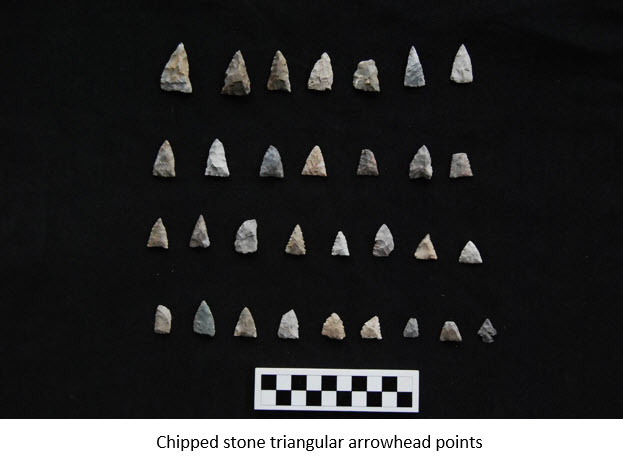
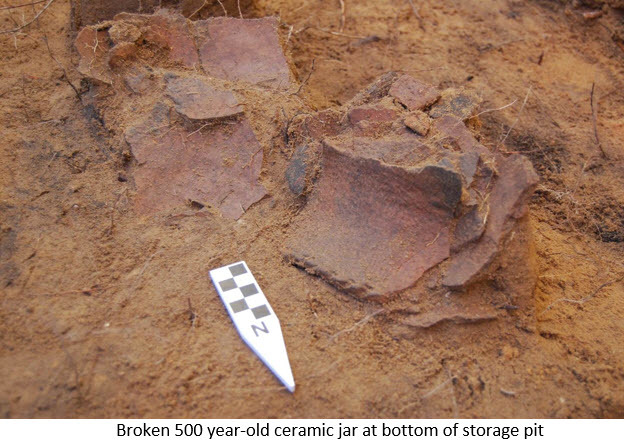
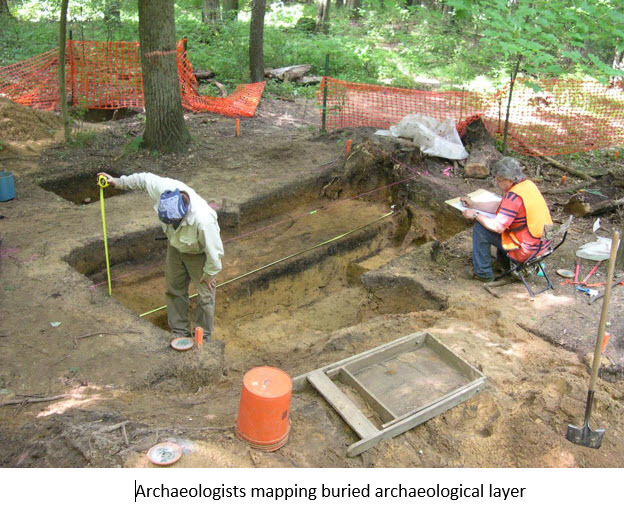
- The award is for archeological discoveries associated with the M-231 project in Ottawa County (see photos below).
- The award will be presented at a public ceremony in the Michigan State Capitol rotunda on May 6.
April 6, 2015 -- Archeological discoveries associated with the M-231 project in Ottawa County have earned the Michigan Department of Transportation (MDOT) a Governor's Award for Historic Preservation. The award will be presented at a public ceremony in the Michigan State Capitol rotunda at 9 a.m. on May 6.
Excavations in 2011 and 2012 from three historically significant sites were required to take place well in advance of M-231 road construction. The excavations revealed evidence of several occupations dating approximately between the years 1000 and 1500. Artifacts found include pottery shards, arrowheads, chipped stone tools, and the debris from making tools. Animal bones and seeds representing food remains also were recovered. Two of the most notable finds from these archaeological sites provided evidence that the sites were used for harvesting wild rice and fishing for lake sturgeon.
MDOT collaborated with six sovereign Native American nations, including the Little River Band of Ottawa Indians, the Match-e-be-nash-she-wish (Gun Lake) Band of Pottawatomi Indians, the Nottawaseppi Huron Band of the Potawatomi, the Saginaw Chippewa Indian Tribe of Michigan, the Little Traverse Bay Bands of Odawa Indians, and the Grand Traverse Band of Ottawa and Chippewa Indians, as well as the Federal Highway Administration (FHWA), and the State Historic Preservation Office (SHPO) to develop a Tribal Involvement Plan (TIP) for the project. The TIP specified how information about the excavations would be shared with the tribes and made provisions for tribal members to visit the sites, view the excavations, and conduct spiritual blessings and ceremonial activities during the fieldwork.
MDOT also is working with Michigan Native American tribes to develop educational materials for Michigan schools that will use the archaeological data, as well as information from Michigan Native American educators, environmental scientists, historians, and elders about lake sturgeon, wild rice, tribal history, economy and culture.
"We review about 300 projects a year and use topography, distance to water, soil types, vegetation patterns, early maps, and historical records to help us determine if a road project might impact a historically significant archaeological site," said MDOT Archeologist James Robertson. "Our goal is to avoid impacting archaeological sites. In the rare cases when avoidance is not possible, we preserve the information about the site by doing excavations and then use it to better understand the lifestyles and cultures of the native people who lived there."
In 1966, in response to growing public interest in historic preservation, Congress passed the National Historic Preservation Act. The act required that each state establish a State Historic Preservation Office (SPHO) and that the governor of each state appoint an officer to oversee the preservation activities. Each year, Michigan receives an Historic Preservation Fund grant from the National Park Service to operate its program. The Michigan SHPO identifies, evaluates, registers, interprets and protects the state's historic properties. The SHPO at the Michigan State Housing Development Authority (MSHDA) initiated the awards program in 2003 to recognize outstanding historic preservation achievements that reflect a commitment to the preservation of Michigan's unique character and the many archaeological sites and historic structures that document Michigan's past. To learn more, go to www.michigan.gov/shpo and click on Special Projects and Governor's Awards.
The 2015 Governor's Award for Historic Preservation recipients being honored May 6 are:
- MDOT, the Grand Traverse Band of Ottawa and Chippewa Indians, the Little River Band of Ottawa Indians, the Little Traverse Bay Bands of Odawa Indians, the Match-e-be-nash-she-wish Band of Pottawatomi Indians, the Nottawaseppi Huron Band of the Potawatomi, the Saginaw Chippewa Indian Tribe of Michigan, and Commonwealth Cultural Resources Group, Inc. for the US-31/M-231 Holland to Grand Haven Archaeological Data Recoveries.
- Roxbury Group, Trans Inns Management, Kraemer Design Group, PLC, and Walbridge for the restoration of the David Whitney Building in Detroit.
- Woda Group, Hooker DeJong Architects and Engineers, and the City of Menominee for the restoration of Lloyd's Department Store in Menominee.
- Friends of the Bohm Theatre, Albion Community Foundation, the Greater Albion Community, Mitchell and Mouat Architects, and Gordon Martin Builder, Inc. for the restoration of the Bohm Theatre in Albion.
- Eyde Company, Quinn Evans Architects, and Granger Construction for the restoration of the J. W. Knapp Company Building in Lansing.
###
Download MDOT's Mi Drive traffic information app: www.michigan.gov/drive
www.twitter.com/MichiganDOT | www.facebook.com/MichiganDOT