Showcasing the DNR: What do you think about Michigan's forests?
Michigan Department of Natural Resources sent this bulletin at 12/13/2012 04:16 PM EST


Showcasing the DNR
Showcasing the DNR was originally designed for weekly news publications, but we see benefit in sharing it more broadly. You’re invited to share these stories with friends, family and anyone you believe finds value in learning about the DNR’s efforts to better connect people of all ages to Michigan’s great outdoors and cultural heritage.
Media organizations are welcome to cut and paste these stories for use with their own readers and website visitors. Use the Internet link (at the end of this email) to access camera-ready photos (in color and/or grayscale) to supplement the story.
Thank you for your interest in Showcasing the DNR. If you would like to see past Showcasing stories, visit www.michigan.gov/dnr-stories. Questions or comments? Please contact DNR public information officer Ed Golder at (517) 335-3014 or goldere@michigan.gov.
Thursday, Dec. 13, 2012
1,090 words
Photos available: Yes
Seeking residents’ input on management of state forest land
Did you know that, as a Michigan resident, you’re co-owner of nearly 4 million acres of state forest land?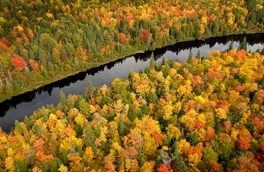 That’s the amount of forest land the Department of Natural Resources is responsible for managing – while keeping the needs of all forest stakeholders in mind.
Because this forest land belongs to everyone, the DNR wants the public to have a say in how it is used. Now through Jan. 2, 2013, anyone interested in the health and sustainability of the state forest has the chance to do just that by sharing their thoughts about the DNR’s draft Regional State Forest Management Plans (RSFMPs).
According to Bill O’Neill, chief of the DNR’s Forest Resources Division, the regional plans grew out of a need for better planning and communication between state and local levels.
“After getting a lot of important input from DNR field staff and stakeholders,” he said, “it just made sense to think regionally about the different types of forests that are present in the eastern Upper Peninsula, the western Upper Peninsula and the northern Lower Peninsula.”
To get the balance right, the DNR worked with a diverse group that included folks from government organizations, outdoor recreation, the forest industry and conservation agencies, as well as everyday citizens. The end product – the draft plans – are on the DNR’s website at www.michigan.gov/regionalforestplans.
O’Neill said the department’s aim really was to create a thoughtful, workable set of regional plans that:
-
Recognize the unique needs of individual forest management areas (groupings of existing forest compartments that range in size from approximately 17,000 to 105,000 acres);
-
Account for regional needs;
-
Better inform and guide management and operational decisions for timber production and wildlife habitat; and
-
Help improve communication among all interested individuals and organizations.
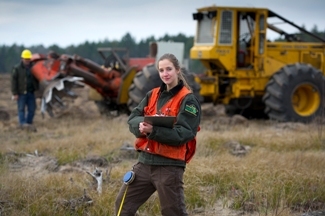 “Sustaining our state forest land is a huge responsibility that requires cooperation from everyone,” said O’Neill, who also serves as state forester. “We worked hard to develop plans that will help ensure quality wildlife habitat and ample recreation opportunities are well represented, while also keeping the needs of the forest industry in mind.
“If you enjoy, care about or rely on Michigan’s state forest land, we want to hear from you. Public review and feedback are vital to the success of these plans.”
O’Neill added that the plans will help guide the DNR in its pursuit of two related missions: the wise current use of natural resources and protection of those resources for the future.
Stakeholder input
One organization that will be taking a close look at the drafts is the Sierra Club Michigan Chapter. Marvin Roberson, a forest policy specialist for the group, stressed how important it is for people who treasure Michigan’s forest land to do the same.
“As stakeholders of our state forest system, we’re excited that this is the first time that the public has really had an opportunity to provide input regionally and not just on a compartment-review level,” said Roberson, who also serves on the DNR’s Forest Management Advisory Committee.
“It’s clear that a lot of thought has gone into these drafts that will serve as a blueprint for how our state forest system will be managed,” he added. “While we might not agree with everything that is included in the plans, having the opportunity to voice concerns while they are in the draft stage is an important part of making sure these plans will best reflect our collective needs.”
Jessica Turino, senior forestry services specialist for the Weyerhaeuser NR Company, a wood products business in Grayling, said providing feedback is important for the timber industry – a key economic driver that contributes to a $14 billion statewide industry that supports about 26,000 jobs.
“The DNR Regional State Forest Management Plans are a vital part of sustainably managing the 4 million acres of state forest land we have here in Michigan,” said Turino, who also serves on the DNR’s Timber Advisory Council.
“These plans cover all aspects of natural resource management and are intended to meet the demands of 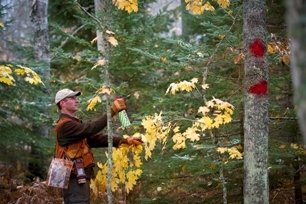 current and future generations,” Turino said. “As a stakeholder, we are pleased to have the opportunity to provide input into this process as we all play a role in the viability of our Michigan forests and the local economies that depend on them.”
Guiding decisions
Once finalized, the plans will provide long-term, landscape-level direction for resource managers that will guide decisions about specific activities and treatments on state forest land. The plans describe things like:
-
resource conditions;
-
resource management practices;
-
levels of timber production;
-
ecosystem health and protection;
-
vegetative management;
-
wildlife habitat management;
-
fisheries values;
-
recreation opportunities; and
-
soil and water protection.
The plans also provide for an ecosystem-based approach to management and help to ensure the maintenance of independent, third-party forest certification.
The DNR has been certified by the Forest Stewardship Council (FSC) and the Sustainable Forestry Initiative (SFI); both of these agencies have audited the DNR’s forest management practices against biological, social and economic standards and have independently certified those practices as sound, comprehensive and likely sustainable.
Providing feedback
The DNR encourages people to visit www.michigan.gov/regionalforestplans, review the plans – especially the sections most relevant to their expertise or interests – and give feedback. Comments may be submitted via email to forestplancomments@michigan.gov.
“Now is the time to speak up and tell us what matters most to you about Michigan’s state forests,” said the DNR’s O’Neill. “Take a look at what we’ve put together and let us know what makes sense and what can be improved.”
What comes next?
Following public review, the DNR will assess the feedback it has received, consult with stakeholders, revise each plan accordingly and prepare for final review and approval by the DNR director at a future 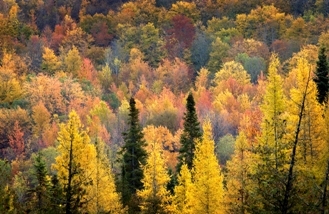 meeting of the Natural Resources Commission. Implementation of the Regional State Forest Management Plans will begin with the 2015 compartment review process and will continue over the 10-year life of these plans.
“Michigan’s forests are a huge part of our state’s social, economic and ecological landscape. Camping, hiking, timber production, hunting and other forest-related activities have a positive effect on surrounding communities and individual livelihoods,” O’Neill said.
He added the draft plans do take all of those factors into account, but the DNR would like them to be as comprehensive as they can be – and that means hearing from as many state forest co-owners as possible.
After all, Michigan’s state forest land really does belong to all of us.
To learn more about the draft Regional State Forest Management Plans, go to www.michigan.gov/regionalforestplans.
###
Editor’s note: Photos are available for download at www.michigandnr.com//ftp/OutReach/ (in the folder marked Forest Land Management). Captions to accompany those photos follow.
**Credit photo: Michigan DNR
Captions:
DSK14 08.jpg – Scenes like this are a big reason the Department of Natural Resources drafted the Regional State Forest Management Plans. Working with partners in government, outdoor recreation, the forest industry and conservation, as well as citizens, the DNR is working to ensure residents and visitors can enjoy the breathtaking beauty of Michigan’s forest resources for years to come.
DSK119 16.jpg – The Department of Natural Resources is seeking public feedback on its draft Regional State Forest Management Plans, which cover the eastern Upper Peninsula, the western Upper Peninsula and the northern Lower Peninsula. Broad public input will help the DNR better plan for the picture-perfect backdrops like these, which offer the best in camping, hiking, hunting and exploring.
DSK448 014.jpg – Ed Rice, a forester with the Department of Natural Resources, marks the boundary of a future timber sale in Iron County. Each of the DNR’s Regional State Forest Management Plan drafts outlines objectives to ensure consistent timber harvest levels for the 10-year life of each plan.
DSK448 091.jpg – Department of Natural Resources forester Dan McNamee inspects the harvest of an active timber sale in Delta County. Because the timber industry is vital to Michigan’s economy, the DNR has included harvest management guides in its draft Regional State Forest Management Plans for the western Upper Peninsula, the eastern Upper Peninsula and the northern Lower Peninsula.
DSK455 022.jpg – Department of Natural Resources forester Tricia Mitchell conducts a regeneration survey. Mitchell is determining the surviving density of red pines from last year’s regeneration efforts. The DNR’s draft Regional State Forest Management Plans – which are up for public review until Jan. 2, 2013 – will be used to develop forest treatments that ensure ample wildlife habitat and recreation opportunities and meet the needs of current and future generations.
DSK455 037.jpg – This trenching machine, operated by Department of Natural Resources’ Forest Resources Division staff, is preparing the soil for the future planting of red pine seedlings. Red pines are planted on a 75-year rotation. The DNR’s Regional State Forest Management draft plans provide landscape-level direction for the sustainable management of state forest land like the area seen here.
For photo assistance, contact David Kenyon (517) 373-6516 or kenyond@michigan.gov.