|
Here are a few of this week's stories from the Michigan Department of Natural Resources:
See other news releases, Showcasing the DNR stories, photos and other resources at Michigan.gov/DNRPressRoom.
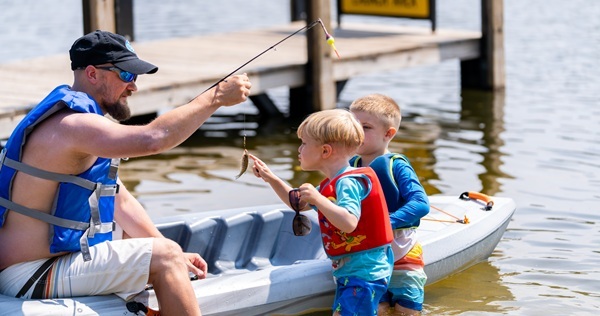
Photos: Larger, higher-res versions of some of the images used in this email — family fishing, autumn tree, waterfowl hunter and Little Sable Point Lighthouse — and others (Clean, Drain, Dry and Pointe Mouillee) are available in this folder.
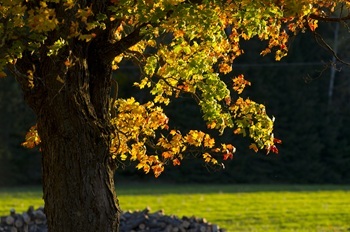
If you love fall color but don’t think there's enough of it in your yard, fix it now for next year! Fall is a great time to plant trees.
When you’re done, pin your tree on the DNR’s interactive map and help us reach our goal of planting 50 million trees across the state by 2030. Check out program info and get tree-planting tips at Michigan.gov/MITrees.
“Fall is an ideal time to plant trees in Michigan,” said Kevin Sayers, the DNR's Urban and Community Forestry Program manager. “The cooler temperatures and moist soil give roots a chance to establish before winter, setting trees up for healthy growth in spring.”
|
To plant a tree that will stand the test of time:
-
Choose your tree and location. A tree that will reach a mature height of 50 feet is too big to plant next to your garage. Use the Michigan Community Tree Species Selection Guide to refine your choice.
-
Plan with care. Before you put a shovel in the ground, call 811 by phone or visit missdig811.org. Workers will mark the locations of underground water, gas and other utility lines.
-
Dig. Make your hole two to three times the width of the tree’s root ball or container, and at about the same depth as the root ball itself — roots need space to get established. Remove the tree’s container and shave off outer roots so new roots can sprout. For a tree with burlap-wrapped roots, remove at least the top half of the burlap and the cage. Plant trees at a depth that allows you to cover roots but still see the flare at the bottom of the trunk. Then water well.
-
Mulch and water. Water the entire area under the canopy of the tree. A layer of mulch will help protect its roots, but don’t let mulch touch the tree trunk; that can cause rot. Fertilizer isn’t recommended for the first several years.
Questions? Contact Kevin Sayers at 517-582-3209.
 With deer and waterfowl hunting now underway, fall turkey and many small game seasons kicking off this week, and the Oct. 1 archery and Nov. 15 firearm deer season openers right around the corner, hunters across the state are getting ready to head into the field.
Wondering where to prepare so your shot doesn’t miss the mark? DNR shooting ranges may be the answer.
Whether you’re looking to get in some target practice or sight in or pattern your firearm, work on your archery skills or shoot clay targets, the DNR’s 15 ranges across the state offer safe, comfortable places to shoot. They’re also a low-cost — in many cases, free — option.
Many of our ranges are staffed with friendly, highly trained employees and include amenities like modern restrooms and accessible features. Right now, while the weather’s still mild and the ranges aren’t as busy as they will be later in the fall, is a great time to check them out.
The DNR has shooting ranges in Allegan, Barry, Clinton, Grand Traverse, Hillsdale, Ingham, Jackson, Lapeer, Livingston, Marquette, Oakland, Ontonagon and St. Clair counties.
The following DNR-staffed shooting ranges (Barry County, Dansville, Echo Point, Lapeer, Ortonville, Pontiac Lake, Rose Lake and Sharonville) will be open six days a week in October and seven days a week the first two weeks of November.
Watch our new DNR shooting ranges video to learn more about what to expect when visiting and safety rules at DNR ranges.
For more information about locations, hours and more, visit Michigan.gov/ShootingRanges.
Questions? Contact Gary Jones at 734-431-2147.
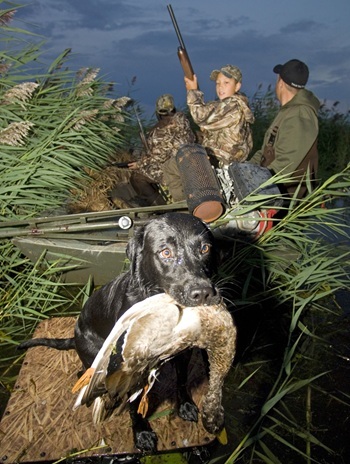
As waterfowl hunting season begins, the Michigan Invasive Species Program is asking hunters across the state to take extra precautions to prevent the spread of invasive species.
Several aquatic invasive plants tend to grow in slow-moving waters — just the kind of places that ducks and geese flock to. Those plants’ seeds and turions (buds capable of growing into plants) are ripe for distribution, and they easily can attach to boats and gear, including decoys, straps and trailers.
Hunters may be familiar with invasive phragmites, a now-widespread, reedlike grass that takes over shorelines and shallow-water areas. In recent years, another, similar invasive grass called Glyceria maxima has been detected in the Upper Peninsula, likely arriving from infested areas in Wisconsin. Both plants spread by seeds and plant fragments.
Invasive European frog-bit, resembling small water lilies, is widespread along the coastal areas of lakes Erie and Huron up to the eastern Upper Peninsula and has been found in inland lakes and ponds in areas of Michigan. Easily spread by its seedlike turions, it forms dense mats of vegetation that can hamper the movement of diving ducks and reduce the availability of snails, mollusks and other food sources.
A significant infestation of hydrilla, considered one of the world's most invasive aquatic plants, was detected in 2024 in Ontario, Canada’s Hillman Marsh Conservation Area, popular with waterfowl hunters. In 2023, hydrilla was first detected in Michigan in private ponds in Berrien County.
Hydrilla’s long stems and short green leaves resemble both native and invasive elodea plants. If hydrilla is chopped by boat motors, its fragments can drift to new areas to start new populations. Fragments left on boats or gear can be transported to new rivers and lakes.
|
Take action!
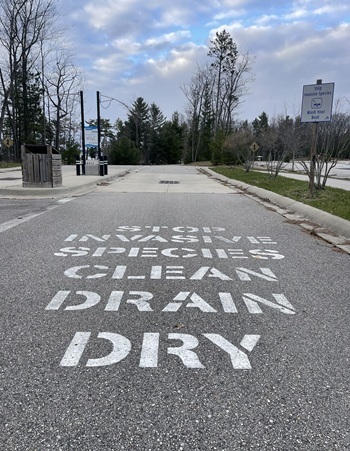
To protect Michigan’s waterfowl habitat, hunters are urged to take the following precautions:
-
Clean equipment (including waders, decoys, straps, anchors, boats and trailers) thoroughly between trips to keep from transporting undesirable plant fragments, seeds or organisms from one site to another.
-
Drain all water from boats, trailers and equipment.
-
Dry boats, gear and equipment for five days (if possible) before transporting to another body of water.
-
Inspect all gear and equipment, including anchors, decoys and lines, blinds, waders and clothing, before and after use. Don’t forget to check dogs and their gear! Remove any plants, debris or soils.
Remember that Michigan boating laws require boaters to pull plugs, drain water and remove plants and debris from boats and trailers before getting on the road.
Hunters are encouraged to use synthetic materials to camouflage boats and blinds or choose known native species like cedar to avoid accidental selection of invasive plants.
A brief video outlining what waterfowl hunters need to know about invasive phragmites and other helpful information about invasive species can be found at Michigan.gov/Invasives.
Questions? Contact DNR invasives communications species specialist Joanne Foreman at 517-284-5814.
|
 Hidden beneath the waters of Lake Huron lies the Middle Island Sinkhole. Formed over thousands of years as groundwater dissolved the limestone beneath the lakebed, the sinkhole plunges 80 feet below the surface into a colorful ecosystem unlike anything in the Great Lakes. This rare environment attracts researchers from around the world seeking clues about early life on Earth.
Freshwater explorers and filmmakers Zach Melnick and Yvonne Drebert — who recently explored the deepest point of Lake Superior with DNR staff — are teaming up with Thunder Bay National Marine Sanctuary and Great Lakes Now for the first-ever livestream from this underwater time capsule, providing an up-close look at an area that, until now, has only been experienced by advanced divers.
Using a high-tech remotely operated vehicle, or ROV, equipped with high-resolution cameras, the team will descend into the sinkhole, following divers as they collect samples from the remarkable microbial mats that carpet the bottom.
The livestream is planned for Wednesday, Sept. 16, at 11 a.m., subject to weather conditions. To watch the livestream or learn more about the expedition, visit InspiredPlanet.ca/Hidden-Below-Live.
Questions? Contact producer Yvonne Drebert at 905-317-0350.
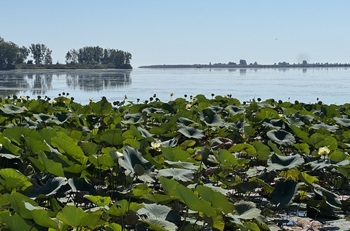
Duck-calling contests, a huge outdoor trading post, a dog jumping championship, a layout shooting contest, kid-friendly archery and BB shoots, an art tent filled with wildlife wares — in case you missed it, the Pointe Mouillee Waterfowl Festival is back! Head to the Pointe Mouillee State Game Area in Brownstown Saturday and Sunday, Sept. 19-20, for a weekend of outdoor fun, learning and competition.
First held in 1947, the festival celebrates Pointe Mouillee as a world-class waterfowl hunting destination and an important wetland refuge for thousands of migratory birds. With 4,000-plus acres of wildlife habitat, Pointe Mouillee SGA is one of the largest ongoing freshwater marsh restoration projects in the world.
The festival runs 8 a.m. to 5 p.m. Saturday and 8 a.m. to 3 p.m. Sunday. Event admission is free, but some contests require entry fees. A Sunday highlight is the 78th Michigan Duck Hunters Tournament, with registration beginning at 9 a.m. Organizers describe this tradition as “the most unique and oldest shooting event around,” inviting hunters to test their skills in a fun, family-friendly event. Boats and steel shells are provided.
Want to learn more? Visit ptemouilleewaterfowlfestival.org or call Bob Whitwam (festival contact) at 734-587-3221 or Zachary Cooley (DNR contact) at 734-379-9692.
|
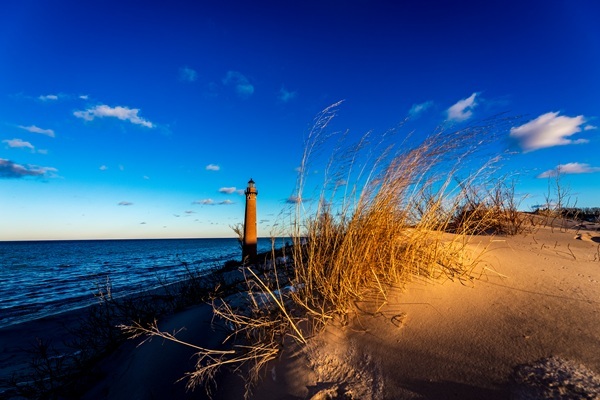 See more pictures by Michigan state parks photo ambassadors at Instagram.com/MiStateParks. For more on the program, call Stephanie Yancer at 989-274-6182. (This photo is by Aubry Healy, for the Michigan DNR, at Silver Lake State Park in Oceana County.)
|