|
As summer wraps up, we're excited to share information about the MGLP's updated Fall webinar schedule with a new webinar added and to celebrate the 20th Anniversary for the National Fish Habitat Partnership.
Newsletter contents
These free webinars address a diverse range of lake and fish habitat management issues such as aquatic plants, climate change, watershed conservation, and much more.
Check out our lineup below and register using the links provided. Please note that we've changed the date for the MGLP Lake Conservation Grant webinar, and we've added a new webinar to the list with information about the MGLP's forthcoming Lake Conservation Planner 2.0. You can view the full list of webinars plus recordings of past webinars on our Lake Conservation Webinars webpage.
Would you like to present a future MGLP Lake Conservation Webinar? We want to hear from YOU! We encourage speakers from diverse backgrounds and areas of expertise in our webinar series. Please email MGLP Coordinator Joe Nohner to express your interest.
|
Joe Nohner
September 8, 2026 at 1 PM Central
|
|
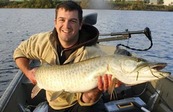 |
The Midwest Glacial Lakes Partnership supports conservation of inland lakes through its Lake Conservation Grant. The grant annually distributes approximately $300,000 in funding to support on-the-ground conservation projects, science, and outreach to benefit glacial lakes. The grant will operate on a new timeline this year, with applications announced in the late summer and due in the fall. This webinar will walk through the process of applying to the grant, provide insight into the characteristics of successful applications, describe the process and timeline for grant selection, and share basic information about administration of these grants.
|
Joe Nohner
September 22, 2026 at 1 PM Central
|
|
 |
The MGLP is preparing to release a completely overhauled second version of its Lake Conservation Planner, with a host of new datasets for assessing lakes and planning for their management. New datasets on fisheries surveys, non-native species, water temperatures, water quality, shoreland and watershed land use, fish passage, and human populations provide a wealth of information. Tune in to learn more about how to use this exciting tool to help inform conservation on lakes near you.
|
Luoliang Xu
October 13, 2026 at 1 PM Central
|
|
 |
Climate warming is reshaping thermal habitats in inland lakes, often reducing suitable conditions for cold- and cool-water species while expanding habitat for warm-water species. This shift raises an important management question: can redirecting recreational harvest pressure toward warm-water species help buffer climate-driven declines in vulnerable cooler-water fisheries? In this presentation, I will introduce this idea, examine its management implications, and discuss alternative science-based strategies for sustainably managing freshwater fisheries in a warming world.
|
Alison Mikulyuk & Katie Hein
October 20, 2026 at 1 PM Central
|
|
 |
This presentation will start with some findings about Eurasian watermilfoil management and management prioritization – in that work, we wanted to better understand and provide context to some of the effects of whole lake herbicide treatments we observed in survey data. From there, we developed a model to predict lakes likely to experience future Eurasian watermilfoil introductions and lakes likely able to support dense populations. We hope that information could help guide smart prevention and smart management. More recently, we are interested in expanding the way folks are able to think and talk about plant communities – by naming, narrating, and celebrating unique community assemblages, we hope eventually to enable people to appreciate, connect to, and experience part of the natural world that usually remains hidden.
|
Steve Epting
October 27, 2026 at 1 PM Central
|
|
 |
Nonpoint source (NPS) pollution, or polluted runoff, is the predominant cause of water quality problems in the United States. Land protection can play a critical role in protecting waters by maintaining forests, riparian buffers, and other critical natural areas that filter polluted runoff. Protected lands also help ensure the durability of water quality restoration by preventing new pollutant loads. Over the last several years the USEPA has worked to highlight the role of land protection as a NPS management strategy and strengthen partnership opportunities between clean water programs and land conservation community. This webinar will spotlight this work and how its relevance to protecting lake ecosystem health.
|
Robert Davis & Daniel Isermann
November 17, 2026 at 1 PM Central
|
|
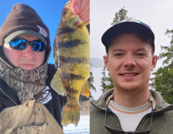 |
This study evaluated stocking success of Walleye in lakes and reservoirs across the Midwestern United States to inform stocking practices for state agencies. Demand for Walleye stocking may increase if climate change limits the potential for natural recruitment in lakes. Consequently, the strategic distribution of Walleye stocking may maximize fishing opportunities. Latitude and year explained relatively little variation in stocking success compared to within‐lake variation. Relative abundance of Largemouth Bass was an important indicator of Walleye stocking success for fry and fingerlings, with stocking success generally decreasing with increased bass abundance. There was an interaction between lake surface area and growing degree‐days, as large lakes (>2500 ha) seemed to be more conducive to Walleye stocking success regardless of growing degree‐days. The models that we developed did not accurately predict exact levels of Walleye stocking success but were 92–94% accurate in predicting whether the stocking success of both fry and fingerlings would be at or above the 50th percentile. These findings may help to inform the management and stocking allocation of Walleye and suggest that future increases in Largemouth Bass abundance and growing degree‐days could limit the effectiveness of stocking in some lakes.
You may be familiar with the Midwest Glacial Lakes Partnership (MGLP), but did you know that the MGLP is a member of a broader national organization called the National Fish Habitat Partnership (NFHP)?
This year, NFHP proudly marks its 20th Anniversary in 2026, celebrating two decades of collaborative, science-driven efforts to conserve, protect, and restore the nation’s fish and aquatic habitats. Since its establishment in 2006, NFHP has brought together federal, state, and tribal agencies, conservation organizations, industry partners, and local communities to address the most pressing challenges facing aquatic ecosystems across the United States. Through this partnership-driven approach, NFHP has implemented impactful, on-the-ground projects that improve water quality, reconnect rivers and streams, and enhance habitats for fish and wildlife.
20 Years of Impact: Progress Through Partnerships
Over the past two decades, NFHP and its partners have delivered measurable conservation results nationwide:
• More than 1,500 conservation projects implemented across all 50 states
• Over $380 million in leveraged funding generated to support aquatic conservation
• More than 9,800 miles of rivers and streams reconnected, improving fish passage and ecosystem function
• Over 70,000 acres of habitat conserved, including rivers, lakes, reservoirs, riparian areas, uplands, estuaries, and wetlands
• More than 1,700 partner organizations engaged, spanning federal and state agencies, conservation organizations, and Tribal partners
These accomplishments can be seen on NFHP's Projects and Accomplishments Dashboard, reflect NFHP’s guiding principle of progress through partnerships, and demonstrate the power of coordinated, on-the-ground conservation.
NFHP supports a national network of 20 Fish Habitat Partnerships, such as the MGLP, that work to conserve priority aquatic habitats from coast to coast. Other partnerships in the Upper Midwest include:
These partnerships leverage local expertise and resources to deliver efficient, science-based solutions to meet local and regional conservation needs.
The 20th anniversary marks not only a milestone but also a renewed commitment to the future. NFHP continues to advance innovative conservation strategies that address emerging challenges such as loss of habitat, water scarcity, and habitat fragmentation.
Recently, NFHP released the third edition of its National Fish Habitat Action Plan, a comprehensive roadmap that outlines strategies for conserving America’s freshwater and marine habitats by convening a broad suite of public and private sector organizations and businesses to address national and regional priorities that benefit the American people.
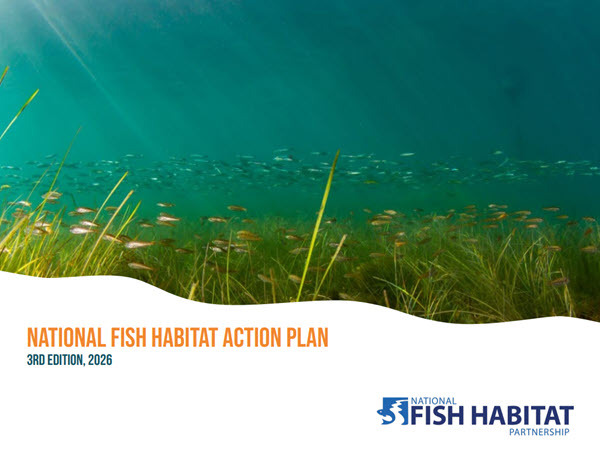 As the National Fish Habitat Partnership enters its third decade, the new Plan will guide the program by focusing its efforts on specific, measurable objectives that strengthen partnerships and leverage investments in fish habitat conservation for maximum impact.
The Plan’s objectives address four goals:
• Providing national leadership and coordination;
• Mobilizing support for fish habitat conservation;
• Achieving measurable science-based outcomes; and
• Evaluating and communicating the status of fish habitat and addressing gaps in scientific knowledge.
|