|
Here are a few stories from the Michigan Department of Natural Resources ahead of the busy Memorial Day holiday weekend. As always, check Michigan.gov/DNRClosures for updates on DNR-managed sites and facilities that are closed due to weather-related factors, improvement projects or planned maintenance.
Have fun, stay safe and take care of the outdoors!
See other news releases, Showcasing the DNR stories, photos and other resources at Michigan.gov/DNRPressRoom.
PHOTOS: Larger, higher-res versions of some of the images used in this email — boating safety, Kirtland's warbler, ORV, Saugatuck — are available in the DNR's online image collection.
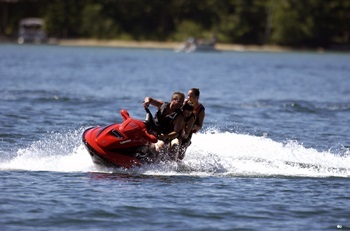
Many Michiganders and visitors will mark the unofficial start of boating season this holiday weekend. Whether you’re a boater, angler or other water sports enthusiast, safety and common sense in and around the water are a must.
The DNR is a proud supporter of National Safe Boating Week (this year, May 16-22) and safe boating practices all year long. Drowning was the cause of death in 76 percent of recreational boating fatalities where the cause of death was reported, according to 2024 U.S. Coast Guard recreational boating statistics, and 87 percent of those who drowned were not wearing life jackets.
Before leaving shore, consider these safety tips:
- Wear a U.S. Coast Guard-approved life jacket. Situations on the water can happen much too fast to reach and put on a stowed life jacket.
- Always ride with an operator who has completed an approved boater safety course. In Michigan, boater safety certificates are needed by anyone born after June 30, 1996, operating a motorized boat, or anyone born after Dec. 31, 1978, operating a personal watercraft, like a Jet Ski. Most states require a boater safety certificate for boat or personal watercraft rentals.
- Make sure your boat is in good working condition and prepared with the necessary equipment, including a flotation device for each person on board.
- File a float plan with someone you trust. Include details about the trip, boat, others on board, towing or trailer vehicle, communication equipment and emergency contacts.
- Check the weather, including the water temperature, and monitor changing conditions.
- Boat sober. Where the primary cause was known, alcohol was listed as a leading factor in boating-related deaths.
- Beware of carbon monoxide poisoning. Gasoline-powered engines on boats, including onboard generators, produce carbon monoxide, a colorless and odorless gas that can poison or kill someone who breathes too much of it. Install and maintain a working CO detector, never block exhaust outlets, and always dock, beach or anchor at least 20 feet away from any boat running a generator or engine.
- Keep in touch. Communication devices, such as marine radios, can be your most important piece of emergency equipment.
|
Visit Michigan.gov/RecreationalSafety for information on earning your boating, hunting, snowmobile or off-road vehicle safety certificate.
Questions? Email Cpl. Jill Miller at MillerJ86@Michigan.gov.
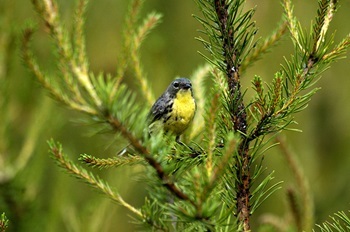
Want to learn more about one of North America’s rarest songbirds? Take advantage of two free tours featuring the Kirtland’s warbler and its jack pine habitat.
The outings, set for 7-10 a.m. Saturday, May 30, and again Saturday, June 13, will start and end at the DNR’s Grayling field office, 1955 Hartwick Pines Road, in Crawford County.
The tours will start with a short presentation detailing the Kirtland’s warbler history, past and current status, and future management strategies. Once nearly extinct, the gray and yellow songbird remains a state-threatened species, with about 95% of its worldwide population nesting in northern Michigan.
Tour participants will then make the short drive to tour the jack pine habitat and observe the warbler. This involves a roughly half-mile walk on a trail road. Bring sturdy footwear, binoculars, water and bug spray.
These events will take place rain or shine. RSVP to Tim Riley at RileyT6@Michigan.gov or 989-370-7313.
More birding opportunities
Observing birds in their natural habitat is a popular pastime, and for birders in Michigan that means the chance to see 450-plus species at state parks, state wildlife and game areas, and national wildlife refuges, along trails and Great Lakes coastline and in other outdoor places.
Visit Michigan.gov/Birding to learn more about the different birding seasons (spring and summer are big draws!), a dozen birding trails worth the drive and tips on getting started.
|
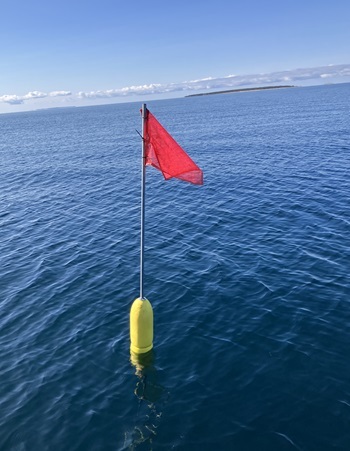
Commercial fishing is an active industry in Michigan waters, providing those throughout the Great Lakes region with a local, healthy and sustainable food source. That’s why it’s critical that recreational boaters do their part to avoid areas marked by orange flags and buoys, which indicate commercial fishing nets below the water’s surface.
Nets can cover more than an acre on the lake bottom. If snagged by a boat, a net can be damaged or cause damage to the boat and other equipment.
If you see an orange flag or buoy while boating, turn the other way and maintain a distance of at least 500 feet. Avoid navigating between flags and pull in any fishing gear. Also keep in mind that additional flags may be difficult to see due to waves, glare, fog, low light or reduced visibility.
If your boat does get tangled in a net:
- Turn off the engine or put the boat in neutral.
- Cut yourself free using wire cutters, then label any gear left behind that should be returned to you.
- Attach a buoy or jug to mark the net and leave it in the water.
- Use GPS to mark the location.
- Report the net to the DNR hotline by calling or texting 800-292-7800.
|
For more information, check out Michigan Sea Grant’s Nets of the Great Lakes webpage.
Questions? Email 2nd Lt. Kevin Postma at PostmaK@Michigan.gov.
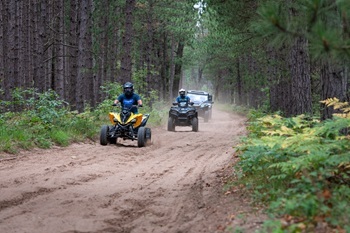
Off-road vehicles are fun year-round, but activity in Michigan ramps up in the spring and summer as people head to trails and ORV scramble areas to enjoy world-class riding experiences.
Keeping safety in mind is vital on any ride, for you and others.
According to 2025 statewide ORV crash data, there were more than 700 reported crashes, including 32 fatalities and over 500 personal injuries. These crashes are primarily due to excessive speed, careless operation and parents not supervising children who are operating ORVs.
Parents are reminded that they must visually supervise all children under the age of 16 who are operating an ORV, whether riding on public or private property.
Additionally, operators who are transporting children should refer to the vehicle manufacturer owner’s manual regarding use of car seats or boosters.
“Most ORV crashes can be avoided,” said Acting Cpl. Sidney LaLonde, DNR Law Enforcement ORV and snowmobile specialist. “When operators ride too fast, they are more likely to lose control when they hit even the smallest bump or try to make turns or stop. Always ride within your and the machine's capabilities.”
|
All ORV operators are urged to "Ride Right" to ensure everyone returns home safely to family and friends. That means:
- Ride at a safe speed.
- Ride sober.
- Ride on the right side of the trail.
- Keep lights on when riding.
- Always wear a helmet.
Read more about ORV safety at Michigan.gov/RideRight. For more on state ORV laws and where to ride, visit Michigan.gov/ORVInfo.
Questions? Email Acting Cpl. Sidney LaLonde at LaLondeS1@Michigan.gov.
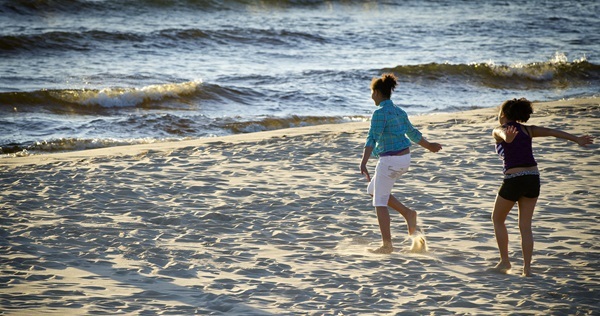
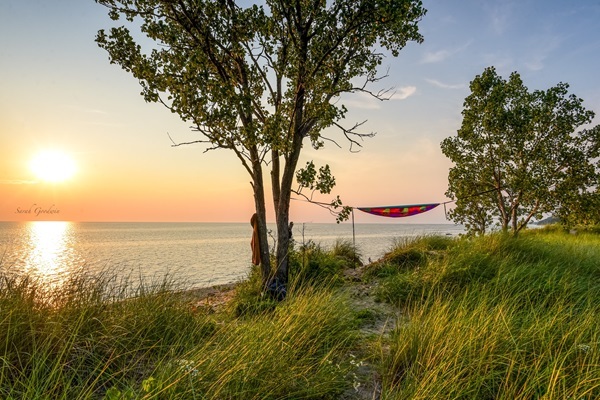 See more pictures by Michigan state parks photo ambassadors at Instagram.com/MiStateParks. For more on the program, call Stephanie Yancer at 989-274-6182. (This photo is by Sarah Goodwin, for the Michigan DNR, at Saugatuck Dunes State Park in Allegan County.)
|