Looking back on a snowy, significant snowmobile season
By HEATHER JOHNSON DUROCHER
Writer, Michigan Department of Natural Resources
A busy day job and full life mean it doesn’t happen as often as he’d like, but when the weather and trail conditions are just right – and were they ever this past winter – a certain route on the Keweenaw Peninsula calls out to passionate snowmobiler Ryan LaPorte.
“I’ll take off from Houghton, head toward Gay, then Lac La Belle and Copper Harbor and Brockway Mountain – basically the perimeter of the Keweenaw,” said LaPorte, 37, who has been riding since he was about 8 years old. “There are so many views of Lake Superior, there’s a mix of trails – twisty, turny trails through the woods – and it’s not only a really cool trail, but it’s also in an area with a lot of natural forest, that is a preserved area. In total, it’s about 150-ish miles.”
As a longtime snowmobiler and president of the Keweenaw Snowmobile Club, LaPorte knows western Upper Peninsula trails well – if he’s not out riding himself, he’s hearing from fellow club members about their rides and jumping in to help groom the club’s 230 miles of snowmobile trails when needed. And this past winter, riding and grooming, in the U.P. and around the state, was happening a lot.
The 2025-26 snowmobile season proved to be one of the best ones he’s experienced, LaPorte said, because of consistent snowfall, riders out enjoying the trails not only in the U.P. but all around Michigan, and an ongoing, successful Michigan Department of Natural Resources statewide safety campaign – Ride Right – that he believes is steadily helping shift snowmobilers’ mindsets when it comes to safely navigating Michigan’s more than 6,300 miles of snowmobile trails.
|
“We had such good snow, equipment ran really well, there was no warm-up and no rain, which tend to make things icier and more treacherous,” said LaPorte, a member of the Michigan Trails Advisory Council, which is made up of members of the public and whose role is to advise the DNR and the governor on the creation, development, operation and maintenance of motorized and nonmotorized trails in the state, including snowmobile, biking, equestrian, hiking, off-road vehicle and skiing trails.
“We did have a rough start with ice over Thanksgiving weekend, and it took almost a month to get trails truly opened up,” he said, “but overall, I think it was really great. I think the snow conditions were just better for everybody. Our local businesses got a steady stream of traffic, too.”
A winter to remember
The state’s 2025-26 winter was snowiest in the U.P., with some areas exceeding 350 inches, while much of the Lower Peninsula saw totals near or above average.
When Mother Nature provides such conditions, snowmobilers rejoice – and the snowmobile clubs that work with the DNR to ensure safe trails keep busy helping maintain routes. What this looks like: nearly 70 organizations around Michigan helping maintain more than 6,300 miles of designated snowmobile trails.
|
Michigan enjoys international acclaim for the exceptional quality and diversity of its trails system. Consistently ranked among the top 10 snowmobiling destinations in North America, the state also boasts the fifth-largest trail network in the nation.
"Michigan’s snowmobile program success is largely due to the clubs and volunteers around the state,” said DNR state trails coordinator Tim Novak. “Their dedication builds safer trails, stronger communities and a winter experience that all riders can count on."
Michigan’s vast network of designated trails and authorized public lands officially opens for the season Dec. 1 and stays open through March 31. Trail grooming occurs when there is enough snow on the ground.
During the 2024-25 snowmobile season – the most recent season for which the DNR has final grooming numbers – snowmobile organizations and clubs groomed a total of 305,287 miles. This amount is expected to be higher for the 2025-26 snowmobile season given the optimal snow conditions.
What’s more, the greater amount of snowfall not only in the U.P. but throughout the Lower Peninsula meant grooming and riding was spread across the state, said Karen Middendorp, who lives in the Grand Rapids area and serves as executive director of the Michigan Snowmobile and ORV Association.
“We had good snow for several weeks, and clubs were grooming more down here (in the Lower Peninsula),” said Middendorp, who also serves as chair of the Michigan Trails Advisory Council Snowmobile Advisory Workgroup. “The volunteers did a great job this year with the trails. The snow was plentiful, and it was consistently good.”
|
For LaPorte, the amount of grooming his western U.P. snowmobile club completed was the most he’s seen in at least the past five years. All told, 25,948 miles in the club’s region – south of Houghton to the tip of the Keweenaw Peninsula – were groomed throughout this past snowmobile season.
“The amount of consistent snow certainly made it much easier for our operators who were out there,” he said.
Supporting statewide snowmobiling
Significant snowfall, coupled with increased miles of grooming during the past two years, has led to back-to-back snowmobile seasons with more than 140,000 trail permits sold. This represents a welcome resurgence in permit sales following the disappointing 2023-24 winter riding season.
Snowmobile trail permits go on sale Sept. 1 each year, and they can be purchased online through the DNR’s eLicense or via the Michigan Snowmobile ORV Association or in person at a number of DNR license agents and dealers. The snowmobile license year runs Oct. 1 through Sept. 30.
Michigan’s snowmobile program is 100% funded through snowmobile trail permit and registration dollars. Every dollar is directly reinvested into the program through snowmobile clubs and DNR program support. These funds support critical operations, including:
- Trail brushing and grooming by 67 snowmobile clubs.
- New equipment grants for snowmobile clubs.
- Trail signage and maintenance.
- Trail bridge and culvert construction.
- Trailhead amenities, such as restroom maintenance and plowing of parking lots.
- Other snowmobile-related expenditures.
|
Residents must also register snowmobiles with the Michigan Secretary of State (unless sleds are used solely on private property). Nonresidents must display a valid registration from the operator's home state or province. Michigan registration is good for three years, and those dollars support the purchase of trail easements, law enforcement on trails and safety education.
“Our snowmobile clubs are paid through the snowmobile program and are a vital component of successful, quality operations,” Novak said. “The revenue from every trail permit sold is funneled directly into the snowmobile program, providing essential funding needed to groom and maintain these sought-after trails."
The DNR recently announced a required five-year Consumer Price Index adjustment for snowmobile trail permit fees. Starting this year, the fee will increase from $52 to $65 and will remain in place for the next five-year period.
This change follows a statutory requirement (Public Act 400 of 2008) to adjust snowmobile trail permit fees every five years based on the CPI as determined by the federal Bureau of Labor Statistics, ensuring funding keeps pace with inflation.
Each $65 snowmobile trail permit pays to groom 12.2 miles of trail.
"The adjustment helps offset the rising costs of equipment and maintenance," Novak said. "It ensures we can sustain our vast snowmobile trail system, which supports a $1 billion economic impact for the state and fuels the work of 67 volunteer clubs maintaining 6,300-plus miles of trails."
|
Ride home safe to family and friends
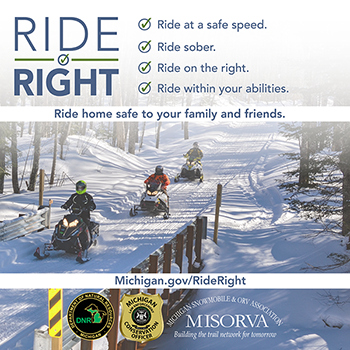
In the past couple years, the DNR’s Ride Right safety campaign – a campaign that runs year-round, during both snowmobile and off-road vehicle riding seasons – has gained momentum with more robust messaging seen throughout the state. This includes safety reminders at gas stations where riders are fueling their machines, on highway billboards, on posters distributed to businesses and placed at trail intersections, and in social media posts.
Among the campaign’s main messages:
- Speed is a contributing factor for off-road vehicle and snowmobile crashes and fatalities. Operate within the limits of your snowmobile and your own abilities.
- Ride sober.
- Stay on the right side of the trail.
- Ride home safe to your family and friends.
“The DNR’s commitment to promoting safe riding on the state’s snowmobile trails is a top priority, and the Ride Right campaign is a key component of that effort,” said Jon Spieles, DNR Marketing and Outreach Division chief. “We just want everyone to have a ton of fun and make it home safe.”
According to current available data, fatalities were down slightly this most recent snowmobile season. The DNR is tracking at least 13 fatalities that occurred during the 2025-26 season, which compares to a total of 16 fatalities during the previous season.
Both LaPorte and Middendorp are hopeful the Ride Right messaging is making a positive impact within the snowmobile community.
“I think the message is out there, people are seeing it, and I think that it continues to help draw attention to how riders need to behave on the trail,” LaPorte said, adding that connecting with businesses and having them help share the message is equally as important. “Education is a key piece in helping people understand, and I think that has been a huge improvement, as that campaign continues to develop and grow.”
Middendorp believes the campaign “has taken hold.”
“Riders are used to seeing it and hearing it – it’s making our riders stop and think,” she said. “They know that there is someone waiting for them at home. It’s a consistent message, and it is making a difference.”
For those looking to experience Michigan’s winter wonderland for the first time, or for those who are ready test out their new equipment, the DNR offers its annual Free Snowmobiling Weekend. For two days, the requirement for a trail permit or registration is waived (on DNR trails only), providing the perfect opportunity to explore the nation's premier trail system. The 2027 Free Snowmobiling Weekend dates will be announced soon, likely in July.
Find out more about snowmobiling in Michigan at Michigan.gov/Snowmobiling.
Learn more about the Ride Right safety campaign, including how to promote the initiative in your area at Michigan.gov/RideRight.
Find the latest information on snowmobile and ORV closures in Michigan at Michigan.gov/DNRClosures.
|
Check out previous Showcasing the DNR stories in our archive at Michigan.gov/DNRStories. To subscribe to upcoming Showcasing articles, sign up for free email delivery at Michigan.gov/DNREmail.
Note to editors: Contact: John Pepin, Showcasing the DNR series editor, 906-226-1352. Accompanying photos and a text-only version of this story are available below for download. Caption information follows. Credit Michigan Department of Natural Resources, unless otherwise noted.
Text-only version of this story.
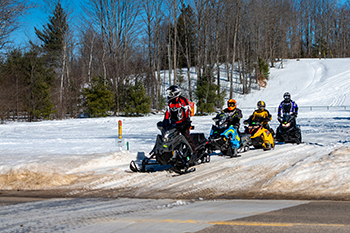
Winter-1: A group of snowmobilers stopped at the edge of a highway to look for passing traffic before crossing.
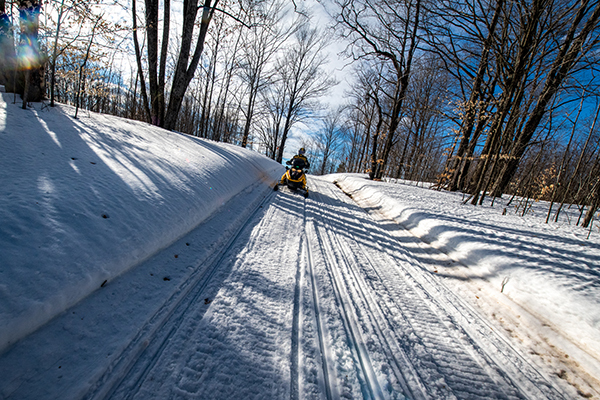
Winter-2: A snowmobiler enjoys a downhill ride on a sunny winter afternoon.
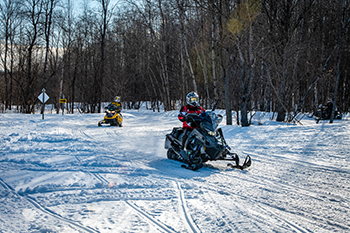
Winter-3: Riders explore a Michigan trail on a winter outing in the Lower Peninsula.
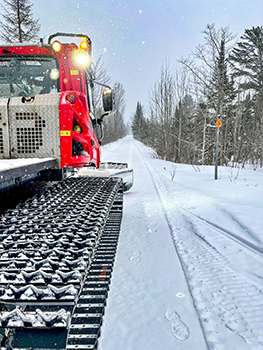
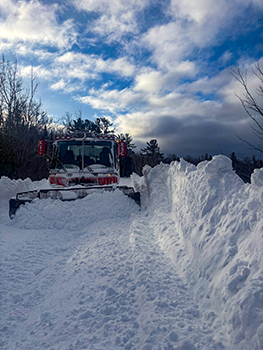
Winter-4: A snowmobile trail groomer is shown contending with some deep snow in the Keweenaw Peninsula. (Photo courtesy of Keweenaw Snowmobile Club)
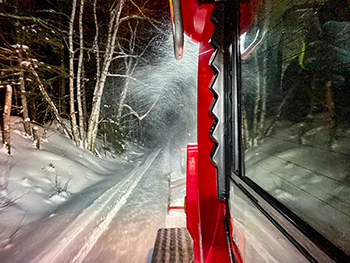
Winter-5: A nighttime shot shows a view from the groomer's cabin on a trail in Keweenaw County. (Photo courtesy of Keweenaw Snowmobile Club)
Winter-6: A trail groomer is shown on a trail in Michigan's Keweenaw Peninsula. (Photo courtesy of Keweenaw Snowmobile Club)
Winter-7: A poster is shown promoting Michigan's snowmobile and off-road-vehicle "Ride Right" safety campaign.
|