If you have an oak tree, put your saw and your pruners down. Due to the possibility of beetles spreading oak wilt fungus from tree to tree, the Michigan Department of Natural Resources advises homeowners and landowners not to trim or prune any oak trees from April 15-July 15. The best time to prune oak trees is during the winter, when the trees are dormant.
Sap-feeding nitidulid beetles are most active during this period and can transfer spores from infected trees to healthy trees through wounds. Recent research at Michigan State University indicates that in Michigan, oak wilt infection risk peaks in May and June.
Oak wilt also can spread from tree to tree through connected root systems and when people move firewood cut from infected trees without debarking.
“This disease can kill trees fast,” said Simeon Wright, forest health resource analyst in the DNR’s Forest Resources Division. Oaks in the red oak family can die within weeks.
If you suspect a tree has died of oak wilt, you can slow the spread of disease by burning it onsite, chipping it or debarking it before April 15. Once wood has been dried for longer than a year and/or all the bark loosens, the wood can no longer spread oak wilt.
During the high-risk period, if an oak is accidentally damaged, immediately cover all wounds with tree-wound paint or latex-based paint to prevent infection from beetle activity. Painting tree wounds is not recommended for other tree species as it can reduce healing.
Oak wilt is common in the Lower Peninsula and has been identified in several counties in the western Upper Peninsula. Trees in the red oak family – including black oak, northern red oak and northern pin oak – are more vulnerable to the disease. These trees all have leaves with pointed tips. Trees in the white oak group have rounded leaf edges and include white oak, swamp white oak and bur oak. These trees can be infected but are better able to block spread of the disease.
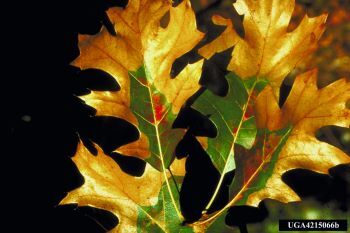
Affected trees will suddenly begin to wilt from the top down, rapidly dropping leaves, which can be green, brown or a combination of both colors. Symptoms of oak wilt most often appear from late June until September.
The DNR recommends that private forest landowners exercise caution during this period. Whenever possible, delay harvesting where remaining oak could be damaged until after July 15.
If you suspect a tree has oak wilt:
|