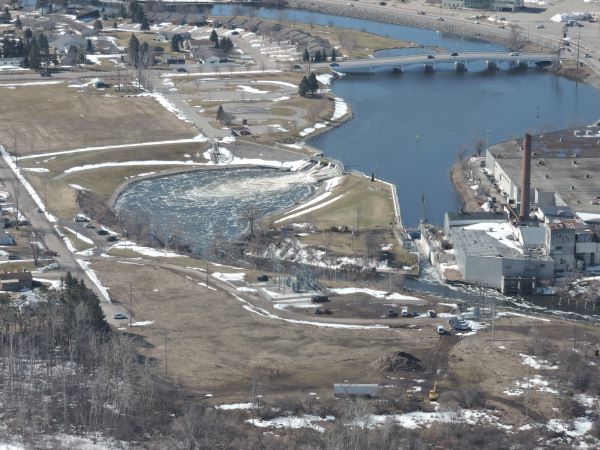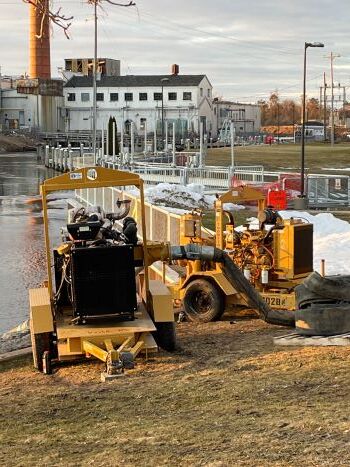
Work crews strategically placed more sandbags today around the Cheboygan Lock and Dam, while large pumps were running to move water around the structure.
The measures are part of continuing efforts to move water through and around the dam and lock to help get ahead of additional rain and snow melt forecasted over coming days.
“The DNR is actively engaged with our partners to prevent the failure of the dam to the fullest extent possible,” said Mike Janisse, leader of the Michigan Department of Natural Resources’ Incident Management Team.
Gov. Gretchen Whitmer declared a state of emergency Friday and activated the State Emergency Operations Center as rising waters from spring rains and melting snow threaten to overwhelm the dam in the city of Cheboygan.
The sandbagging, which began earlier this week, is intended to provide a buffer for rising water and help channel the water. The pumps are being used to move water from behind the dam to the spillway in front, where it can continue flowing out toward Lake Huron.
A wooden timber debris screen, built years ago in front of one of the dam’s gates was removed to help increase water flow through the dam. Engineers carefully reviewed historic photos to make sure the structure could be taken down without damaging the dam itself.
Additional water level monitoring equipment also has been installed by the U.S. Geological Survey.
Cheboygan County emergency managers are encouraging residents to sign up for alerts through Be Alert or to call 211 if they need information about preparedness and possible evacuation.
Local officials are promoting the “ready, set, go” approach which includes these steps:
-
Ready: When water is 12 inches below the top of the dam with levels rising 3 inches a day or more. Plan and/or pack in the event an evacuation becomes necessary.
-
Set: When water reaches 6 inches below the top of the dam, with water levels rising at a rate of 3 inches per day or levels rising 3 inches per day and predicted to top the dam within 48 hours. Prepare by packing and preparing your family, pets and vehicle for potential departure.
-
Go: When water levels are 1 inch below the top of the dam with a high probability of topping it, with the potential for failure occurring. Follow evacuation orders; roadblocks may be installed around the perimeters.
"Our No. 1 priority in all the coordinated efforts being undertaken is safety," said John Pepin, DNR deputy public information officer. "Preparedness is key. The more informed and prepared people are for potential danger, the safer they will be if it ultimately occurs."
|