|
This e-newsletter is made specifically for students, parents and teachers. Expect to receive Fish Bites about four times each year, and have your friends sign up, too!
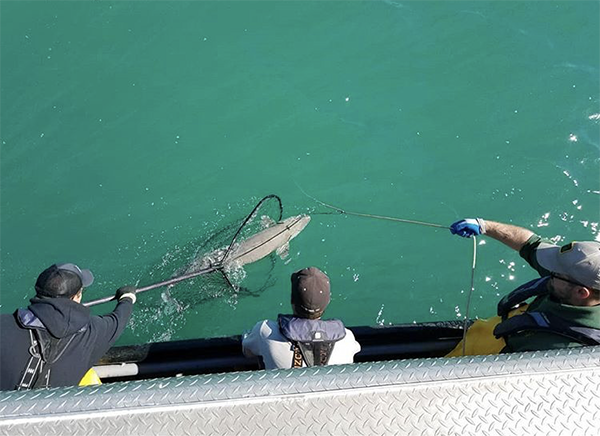
Can you name this species? Scroll to the bottom of the email to learn more!
Arctic grayling, a native Michigan fish species that was extirpated (made extinct in this area) is being reintroduced to Michigan waters. The reintroduction will begin with the Department of Natural Resources giving grayling eggs to tribal partners, who will place the eggs in streams. The handoff of eggs will happen at Oden State Fish Hatchery on May 12, along with a ceremony to commemorate the event. Save the date and click here to learn more!
- Fish are one of the oldest animal families to live on Earth. They were here long before the dinosaurs – about 500 million years ago — and they still thrive.
- Cisco (formerly known as lake herring) eggs usually develop in the winter and will hatch after the ice breaks up in February or March.
- The Great Lakes contain about 21% of the world's surface fresh water.
- A person who studies fish is called an ichthyologist (pronounced: ick-thee-all-o-just).

Salmon in the Classroom applications for Fall 2025 are open until April 15!
Salmon in the Classroom teaches students about everything salmon — from the life history of fish to the importance of the Great Lakes and fishing to Michigan's traditions and way of life. Even better, SIC is a great place-based educational effort that ties right back to the kids' communities. Students get invested in and excited about their local rivers and streams, knowing that the smolts they released will return to the very same spot in two to three years to spawn.
To be accepted into Salmon in the Classroom program, educators must commit to teaching their students about the Great Lakes ecosystem and fisheries management by raising salmon for almost the entire school year. To make this easier, new teachers are treated to a free day-long professional development opportunity with SCECHs and provided with a full program manual, as well as a classroom activity guide and materials kit. Applications are competitive — so be thorough!
Visit the Salmon in the Classroom web page to find out more at Michigan.gov/sic.
|

Lake sturgeon (Acipenser fulvescens), the only sturgeon species found in the Great Lakes, are unique in appearance and characteristics. They have five rows of bony plates, called scutes, on their backs and sides, as well as whisker-like barbels near their mouths. Often referred to as “living fossils” or “dinosaur fish,” lake sturgeon first appeared in the fossil record in the Mesozoic Era, 100 million to 150 million years ago. These fish are long-lived, with some documented at more than 100 years old.
Lake sturgeon are freshwater fish native to Michigan and found in North America throughout the Great Lakes, Mississippi and Hudson River basins. The species is an important cultural resource in the region, in addition to its ecological significance. But due to overfishing and habitat loss and degradation, lake sturgeon populations in Michigan began to decline in the 1800s.
Lake sturgeon are benthivores, which means that they eat prey from the bottom of waterbodies. They feed mostly on small invertebrates such as insect larvae, crayfish, snails, clams, leeches and zebra and quagga mussels, though some populations have been found to prey on other fish, such as the invasive round goby.
Click here to learn more about lake sturgeon.
|
|