|
September is here, and with it comes early teal and goose hunting seasons in Michigan! Get ready for an exciting fall hunting season on the lakes, ponds and marshes.
You can buy your licenses and federal duck stamp online at eLicense or anywhere DNR licenses are sold.
Brush up on all the regulations in the 2022 Waterfowl Digest, available online only this year. Download the DNR digests right to your phone and have them whenever you need them. Find current digests and downloading instructions at Michigan.gov/DNRDigests.
Statewide: Sept. 1-16.
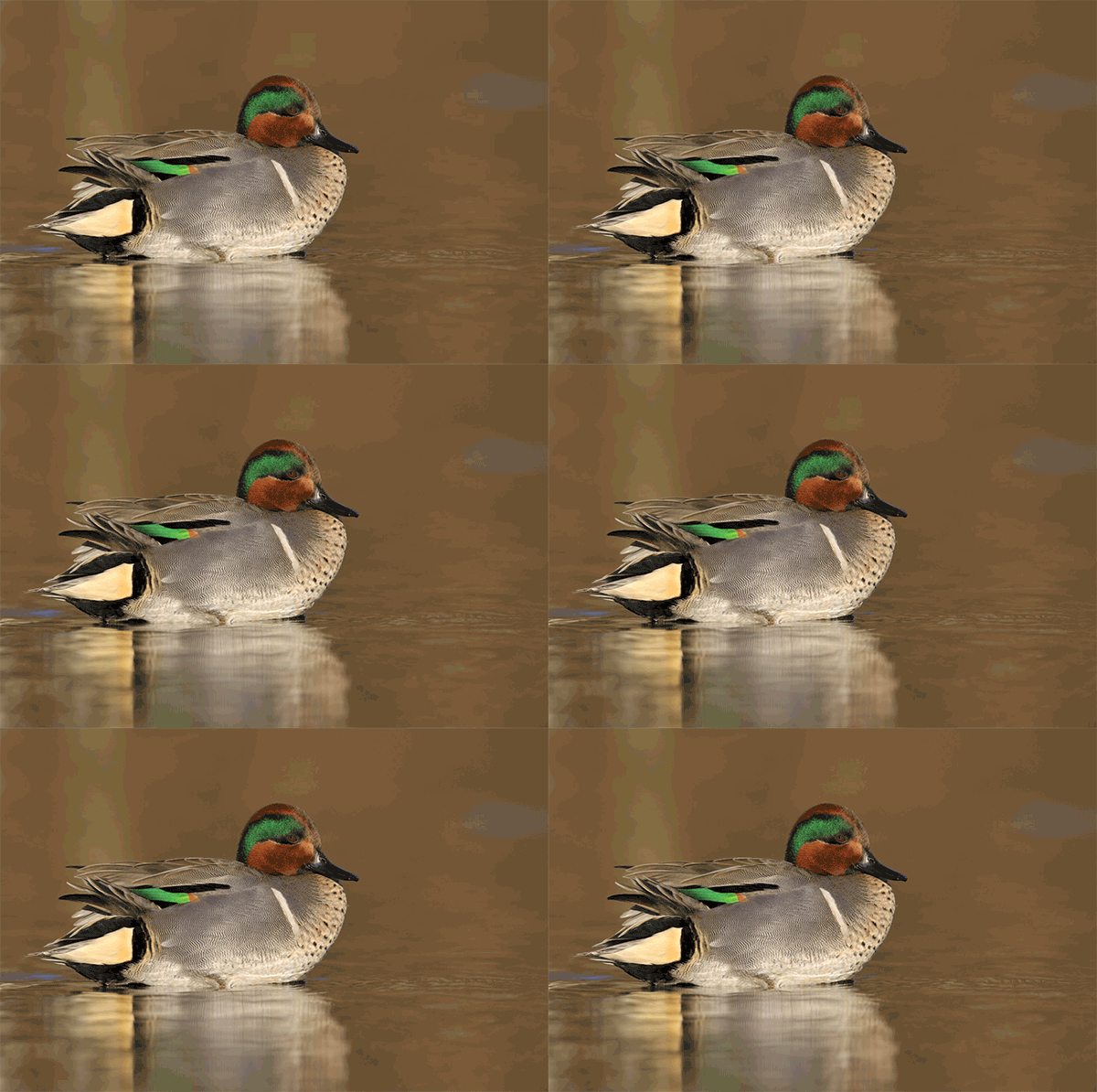
During this special early season, blue-winged and green-winged teal are the only ducks that can be harvested. Hunting hours are from sunrise to sunset, and the bag limit is six teal. Hunters are strongly encouraged to brush up on their duck identification skills for early teal season. Don’t shoot if you aren’t sure of your target.
North Zone: Sept. 1 - Dec. 16.
Middle Zone: Sept. 1-30 and Oct. 8 - Dec. 23.
South Zone: Sept. 1-30, Oct. 15 - Dec. 11, Dec. 31 - Jan. 8 and Feb. 4-13, 2023.
- Allegan County Goose Management Unit: Sept. 1-30, Nov. 5-13, Nov. 26 - Dec. 4 and Dec. 17 - Feb. 13, 2023.
- Muskegon County GMU: Oct. 15 - Dec. 22.
Canada geese, white-fronted geese (or specklebellies) and brant are part of a dark goose aggregate daily bag limit. During the entire goose season, the dark goose aggregate daily bag limit for Canada geese, white-fronted geese and brant is five, only one of which can be a brant. An aggregate bag limit is also in place for light geese including snow, blue and Ross’s geese. Hunters may harvest 20 light geese per day during goose seasons.
Statewide: Sept. 17-18.
The Youth and Veterans/Active-Duty U.S. Military Personnel Waterfowl Hunting Weekend will be Sept. 17-18. This statewide hunt is for properly licensed youth 16 years of age and younger and eligible veterans and active-duty U. S. military personnel.
Ducks, mergansers, geese, coots and moorhens may be harvested. The daily limits and species restrictions are the same as those allowed in the regular waterfowl hunting season. Adults accompanying youth hunters are not permitted to harvest these species during the hunt unless hunting during the September portion of the Canada goose hunting season. Youth hunters will need a base license, an apprentice base license or a mentored youth license. Those 16 years old also must have a waterfowl license and a federal duck stamp.
Participating veterans and active-duty U.S military personnel are required to have documentation of verification afield and must present it upon request of a Michigan conservation officer, tribal conservation officer or any law enforcement officer. The following documentation will be accepted as proof of status: military ID, leave papers, duty papers, military orders, copy of DD Form 214, enhanced driver’s license or documentation from the Veterans Administration regarding disability status. Participating veterans and active-duty U.S. military personnel must have a base license, a waterfowl license and a federal duck stamp.
North Zone: Sept. 24 - Nov. 20 and Nov. 26-27.
Middle Zone: Oct. 8 - Dec. 4 and Dec. 17-18.
South Zone: Oct. 15 - Dec. 11 and Dec. 31 - Jan. 1, 2023.
See the Daily and Possession Limits table on page 8 in the 2022 Michigan Waterfowl Hunting Digest for limits on ducks and mergansers for each zone.
Remember to be observant and careful when harvesting and handling wild birds this fall, due to the presence of the highly pathogenic avian influenza virus. Dabbling ducks are the most commonly infected waterfowl, but geese, swans, shorebirds and other species also can be infected.
Highly pathogenic avian influenza primarily affects birds, but is also a zoonotic disease, or one that has the potential to pass from domestic or wild animals to humans. According to the U.S. Centers for Disease Control and Prevention, the public health risk associated with HPAI remains low, but people are advised to avoid handling any sick or dead wild birds.
Learn more about HPAI, what to watch for and safety guidelines for hunters.
Contact the DNR Wildlife Division at 517-284-WILD (9453).
|